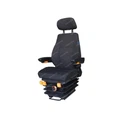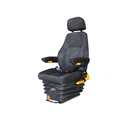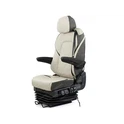


Locomotive cabs endure demanding conditions shift after shift, and over time, even the most durable seating begins to show its age. Whether the foam has flattened, the fabric has torn, or the suspension no longer absorbs vibration the way it once did, a worn-out Locomotive Cab Seat is more than a comfort issue – it is a productivity and safety concern. Drivers who spend eight, ten, or even twelve hours at the controls of a locomotive depend on their seat to support their posture, absorb track vibration, and allow quick, unrestricted access to the cab's controls. When that seat fails to perform, the consequences ripple outward into operator health, operational efficiency, and ultimately, passenger or cargo safety. The good news is that replacement and upgrading are not only possible but straightforward, thanks to modern suppliers who offer factory-direct solutions with full customization support.
Why Replace or Upgrade Your Locomotive Seats?
The reasons operators and fleet managers choose to replace locomotive seats go far beyond simple wear and tear. Older seat designs were built with minimal ergonomic consideration. They lack proper lumbar support, offer little to no vibration damping, and force drivers into fixed postures that contribute to chronic back pain and fatigue over long shifts. Studies across transport industries consistently show that prolonged exposure to whole-body vibration – a daily reality for locomotive operators – is directly linked to musculoskeletal disorders, particularly in the lower back. Without a seat designed to counteract these forces, operators absorb the full impact of every rail irregularity across every mile of track.
The consequences extend beyond operator discomfort. A fatigued driver is a safety risk, and an uncomfortable work environment directly reduces focus and alertness on the job. Modern replacement seats address all of these shortcomings head-on. The table below summarizes the key operational gains an upgrade delivers:
|
Dimension |
Old seat problem |
After upgrade |
|
Operator fatigue |
Vibration transfers directly, muscles tighten over long shifts |
Mechanical suspension isolates operator; fatigue reduced significantly |
|
Back pain / injury |
No lumbar support or height adjustment |
Spine-conforming support with adjustable height and tilt |
|
Control access |
Fixed position makes reaching rear controls difficult |
360° rotation enables fast, ergonomic emergency response |
|
Absenteeism |
High rates due to chronic back pain and discomfort |
Markedly lower with improved seating ergonomics |
|
Driver retention |
Poor comfort contributes to early departure from the role |
Better working conditions improve long-term retention |
|
Parts management |
Mixed legacy models create complex spare parts inventory |
Standardized modern model simplifies fleet-wide maintenance |
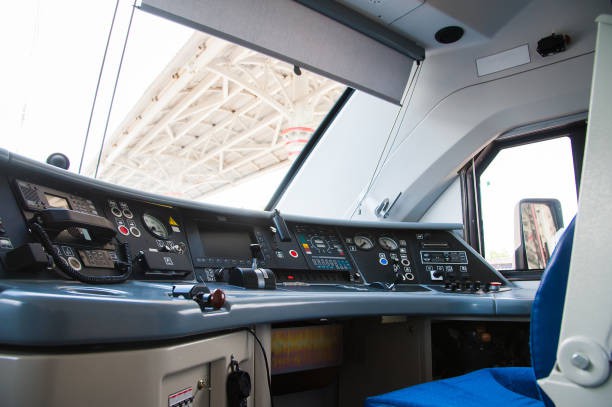
Fleet managers who upgrade to a consistent modern model across multiple locomotives also benefit from simplified maintenance and parts standardization – a practical advantage that reduces long-term operating costs significantly. When you consider the combined value of reduced absenteeism, lower injury claims, and improved operator retention, the return on investment for a quality seat upgrade becomes very clear.
Replacement vs. Upgrade: Understanding Your Options
When it comes to refreshing locomotive seating, there are two distinct paths to consider. A replacement means installing a new seat that matches the specifications of the original – same mounting pattern, similar dimensions, equivalent feature set. This is the right choice when the existing seat model has simply reached the end of its service life but still meets current ergonomic and safety standards. It is also the preferred route for operators managing tight maintenance schedules who need a fast, familiar swap with minimal disruption to regular service.
An upgrade, on the other hand, means stepping forward to a more capable design. For example, replacing a basic fixed seat with a modern model featuring mechanical suspension, 360° rotation, and 60 mm vertical travel is a meaningful improvement that pays dividends in operator wellbeing over time. Upgraded seats also tend to offer broader adjustability ranges, accommodating a wider variety of operator body types and driving positions. Both paths are widely supported by quality Locomotive Seat suppliers who can accommodate either standard replacement orders or complete ergonomic overhauls.
|
Criteria |
Replacement |
Upgrade |
|
Definition |
New seat matching original specs |
New seat with advanced features |
|
Best for |
Worn-out seat, current design still acceptable |
Outdated design, comfort/safety improvement needed |
|
Install complexity |
Low - direct bolt-on |
Medium - confirm mounting and clearance first |
|
Feature gain |
None - same as original |
Significant (suspension, rotation, adjustment range) |
|
Cost |
Lower upfront |
Higher upfront, stronger long-term ROI |
|
Best timing |
Emergency repair, limited budget, retiring fleet |
Long-term ops, driver health priority, fleet standardization |
The installation process itself is typically straightforward. Start by measuring your existing seat's mounting hole spacing and confirming cab clearance dimensions. Then select a compatible new model, verify the features you require, and – if needed – request a sample before committing to a full order. Most professional suppliers support bolt-off, bolt-on installation using standard slide rail systems, keeping downtime to a minimum. In most cases, a skilled maintenance technician can complete a seat swap within a single shift, allowing the locomotive to return to service quickly.
The Case for Choosing a Reliable Supplier
Not all seating solutions are equal, and selecting the right partner matters as much as selecting the right seat. When evaluating Locomotive Cab Seat suppliers, the key factors to look for are direct factory access, genuine customization capability, transparent pricing, and reliable after-sales support. Purchasing directly from the manufacturer eliminates middlemen markups, giving buyers the benefit of low price Locomotive Seat procurement without sacrificing quality. Factory-direct purchasing also shortens the communication chain between the buyer and the engineering team, making it far easier to resolve technical questions, request design modifications, or escalate warranty issues when they arise.

YSR Seating is one such factory-direct supplier, offering the YSR911-41 as a strong example of a modern locomotive cab seat upgrade. This model features a 360° rotating base, mechanical suspension, adjustable height, and dimensions of 550×1080×500 mm – purpose-built for railway locomotive, diesel locomotive, high-speed train, and subway driver applications. The seat is engineered to conform to the natural spine curve, reducing injury risk while maximizing operator focus across extended shifts.
Beyond product quality, the best suppliers also offer Wholesale Locomotive Seat purchasing options to support fleet-scale procurement, with no prohibitive minimum order quantities. The table below outlines the key criteria to evaluate when selecting a supplier:
|
Criteria |
Ideal standard |
Why it matters |
|
Factory-direct access |
No middlemen, EXW/FOB pricing |
Lower cost, faster issue resolution, quality control |
|
Customization support |
OEM & ODM, sample from drawings |
Adapts to non-standard cabs and special requirements |
|
Price transparency |
Ex-factory pricing published |
No hidden costs or markup surprises |
|
After-sales support |
12-month warranty, long-term spares |
Reduces total cost of ownership |
|
Minimum order qty |
MOQ 1 piece |
Accessible for single replacements and large fleets alike |
|
Global logistics |
Express, air, and sea freight |
Reliable delivery regardless of fleet location |
|
Quality certification |
ISO 9001 |
Verified quality management system |
YSR Seating accepts orders from as little as a single seat, making it equally accessible for one-off replacements and large-scale fleet upgrades alike. Combined with flexible international shipping options – including express courier, airfreight, and sea freight – the company is well-positioned to serve railway operators around the world, regardless of fleet size or location.
Customization: Getting Exactly What You Need
One of the most underappreciated advantages of working with modern seating manufacturers is the depth of Customized Locomotive Seat options available. Legacy seats were often one-size-fits-all, with limited accommodation for different operator body types or cab configurations. Today's manufacturers can tailor virtually every element – mounting bracket patterns, seat fabric and color, adjustment ranges, armrest configurations, headrest height, and even integration with advanced cab systems such as augmented reality displays or driver monitoring technology.
OEM and ODM support means suppliers can work from existing drawings to produce adapter solutions for non-standard cabs, or design seats from the ground up to meet a unique specification. This flexibility is particularly valuable for heritage locomotive restoration projects, where original mounting points may not align with any standard modern seat, and for transit agencies pursuing ergonomic upgrades across mixed locomotive fleets with varying cab geometries.

|
Item |
Options / range |
Application |
|
Mounting bracket |
Custom to original bolt pattern |
Fits different locomotive eras and models |
|
Fabric & color |
Industrial vinyl, anti-static textile, fire-retardant material, multiple colors |
Match cab interior, meet safety regulations |
|
Adjustment range |
Height 60mm+, backrest angle, slide-rail travel |
Accommodates operators of different heights |
|
Armrest config |
Single, dual, foldable, fixed |
Different operating habits and cab widths |
|
Headrest |
Height-adjustable or fixed |
Cervical support for long-shift operators |
|
Rotating base |
360° lockable |
Cabs requiring frequent rear-panel access |
|
Heating |
Electric heating element |
Cold-climate winter operations |
|
Suspension tuning |
Adjustable spring stiffness |
Different operator weights or track conditions |
Fabric selection deserves particular attention. Railway environments expose seating materials to significant abuse – oils, cleaning agents, UV exposure in glass-fronted cabs, and constant friction from operators entering and exiting throughout a shift. A quality Customized Locomotive Seat supplier will offer a range of materials rated for industrial durability, and choosing the right option from the outset significantly extends seat service life and reduces total cost of ownership. Always confirm that sample production is supported before committing to a full order – this protects procurement teams from volume commitments before fitment and comfort have been validated in the actual cab environment.
Frequently Asked Questions
Q: Can locomotive cab seats be replaced?
Yes. Most locomotive seats can be replaced with new units that match the original mounting pattern and dimensions. Many suppliers offer bolt-on replacements that can be installed within a single maintenance shift with minimal cab downtime.
Q: What is the difference between replacing and upgrading a seat?
Replacement means installing a seat with the same specifications as the original. An upgrade means moving to a modern model with advanced features – such as mechanical suspension, 360° rotation, ergonomic adjustment, and better materials – that deliver measurable improvements in operator comfort and safety.
Q: How do I choose a locomotive seat supplier?
Look for factory-direct suppliers with ISO 9001 certification, OEM/ODM customization capability, low MOQ (1 piece minimum is ideal), transparent ex-factory pricing, and a minimum 12-month warranty. Direct sourcing eliminates middleman markups and speeds up technical communication.
Q: Can I get a custom seat for a non-standard locomotive cab?
Yes. Manufacturers offering OEM/ODM support can customize mounting brackets, dimensions, fabric, adjustment ranges, and optional features – including heating and rotation – based on your drawings or field measurements.
Q: What is the minimum order quantity for locomotive seat procurement?
Quality suppliers such as YSR Seating accept orders from as little as 1 piece, making it practical to trial a new model or fulfill a single emergency replacement before committing to fleet-wide procurement.
Q: How long does delivery take, and what shipping options are available?
Delivery timelines depend on urgency and destination. Most factory-direct suppliers offer express courier, airfreight, and sea freight options – allowing buyers to match shipping mode to budget and lead-time requirements.
Conclusion: Upgrade Your Locomotive Cab Seat Today
Replacing or upgrading a locomotive cab seat is one of the most cost-effective investments a railway operator can make. The benefits are immediate and measurable: reduced operator fatigue, lower injury risk, improved safety, and a more productive working environment across every shift. Whether you need a direct like-for-like swap or a comprehensive ergonomic upgrade, today's market offers factory-direct access to high-quality solutions at competitive prices. The combination of modern suspension technology, broad adjustability, and deep customization capability means there is no longer any reason to leave operators working in substandard seating conditions when better alternatives are readily available.
Investing in quality locomotive seating is not simply a maintenance decision – it is a commitment to the long-term health and performance of your workforce. Operators who feel physically supported and comfortable throughout their shifts demonstrate better decision-making, faster reaction times, and lower rates of sick leave. For railway operators competing in an environment where safety records and service reliability directly influence contracts and public confidence, these advantages are impossible to ignore.
Ready to replace or upgrade your locomotive cab seats? Contact YSR Seating today for a quote, sample request, or customization consultation. Enjoy ex-factory pricing, no middlemen, MOQ of just 1 piece, and a 12-month warranty – with worldwide shipping by express, air, or sea freight.
Phone: +86-029-81136503
Email: sales@ysrseats.com
WhatsApp: +86-13991337062
WeChat: 18992819914
Related Articles
What is a locomotive cab seat?
Why do locomotive seats have suspension systems?
Do locomotive cab seats reduce fatigue and back pain?
What features do locomotive cab seats have?
Are locomotive seats adjustable for different drivers?
How are locomotive seats different from truck seats?
Do all locomotives have seats for drivers?
Where is the driver's seat located in a locomotive?
What is the standard size of a locomotive cab seat?
Can locomotive cab seats be replaced or upgraded?