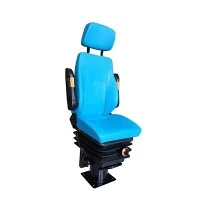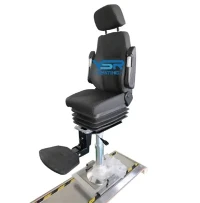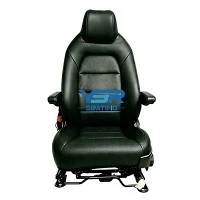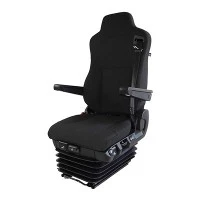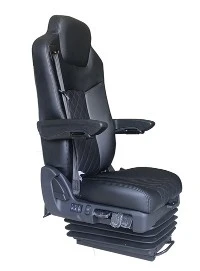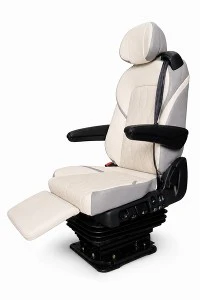


When you picture the cab of a modern locomotive, one element is almost always present: a purpose-built Locomotive Cab Seat designed to keep the operator safe, comfortable, and in full control through long hours on the rails. But is this truly universal across all types of locomotives? The short answer is yes - with only a handful of historical or highly specialized exceptions. Understanding why dedicated seating matters, what features today's seats must offer, and how to choose the right supplier can make a genuine difference to fleet safety and operator wellbeing.
Nearly Universal - But Not Without Exceptions
In mainstream rail operations today - covering diesel freight locomotives, electric passenger trains, high-speed rail, and urban subways - ergonomically engineered locomotive seats are considered standard, non-negotiable equipment. Regulatory bodies across Europe, Asia, and North America increasingly mandate that driver seating meet minimum ergonomic and vibration-dampening standards, recognizing that an uncomfortable or unsupported driver is a safety risk.
That said, a few categories of rail vehicle do operate without conventional seating. Early steam locomotives from the 19th and early 20th centuries often provided nothing more than a wooden ledge or required the driver to stand entirely. Some compact industrial locomotives used in mines or quarries are designed for standing operation in confined spaces. And modern remote-controlled shunters, which move rail cars around marshaling yards without any onboard crew, require no seat at all. These are the exceptions, however - for every mainstream passenger or freight service running today, proper driver seating is both a practical necessity and a legal requirement.

Why Dedicated Seating Is Non-Negotiable
The physical demands placed on locomotive drivers are significant and often underappreciated. Shifts routinely run eight to twelve hours, during which the operator must remain alert, react quickly to signals, and access a wide array of controls. Throughout that entire period, the seat is the driver's primary interface with the cab environment - and the quality of that interface has measurable consequences.
Rail vibration is one of the most serious concerns. Constant low-frequency vibration transmitted through the floor and chassis causes cumulative spinal damage over a career if it is not absorbed before it reaches the driver's body. This is why high-quality low price Locomotive Seat options with genuine mechanical suspension are far more valuable than they might initially appear - the cost of a premium seat is trivial compared to the long-term healthcare costs associated with chronic back injuries.
Equally important is operational access. A driver who must twist awkwardly to reach rear-facing instruments, or who is seated too low to maintain a clear sightline down the track, is a driver working under unnecessary strain. Modern seats address this through 360-degree rotation, height adjustment, and slide-rail positioning, allowing each operator to configure the cab to their individual body dimensions and task requirements. The rotating base in particular - a feature found on the YSR911-41 and comparable professional-grade seats - is considered essential for locomotives where the driver must occasionally face rearward during shunting or reversing operations.

Key Features of a Modern Locomotive Driver Seat
For procurement managers and fleet operators evaluating Wholesale Locomotive Seat options, understanding the core feature set is essential to making a sound investment. The following characteristics define a professional-grade railway driver seat:
- Mechanical suspension is the foundation. A properly engineered suspension system absorbs the vertical shock and vibration inherent to rail travel, protecting the lumbar spine and reducing fatigue over a full shift. Look for systems with adjustable damping that can be tuned to the driver's weight.
- 360-degree rotation enables the driver to access rear controls and communicate with crew without leaving the seat or straining their back. Combined with a locking mechanism that secures the seat in any chosen position, this feature dramatically improves both safety and workflow efficiency.
- Vertical and fore-aft adjustment accommodates the range of driver heights and builds that any fleet will encounter. A vertical range of around 60 mm, paired with a sliding base rail, allows precise positioning relative to the control console.
- Lumbar support and backrest recline round out the ergonomic package. A recline range extending to around 121 degrees allows the seat to transition between an upright working posture and a slightly reclined rest position during appropriate periods, reducing muscle fatigue without compromising readiness.
For fleets looking to work with Locomotive Seat suppliers directly, factory-sourced seats that incorporate all of these features - without passing costs through multiple layers of distributors - represent the best value proposition.
Choosing the Right Supplier for Your Fleet
Whether you are outfitting a new fleet, replacing worn seating across existing rolling stock, or sourcing components for a heritage railway restoration, the supplier relationship matters as much as the product itself. Several factors distinguish reliable Customized Locomotive Seat manufacturers from commodity vendors.
First, look for factory-direct supply. Working with manufacturers who produce seats in-house - rather than assembling from outsourced components - gives you greater quality control, faster lead times, and more competitive pricing. This is the model followed by specialized Locomotive Cab Seat suppliers like YSR Seating, which offers ex-factory pricing with no middlemen and a 12-month product warranty.

Second, consider customization capability. Rail operators around the world work with differing cab layouts, climate conditions, and regulatory requirements. A supplier with genuine OEM and ODM capability can adapt seat dimensions, upholstery materials, armrest configurations, and mounting systems to match your specific application - something a generic catalog vendor simply cannot offer.
Third, evaluate long-term support. Locomotive seats are subject to hard use, and access to spare parts, technical documentation, and after-sales service is essential to keeping your fleet operational.
Conclusion
Do all locomotives have seats for drivers? In every modern, mainstream rail operation - whether freight, passenger, high-speed, or urban transit - the answer is an unequivocal yes. The driver's seat is safety-critical equipment, not an amenity. For fleets still operating with outdated or inadequate seating, upgrading to a properly engineered locomotive driver seat delivers immediate benefits: reduced injury rates, improved operator alertness, and compliance with evolving ergonomic regulations.
Ready to equip your locomotives with modern, factory-direct driver seats? Contact YSR Seating today for a quote, sample request, or OEM/ODM customization.
Phone: +86-029-81136503
Email: sales@ysrseats.com
WhatsApp: +86-13991337062
WeChat: 18992819914
Related Articles
What is a locomotive cab seat?
Why do locomotive seats have suspension systems?
Do locomotive cab seats reduce fatigue and back pain?
What features do locomotive cab seats have?
Are locomotive seats adjustable for different drivers?
How are locomotive seats different from truck seats?
Do all locomotives have seats for drivers?
Where is the driver's seat located in a locomotive?
What is the standard size of a locomotive cab seat?