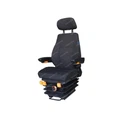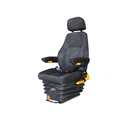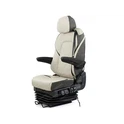


When it comes to professional-grade seating for heavy vehicles, not all seats are created equal. A Locomotive Cab Seat is engineered to meet a completely different set of demands compared to a standard truck seat. While both types of operators spend long hours in the cab and face significant physical fatigue, the environments they work in - and the challenges their seats must address - are worlds apart. In short, locomotive seats differ from truck seats in five fundamental ways: mechanical suspension tuned for high-frequency rail vibration, a 360° rotating base for rear control access, a raised seat base for visibility, a single-lock slide rail, and a design lifespan of 15–20 years. Understanding these differences is essential for fleet managers, railway operators, and procurement teams who need to make the right seating investment.
The Operating Environment: Rails vs. Roads
The most fundamental difference between locomotive seats and truck seats begins with the environment itself. Truck drivers navigate highways, off-road terrain, and construction sites. Their seats are designed primarily to absorb low-frequency shocks from potholes, uneven pavement, and rough ground - and air suspension systems do this job well.
Locomotive operators, by contrast, face continuous high-frequency vibrations generated by rail joints, track irregularities, and the constant motion of a heavy train running at speed. A standard truck seat simply cannot absorb this type of vibration effectively. Locomotive seating solutions - including models like the YSR911-41 - use mechanical suspension systems specifically tuned to dampen rail-generated vibrations, protecting the operator's spine over long shifts that can stretch across hundreds of miles.
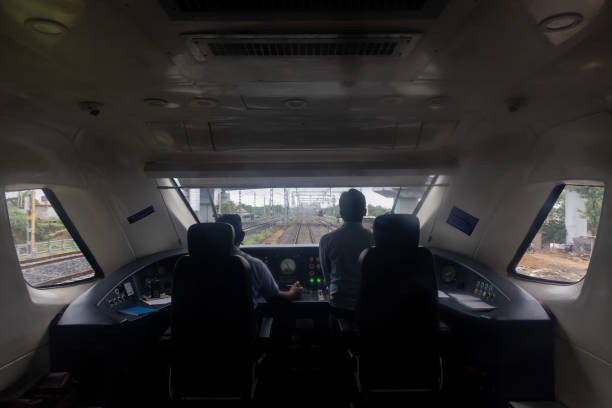
Beyond vibration, the cab layout itself differs dramatically. Truck cabs are designed with a fixed, forward-facing control panel. Locomotive cabs, however, often position controls on multiple sides of the operator, including behind them. The table below summarizes these core environmental and design contrasts:
|
Comparison Dimension |
Locomotive Seat (e.g. YSR911-41) |
Truck Seat |
|
Primary vibration type |
High-frequency (rail joints, switches) |
Low-frequency (potholes, speed bumps) |
|
Suspension type |
Mechanical (~60 mm travel) |
Mainly air suspension |
|
Rotating base |
360° lockable (standard) |
Fixed or ≤180° limited swivel |
|
Seat base height |
Raised base (standard) |
Standard height |
|
Slide rail system |
Single-lock |
Dual-lock (common) |
|
Vertical adjustment range |
60 mm (customizable) |
80–100 mm |
|
Backrest recline range |
80° forward + 41° recline = 121° |
Typically 90–120° recline |
|
Design lifespan |
15–20 years |
5–8 years |
360° Rotation and Heightened Base: Locomotive-Specific Features
One of the most distinctive features you will find in any quality Wholesale Locomotive Seat is a 360° rotating base. The YSR911-41 includes this as a standard feature. This full rotation allows the locomotive engineer to quickly access rear-mounted controls, respond to emergency instruments, or communicate with crew members without straining or twisting the spine - a motion that, repeated over thousands of shifts, can lead to serious musculoskeletal injuries.
Truck seats are typically fixed-facing or offer only a limited swivel of up to 180°. Full rotation is simply unnecessary in a truck cab where all controls are positioned directly in front of the driver.
The heightened seat base is another locomotive-specific design element. Locomotive cabs tend to be tall and expansive, and operators must maintain clear visibility of both the track ahead and the instrument panels. A raised seat base ensures proper sightlines without forcing the operator to slouch or crane their neck.
|
Feature |
Specification |
Why Locomotives Need It |
Required in Trucks? |
|
360° rotating base |
Lockable, standard fit |
Access rear controls, communicate with crew |
❌ Rarely needed |
|
Raised seat base |
Customizable height |
Improve sightlines over cab instrument panels |
❌ Uncommon |
|
Mechanical suspension |
~60 mm vertical travel |
Absorb high-frequency rail vibration |
❌ Air suspension preferred |
|
Single-lock slide rail |
Forward/rear slide, single-point lock |
Suits linear train motion, reduces complexity |
⚠️ Dual-lock more common |
|
Forward-tilt backrest |
80° forward range |
Allows operator to lean forward for certain controls |
❌ Rarely required |

Adjustment Ranges, Slide Rails, and Ergonomic Customization
Adjustment capability is another area where the two seat types diverge. Locomotive Seat suppliers design their products to accommodate operators across a wide range of body types while keeping them securely positioned in a moving vehicle. The YSR911-41 offers a vertical height adjustment of 60 mm (customizable), a backrest recline range of 121° total, and a single-lock slide rail system.
That single-lock slide rail is worth noting. In a highway truck, a dual-lock rail system offers extra security for road conditions involving sharp acceleration, braking, and cornering. In a locomotive, the motion profile is different - trains move in a linear path with gradual deceleration - so a single-lock rail provides secure positioning with less mechanical complexity.
Typical truck seats often provide greater vertical travel (80–100 mm) because truck drivers come in a wider variety of heights and cab geometry varies more between vehicle models. Reputable Customized Locomotive Seat manufacturers like YSR Seating offer full OEM and ODM customization to meet individual railway operator requirements, including bespoke mounting plates for retrofit installations.
Durability, Standards, and Procurement Considerations
Durability requirements for locomotive seating go beyond what most truck seats are built to handle. Locomotive Cab Seat suppliers who understand this market - such as YSR Seating - design their products to ISO9001 standards, using materials and construction methods that can withstand the constant vibration, humidity variations, and mechanical wear of a railway environment over decades of service.
|
Dimension |
Locomotive Seat |
Truck Seat |
|
Service life |
15–20 years |
5–8 years |
|
Vibration exposure |
Continuous high-frequency |
Moderate, intermittent |
|
Environmental conditions |
Temperature/humidity variation, long-term service |
Road dust, temperature variation |
|
Material standard |
Fatigue-resistant, anti-aging |
Wear-resistant, weatherproof |
|
Typical replacement trigger |
Fleet refurbishment or upgrade |
Wear or vehicle resale |
For operators concerned about budget, factory-direct purchasing has made it possible to access a low price Locomotive Seat without sacrificing quality. By sourcing directly from manufacturers rather than through distribution chains, railway companies can access premium seating at competitive prices, whether ordering a single replacement seat or a full fleet supply.

Truck seats are typically designed for shorter replacement cycles - the commercial trucking industry has a more standardized replacement market, and trucks themselves change hands more frequently than railway rolling stock. This means truck seat manufacturers can optimize for a shorter product lifecycle, a design philosophy that is simply not appropriate for the rail sector.
Frequently Asked Questions
What is the biggest difference between a locomotive seat and a truck seat?
The biggest differences are the 360° rotating base and raised seat height required in locomotive cabs for rear control access and visibility, combined with mechanical suspension tuned for high-frequency rail vibration - none of which are standard features in truck seats, which use air suspension for lower-frequency road shocks.
Can I install a truck seat in a locomotive cab?
It is not recommended. Truck seats lack 360° rotation, a raised base, and the correct suspension tuning for rail vibrations. Using the wrong seat compromises operator safety, comfort, and long-term health.
Do locomotive seats have air suspension?
Most locomotive seats use mechanical suspension tuned for high-frequency rail vibration. Air suspension is less common in rail applications because it is optimized for the lower-frequency inputs typical of road driving.
How long do locomotive seats last compared to truck seats?
Locomotive seats are built for 15–20 years of service, aligning with railway rolling stock lifecycles. Truck seats typically last 5–8 years due to shorter vehicle replacement cycles.
Conclusion: Choosing the Right Seat for the Right Vehicle
The differences between locomotive seats and truck seats are not superficial. From the 360° rotating base and heightened seat platform to the mechanical suspension tuned for rail vibrations and the single-lock slide rail system, every feature of a dedicated locomotive seat exists for a specific engineering reason. Choosing a generic truck seat for a locomotive cab - or vice versa - means compromising operator safety, comfort, and long-term health.

For railway operators, fleet managers, and procurement teams looking for the right seating solution, YSR Seating offers expert guidance, factory-direct pricing, and full OEM/ODM customization support. Whether you need a single Locomotive Cab Seat replacement or a large-volume wholesale order, YSR Seating delivers premium quality with no middlemen.
Contact YSR Seating today to request a sample, get a quote, or discuss customization options:
Phone: +86-029-81136503
Email: sales@ysrseats.com
WhatsApp: +86-13991337062
WeChat: 18992819914
Related Articles
What is a locomotive cab seat?
Why do locomotive seats have suspension systems?
Do locomotive cab seats reduce fatigue and back pain?
What features do locomotive cab seats have?
Are locomotive seats adjustable for different drivers?
How are locomotive seats different from truck seats?
Do all locomotives have seats for drivers?
Where is the driver's seat located in a locomotive?
What is the standard size of a locomotive cab seat?