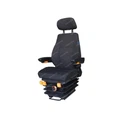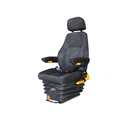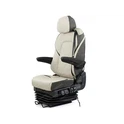


Locomotive seats have suspension systems to protect operators from whole-body vibration caused by rail joints, switches, and track irregularities - reducing chronic injury risk, slowing fatigue onset, and keeping drivers safely in control throughout their shift.
For anyone who has ever ridden in the cab of a working locomotive, the relentless rhythm of vibration underfoot is immediately noticeable. For the operators who spend eight to twelve hours a day in that environment, those vibrations are not just uncomfortable - they are a serious occupational health hazard. This is precisely why every professional Locomotive Cab Seat on the market today is engineered with a dedicated suspension system. Far from being a luxury add-on, suspension technology is a fundamental safety and ergonomic requirement that protects drivers, improves focus, and extends productive working life.
What Suspension Systems Actually Do - And Why They Matter
Railway tracks are never perfectly smooth. Joints, switches, minor misalignments, and wear all generate continuous vertical and horizontal shocks that travel directly up through the locomotive frame and into the driver's seat. Without a properly engineered suspension system, these forces transfer straight into the human spine, hips, and lower back, accumulating over months and years into chronic musculoskeletal injuries.
Modern locomotive seats address this through mechanical suspension systems - typically featuring a vertical travel range of around 60 mm - that act as a buffer between the vehicle structure and the operator's body. The suspension compresses and rebounds in response to track-induced motion, absorbing the energy before it reaches the driver. The result is a dramatically smoother ride that reduces whole-body vibration (WBV) to levels consistent with occupational health standards.
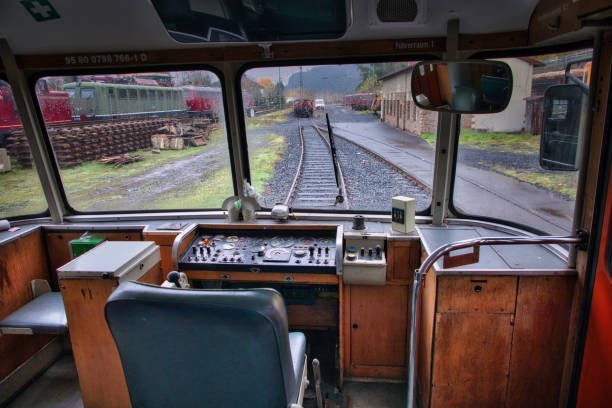
This matters not only for long-term health but also for immediate safety. A driver who is being constantly jostled cannot maintain precise, controlled contact with the instruments and controls in front of them. A well-suspended seat keeps the operator stable and correctly positioned, which is critical when quick reactions - emergency braking, for example - are required.
Key Features That Define a High-Performance Railway Seat
The suspension mechanism is the heart of a quality locomotive seat, but it works in concert with several other engineered features. The YSR911-41, produced by YSR Seating as a factory-direct low price Locomotive Seat solution for rail operators worldwide, illustrates this well.
|
Feature |
Specification |
Benefit |
|
Mechanical Suspension |
~60 mm vertical travel |
Absorbs shocks from rail joints and switches |
|
Backrest Adjustment |
Wide angular range |
Supports upright and rest postures without losing suspension |
|
Lumbar Support |
Conforms to spinal curvature |
Reduces static muscle loading over long shifts |
|
Rotating Base |
360°, lockable |
Full cab mobility without standing |
|
Slide Rail |
Single-lock, fore-aft adjustable |
Fits operators of different builds |
|
Heightened Seat Base |
Raised platform |
Improves sightlines over the control console |
|
Upholstery |
Customizable fabric and color |
Fleet standardization or bespoke installation |
For operators or procurement teams sourcing through Wholesale Locomotive Seat channels, this combination of performance and configurability represents strong value at scale, with full OEM and ODM support available for new-build and retrofit programs alike.
Operational Benefits: Safety, Health, and Productivity
The business case for investing in properly suspended locomotive seats is straightforward. Driver fatigue is one of the leading contributing factors in railway incidents globally. Whole-body vibration accelerates fatigue onset - a driver who is physically uncomfortable loses concentration faster, makes more errors, and is more likely to miss critical signals or react slowly to hazards.

The following comparison illustrates the operational difference between suspended and unsuspended seating:
|
Dimension |
Without Suspension |
With Suspension (e.g. YSR911-41) |
|
Whole-Body Vibration Exposure |
High - forces transfer directly to operator |
Significantly reduced, within health standards |
|
Fatigue Onset |
Rapid accumulation, reduced alertness |
Slow accumulation, sustained focus |
|
Incident Risk |
Higher (slower reaction time) |
Lower |
|
Back Pain / Injury Rate |
High |
Low |
|
Absenteeism |
High |
Low |
|
Long-Term Health Cost |
High |
Low |
By contrast, a driver seated in an ergonomically sound, suspension-equipped cab seat maintains better alertness throughout a shift. Studies in occupational health consistently show that reducing WBV exposure improves both comfort scores and cognitive performance in operators of heavy vehicles and rail equipment. The downstream effects include fewer incidents, lower absenteeism due to back and joint injuries, and reduced long-term disability claims - all of which represent measurable cost savings for rail operators and fleet managers.
For procurement teams evaluating Locomotive Seat suppliers, these operational benefits should weigh heavily alongside unit cost. A seat that fails after two years or contributes to driver injury is far more expensive in total than a higher-quality product sourced from a certified manufacturer. ISO9001-certified suppliers with verifiable factory production offer the quality controls and documentation that responsible fleet procurement requires.
Choosing the Right Supplier and Customization Options
The global rail industry encompasses a wide range of operating environments - high-speed passenger trains, heavy-haul freight locomotives, diesel shunters, and urban metro systems all have different cab configurations and duty cycles. This diversity is why flexibility in seat design matters.
Customized Locomotive Seat solutions allow operators to specify everything from suspension travel range and weight adjustment to seat dimensions, armrest configuration, and fabric grade. The table below summarizes key considerations for any serious procurement process:
|
Procurement Factor |
Recommendation |
|
Supplier Type |
Factory-direct preferred - eliminates distributor markup |
|
Quality Certification |
ISO9001 - ensures controlled manufacturing process |
|
Customization Capability |
OEM/ODM support for different cab types and rail applications |
|
Warranty |
12 months minimum |
|
Price Transparency |
Request EXW (ex-factory) pricing for accurate cost comparison |
|
Spare Parts Availability |
Confirm long-term parts supply before committing |

When evaluating Locomotive Cab Seat suppliers, buyers should look for direct factory access, transparent pricing, and clear warranty terms. Factory-direct sourcing eliminates distributor markups that can add significant cost without adding product value. YSR Seating offers ex-factory pricing, no-middleman supply chains, and a 12-month product warranty - terms that reflect confidence in the manufacturing process and provide procurement teams with predictable total cost of ownership.
Frequently Asked Questions
Why do locomotive seats need suspension systems?
Rail tracks have joints, switches, and irregularities that generate continuous vibration. Suspension seats absorb these shocks before they reach the operator's spine, reducing whole-body vibration exposure, preventing chronic back injuries, and improving safety.
What is the typical suspension travel in a locomotive seat?
Most quality locomotive seats offer around 60 mm of vertical travel, which is sufficient to isolate operators from most track-induced vibrations under normal operating conditions.
Can locomotive seats be customized for different cab layouts?
Yes. Suppliers like YSR Seating offer OEM/ODM customization including seat dimensions, fabric selection, armrest configuration, rotation base, and suspension tuning to match specific locomotive models and cab environments.
Do suspended locomotive seats reduce driver fatigue?
Yes. By isolating the operator from constant vibration, these seats significantly slow the onset of fatigue, helping drivers stay alert through full shifts and reducing the risk of incidents caused by reduced concentration.

Conclusion
Suspension systems in locomotive seats are not an optional feature - they are a foundational element of safe, healthy, and productive rail operations. From absorbing the constant micro-shocks of steel wheel on steel rail, to supporting the driver's spine across a full working shift, a well-engineered Locomotive Cab Seat pays for itself many times over in reduced injury, improved alertness, and longer service life.
Whether you are outfitting a new fleet, retrofitting older cabs, or sourcing through Wholesale Locomotive Seat channels for a large-scale upgrade program, choosing a certified supplier with genuine factory-direct capabilities is the most important decision you can make.
Ready to upgrade your railway fleet with suspension-equipped cab seats built to last? Contact YSR Seating today for a quote, sample request, or OEM/ODM customization consultation. Enjoy ex-factory prices, no middlemen, and a 12-month warranty.
Phone: +86-029-81136503
Email: sales@ysrseats.com
WhatsApp: +86-13991337062
WeChat: 18992819914
Related Articles
What is a locomotive cab seat?
Why do locomotive seats have suspension systems?