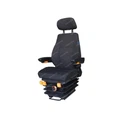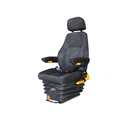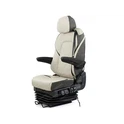

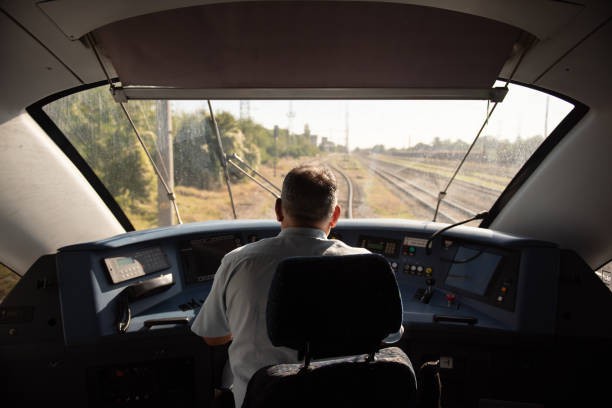
For locomotive drivers who spend eight to twelve hours confined to a cab - enduring constant vibration, repetitive posture, and intense concentration - the seat beneath them is far more than a piece of furniture. A well-engineered Locomotive Cab Seat is a frontline health and safety tool. The short answer to the question is yes: purpose-built cab seats, when properly designed with ergonomic principles and mechanical suspension, can significantly reduce both fatigue and chronic back pain. Research in occupational health and decades of real-world railway experience both point to the same conclusion: the quality of the operator's seat has a direct and measurable impact on physical wellbeing, mental alertness, and long-term musculoskeletal health. YSR Seating's model YSR911-41 is a prime example of what modern railway seating engineering can achieve for operators on long-distance and high-frequency routes.
It is worth understanding just how physically demanding the locomotive cab environment really is. Unlike office workers who can stand up, walk around, or change their environment throughout the day, locomotive drivers are bound to a fixed workstation for the entirety of their shift. They must maintain constant visual attention on the track ahead, operate controls that may require reaching or leaning, and endure a physical environment defined by noise, temperature extremes, and - most significantly - unrelenting mechanical vibration. These conditions, sustained over years and decades, contribute to a well-documented pattern of occupational health problems including chronic lower back pain, cervical spine degeneration, and systemic fatigue. Addressing these problems begins with the seat.
How Mechanical Suspension and Ergonomic Design Fight Fatigue
The root cause of locomotive operator fatigue is not simply long hours - it is whole-body vibration. Rail tracks transmit continuous shocks upward through the cab floor and into the operator's spine, muscles, and joints. Over a full shift, this accumulation of micro-impacts leads to deep muscle fatigue, reduced alertness, and impaired reaction time. Studies on whole-body vibration exposure in transport workers have consistently found correlations between high vibration levels and increased rates of lumbar disc disorders, sciatic nerve pain, and general musculoskeletal complaints. Quality locomotive seats address this at the source through mechanical suspension systems that absorb and dampen vertical vibrations before they reach the operator's body. The YSR911-41 integrates this suspension directly into the seat base, creating a physical buffer between the track and the driver.
Beyond vibration control, ergonomic design plays an equally important role. A seat that forces the spine into an unnatural position - even slightly - becomes a source of constant muscular effort as the body works to maintain stability. Over the course of an eight-hour shift, those small muscular efforts accumulate into significant fatigue. Purpose-built locomotive cab seats are contoured to follow the natural curvature of the lumbar spine, reducing the muscular workload required to simply sit upright. Integrated lumbar support maintains healthy alignment across the full duration of a shift, preventing the gradual collapse of posture that leads to muscle strain and disc compression. The seat back is designed not just to support the operator passively, but to actively encourage a neutral pelvic tilt - the foundational position from which all healthy seated posture flows. The combined effect is a measurable reduction in the physical toll of each working day, and over a career, a substantially lower risk of chronic spinal conditions.
Key Adjustability Features That Prevent Back Pain
Not all operators share the same body dimensions, and a seat that fits one driver poorly can cause injury over time. A seat set too low forces the operator to raise their shoulders and crane their neck to see the track ahead. A seat set too high leaves the legs unsupported, cutting off circulation and placing uneven pressure on the thighs and lower back. These may seem like minor inconveniences, but experienced railway health and safety professionals know that such mismatches, repeated daily, produce serious long-term consequences. This is why adjustability is a defining characteristic of professional-grade Wholesale Locomotive Seat solutions.
The YSR911-41 offers backrest recline across a range of 80 degrees plus 41 degrees, allowing the operator to shift pressure points and decompress spinal discs during a shift - a critical feature on routes lasting several hours. Even small positional changes, made at regular intervals, are known to significantly reduce the static load on intervertebral discs and improve circulation to the lower back. Vertical height adjustment of up to 60 mm ensures that operators of different heights can position themselves so that feet rest flat on the floor, relieving lower back tension that builds when legs are left dangling or over-compressed.
The heightened seat base design improves forward visibility without requiring the operator to hunch forward, a posture that compresses the thoracic spine and strains the neck and shoulders over time. Perhaps the most underappreciated feature in preventing back injury is the 360-degree rotating base. Locomotive drivers frequently need to access rear controls or communicate with crew behind them. Without a rotating seat, this requires repeated twisting of the lumbar and thoracic spine - a motion that, performed dozens of times per shift, is a leading cause of spinal injury in railway workers. A full-rotation seat eliminates this risk entirely by allowing the operator to turn the whole seat rather than their body. The single-lock slide rail system completes the safety picture by keeping the seat securely in position, preventing sudden jolts from shifting the operator unexpectedly and eliminating the micro-adjustments drivers otherwise make unconsciously - adjustments that themselves create cumulative muscular strain.
The materials used in seating construction also deserve attention. High-density foam cushioning, when correctly specified, distributes body weight evenly across the seat surface, preventing pressure hotspots that reduce circulation and accelerate fatigue. Breathable upholstery fabric further contributes to operator comfort on long shifts by preventing heat buildup, which is known to accelerate physical fatigue and reduce mental acuity. Every element of a professionally engineered locomotive cab seat works in concert toward a single outcome: keeping the operator comfortable, supported, and alert for the full duration of their working day.
Operational and Safety Benefits for Railway Operators
The benefits of investing in ergonomic Customized Locomotive Seat solutions extend well beyond individual comfort. Fatigue is directly correlated with reduced cognitive performance, slower reaction times, and increased error rates - all of which carry serious safety implications in railway operations. A driver who is well-supported and physically comfortable maintains sharper focus across a full shift. Research in occupational health consistently demonstrates that reducing physical discomfort leads to measurable improvements in concentration and decision-making - exactly the qualities that keep trains, passengers, and crews safe. In an industry where a momentary lapse in attention can have catastrophic consequences, the ergonomic quality of the operator's seat is not a luxury consideration - it is a safety-critical specification.

There is also an important human resources dimension to consider. Railway operators who experience chronic pain or fatigue as a result of poor seating are more likely to take sick leave, more likely to seek early retirement, and less likely to perform at their peak during their working years. The recruitment and training costs associated with high operator turnover are substantial. Investing in quality seating is, in this context, also an investment in workforce retention. Operators who feel that their employer takes their physical wellbeing seriously are demonstrably more engaged and more loyal - a benefit that extends far beyond the cab.
From a fleet management perspective, sourcing from reliable Locomotive Seat suppliers also delivers long-term operational value. Seats engineered for railway environments are built to withstand continuous vibration, temperature variation, and heavy daily use - conditions that quickly degrade consumer-grade alternatives. The YSR911-41 carries a 12-month warranty and is designed for applications ranging from diesel locomotives and high-speed trains to subway driver cabs, making it a versatile solution across diverse railway fleets. Procurement teams looking for low price Locomotive Seat options without sacrificing quality will find that factory-direct purchasing from manufacturers like YSR Seating eliminates distributor markups while maintaining full product standards. The result is premium ergonomic performance at a price point that makes fleet-wide upgrades financially practical rather than aspirational.
YSR Seating also recognizes that no two railway operations are identical. Cab dimensions, control layouts, regulatory requirements, and operator demographics all vary across networks and operators. This is why the ability to work with experienced Locomotive Cab Seat suppliers who offer genuine OEM and ODM customization capability is so valuable. Whether the requirement is a modified seat profile to fit a narrow cab, a specific upholstery material to meet fire safety standards, or a bespoke color scheme to match fleet livery, factory-direct manufacturers can accommodate these needs in ways that off-the-shelf suppliers simply cannot.
Conclusion: Invest in Your Operators, Invest in Safety
The evidence is clear. A properly engineered locomotive cab seat - equipped with mechanical suspension, lumbar support, multi-axis adjustability, and a full-rotation base - is one of the most effective investments a railway operator can make in workforce health and operational safety. Back pain and fatigue are not inevitable consequences of the job; they are engineering problems with engineering solutions. The technology exists today to dramatically reduce the physical burden placed on locomotive drivers, and the business case for doing so - spanning safety, productivity, retention, and liability - is compelling.
Working with qualified Locomotive Cab Seat suppliers ensures that your fleet is equipped with seats built specifically for the demands of railway operations, not adapted from other industries. Whether you require standard configurations or fully Customized Locomotive Seat designs to meet specific cab dimensions or regulatory requirements, YSR Seating offers factory-direct OEM and ODM solutions with no middlemen and no compromise on quality.
Don't let back pain and fatigue slow down your railway team. Contact YSR Seating today for factory-direct pricing, OEM/ODM customization, and a 12-month warranty. Request a sample or quote and experience the difference that purpose-built ergonomic seating makes.
Contact YSR Seating:
Phone: +86-029-81136503
Email: sales@ysrseats.com
WhatsApp: +86-13991337062
WeChat: 18992819914
Related Articles
What is a locomotive cab seat?
Why do locomotive seats have suspension systems?
Do locomotive cab seats reduce fatigue and back pain?
What features do locomotive cab seats have?
Are locomotive seats adjustable for different drivers?
How are locomotive seats different from truck seats?
Do all locomotives have seats for drivers?
Where is the driver's seat located in a locomotive?
What is the standard size of a locomotive cab seat?