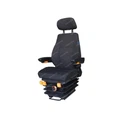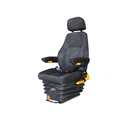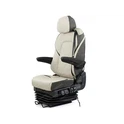


If you spend long hours behind the wheel, you've probably wondered whether upgrading to a Truck Mechanical Suspension Seat is worth the effort - and more importantly, whether it will even fit your vehicle. The good news is that in most cases, replacing your existing seat is a straightforward process that delivers significant rewards in comfort, safety, and long-term health. Worn-out factory seats offer little protection against the constant vibration and road shock that accumulate over a driving shift, contributing to back pain, fatigue, and reduced concentration. A modern mechanical suspension seat addresses all of these issues through a simple yet highly effective design that requires no electrical or air connections - making it compatible with virtually any truck, regardless of age or configuration. Whether you drive a long-haul commercial truck, a construction vehicle, or agricultural machinery, this upgrade is one of the most impactful improvements you can make to your working environment.
Why Your Current Seat May Be Failing You
Before diving into the replacement process, it's worth understanding why so many truck owners make the switch. Original factory seats are typically designed to meet a baseline standard rather than to optimize driver well-being over extended periods. Over time, foam compresses, cushioning degrades, and any built-in suspension loses its effectiveness. The result is a seat that transmits road vibration directly to your spine - a known contributor to musculoskeletal disorders among professional drivers. A mechanical suspension system works by isolating the seat from the chassis using a scissor-linkage mechanism and spring-damper assembly, absorbing the energy from bumps and vibrations before it reaches the driver. Unlike air suspension systems, which require a compressor and an ongoing power source, a mechanical suspension system is entirely self-contained. It operates through calibrated springs and dampers tuned to the driver's weight, making it reliable, low-maintenance, and energy-independent. For operators in demanding environments - from dusty construction sites to uneven farm terrain - this simplicity is a major practical advantage.

Will a New Seat Fit Your Truck?
Compatibility is usually the first concern for anyone considering a seat swap, and it's a reasonable one. The key factors to assess are mounting pattern, physical dimensions, and weight capacity. Most trucks use standardized floor mounting rails with common bolt patterns (such as 275×220 mm or 285×240 mm), which means a quality mechanical suspension truck seat will typically align with your existing hardware without modification. To confirm fitment, measure the width between your door panel and center console, check overhead clearance, and compare those figures against the seat's listed dimensions. For reference, a well-specified seat like the YSR 911-5B measures 660×1100×542 mm (W×D×H) and accommodates drivers weighing between 40 and 130 kg - a broad enough range to suit nearly any operator. If your truck has a non-standard mounting pattern due to its age, manufacturer, or specialized use, custom mounting bases are available and can be fabricated to match your vehicle's exact configuration, including options with 360° rotation for equipment that requires multidirectional operation. The bottom line: fitment challenges are solvable, and they shouldn't discourage you from making the upgrade.
The Replacement Process: Simpler Than You Think
One of the most appealing aspects of switching to a mechanical suspension seat is how manageable the installation process is. Because the system requires no electrical wiring or pneumatic connections, you're working with a straightforward bolt-in replacement. Start by disconnecting your truck's battery as a precaution, then remove the four mounting bolts securing your current seat and lift it clear of the cab - having a second person on hand is recommended given that a quality seat typically weighs around 35 kg. Once the old seat is out, clean the mounting area and compare the new seat's base pattern to your floor rails. If they align, position the new seat, insert the bolts with thread locker applied, and torque them to the manufacturer's specification (typically 40–50 Nm). The entire process generally takes between one and two hours for a confident DIYer, and less for a professional installer. After mounting, take time to configure all available adjustments: weight/suspension setting, horizontal slide travel, height, seat rake, backrest angle, and headrest position. A properly configured mechanical suspension truck seat should feel noticeably different from the first moment you sit in it - responsive to your movements rather than rigid and unyielding.
|
|
|
|
|


Long-Term Value and Choosing the Right Product
Investing in a quality seat replacement pays off in ways that go beyond immediate comfort. Reduced physical fatigue translates directly into sharper focus and safer driving, particularly during long shifts or demanding off-road conditions. From a cost perspective, a mechanical suspension system offers a lower entry price than air suspension alternatives and demands minimal ongoing maintenance - no compressor to service, no air lines to inspect, and no electronic components to troubleshoot. Look for a seat built on a heavy-duty steel frame with high-quality fabric options, an integrated three-point safety belt, and reinforced shoulder protection. Certifications such as ISO9001 are a reliable indicator of consistent manufacturing standards. It's also worth sourcing directly from the manufacturer where possible, as factory-direct purchasing eliminates middlemen markups and gives you direct access to technical support for compatibility questions or custom base requests. A one-piece minimum order quantity is a useful feature for individual truck owners who don't need bulk quantities but still want access to commercial-grade seating.

Conclusion
Replacing your truck's existing seat with a mechanical suspension seat is one of the most practical upgrades available to any driver who values comfort, safety, and long-term physical well-being. The process is accessible, the compatibility challenges are manageable, and the benefits - reduced vibration, better posture support, and improved alertness - are felt from day one. Whether you're running long highway miles, operating heavy equipment, or working agricultural land, the right seat makes every hour in the cab more productive and less punishing on your body. If you're ready to make the switch, reach out to YSR Seating Factory for expert guidance on compatibility, custom mounting solutions, and factory-direct pricing.
📞 Phone: +86-029-81136503
📧Email: sales@ysrseats.com
💬WhatsApp: +86-13991337062
📱WeChat: 18992819914
Related Articles
What's the difference between mechanical suspension and air suspension seats in trucks?
Do mechanical suspension truck seats reduce driver fatigue and back pain?
How do I choose the right mechanical suspension seat for my truck?
Will a mechanical suspension seat fit my truck's cab or mounting rails?
How do I install a mechanical suspension seat in a truck?
Can I install a mechanical suspension seat myself?
How much vibration do mechanical suspension seats absorb compared to rigid seats?
What are the key features of a good truck mechanical suspension seat?
What are the weight capacity and adjustment ranges for truck mechanical seats?
Are mechanical suspension seats worth the cost vs. air ride seats?
How do I maintain and clean a truck mechanical suspension seat?
Maintenance and durability of mechanical suspension seats
Can I replace my truck's existing seat with a mechanical suspension seat?