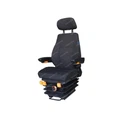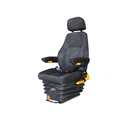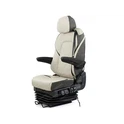


When evaluating seating options for commercial vehicles, understanding the full scope of adjustability is just as important as understanding load ratings. A well-specified Truck Mechanical Suspension Seat is engineered to accommodate a wide range of driver body types while actively isolating vibration - making it a cornerstone of both driver comfort and long-term health. The YSR 911-5B from YSR Seating Factory serves as an excellent benchmark, offering a comprehensive suite of ergonomic adjustments that address the real-world diversity of professional drivers. From weight calibration to backrest recline, every adjustment feature plays a specific role in how effectively the seat performs across different operators and applications.
Weight Adjustment: The Foundation of Suspension Performance
The most critical - and often overlooked - adjustment on any mechanical suspension seat is the weight setting. Unlike air suspension seats that adjust automatically, a mechanical system requires the driver to manually set the spring pre-load to match their body weight. When this setting is incorrect, the consequences are significant: a spring calibrated too soft will allow the seat to bottom out under load, while one set too firm will transmit vibration directly to the driver rather than absorbing it. The YSR 911-5B supports a weight adjustment range of 40–130 kg, which covers approximately 95% of the adult driver population. This wide range is particularly valuable in fleet operations where multiple drivers share the same vehicle - each driver can quickly dial in their weight setting before a shift, ensuring the mechanical suspension system operates within its optimal travel window from the very first mile.
Beyond fleet flexibility, the 40–130 kg span also future-proofs procurement decisions. Operators don't need to source different seat models for lighter or heavier drivers; one model handles the full spectrum. The YSR 911-5B provides ±30 mm of suspension travel, which only delivers its full vibration-absorbing potential when the weight is properly dialed in. Improper adjustment effectively wastes a portion of that travel range, leaving the driver exposed to the very vibrations the seat was designed to eliminate.

Horizontal, Height, and Rake Adjustment: Building the Right Driving Position
Once the suspension is correctly calibrated, the next priority is positioning the driver correctly relative to the vehicle's controls. Horizontal (fore-aft) adjustment allows the seat to slide forward and backward along its rail, and the YSR 911-5B offers a 200 mm stroke - enough to comfortably accommodate drivers ranging from approximately 5'0" to 6'5" in height. This range ensures that shorter drivers can fully depress the clutch and brake pedals without stretching, while taller drivers can maintain the slight knee bend that ergonomics best practices recommend.
Height adjustment adds another dimension to the fit equation. The YSR 911-5B provides ±60 mm of vertical adjustment, allowing drivers to optimize their sightlines over the hood and align properly with the steering wheel. This is particularly relevant in heavy-duty trucks where cab height varies and where mirror visibility depends heavily on the driver's seated eye level. Paired with the height adjustment, the seat's ±12° rake adjustment fine-tunes the angle of the seat cushion. Tilting the cushion slightly forward redistributes pressure away from the underside of the thighs, improving circulation during long hauls. Tilting it backward encourages a more reclined posture that reduces lower back loading. Together, height and rake give drivers the ability to construct a truly customized seated position - one that supports the pelvis correctly and reduces cumulative spinal stress over a full working day.
Backrest and Headrest Adjustment: Spinal Support and Safety
The backrest on a mechanical suspension truck seat must do double duty: support the spine during active driving and allow a degree of recline during mandatory rest breaks. The YSR 911-5B delivers on both fronts with a backrest range of 80° + 41° - an upright arc of 80° covering all normal driving positions, plus an additional 41° of recline for rest periods when the vehicle is stationary. This 121° total range means drivers aren't forced into a single fixed posture for hours on end. Periodic position changes, even minor ones, meaningfully reduce muscle fatigue and help maintain alertness.
Headrest adjustment is the final piece of the ergonomic puzzle. The YSR 911-5B headrest travels 75 mm across three positions, ensuring it can be aligned behind the skull - not the neck - for drivers of different heights. A properly positioned headrest serves a dual purpose: it reduces neck fatigue during long drives and provides genuine whiplash protection in the event of a rear-end collision. A fixed headrest, by contrast, may sit at entirely the wrong height for a given driver, offering neither comfort nor safety benefit. For a seat that may be used by multiple drivers, three discrete height positions represent a practical minimum for adequate coverage.
|
|
|
|
|


How the YSR 911-5B Compares - and Why Adjustment Range Matters for Selection
When purchasing seats for a fleet or specialized vehicle application, adjustment range is often underweighted in the buying decision relative to price. However, a seat with a narrow weight range (for example, 50–100 kg) will underperform for drivers outside that band regardless of its other qualities. Similarly, a seat with limited horizontal travel may force taller drivers into a compromised posture that contributes to musculoskeletal injury over time - a cost that far exceeds any savings made at the point of purchase.
The YSR 911-5B occupies a compelling position in the market: its adjustment specifications are competitive with premium air suspension seats, while its mechanical suspension design keeps the price accessible and maintenance requirements low. Mechanical systems have no compressor, no air lines, and no electrical components to fail - an important consideration in harsh agricultural, mining, or construction environments where pneumatic systems can be compromised by dust, moisture, or vibration-induced fatigue in fittings. The full adjustment summary for the YSR 911-5B is as follows: weight adjustment 40–130 kg, horizontal stroke 200 mm, height adjustment ±60 mm, rake ±12°, backrest 80°+41°, headrest 75 mm (3 positions), and suspension travel ±30 mm. Each of these specifications serves a distinct ergonomic purpose, and together they define a seat that can accommodate virtually any professional driver in any standard truck or heavy machinery cab.

Conclusion
The weight capacity and adjustment ranges of a truck seat are not secondary specifications - they are the primary determinants of whether the seat will actually perform for the range of drivers who use it. A mechanical suspension seat that is correctly adjusted to a driver's weight will absorb vibration efficiently, reduce fatigue, and protect the spine over years of professional use. One that is incorrectly set, or that lacks the range to accommodate a given driver, provides far less benefit than its engineering otherwise allows. The YSR 911-5B demonstrates that a mechanical suspension system can deliver premium-level adjustability without the complexity or cost of air-based alternatives, making it a smart choice for fleet operators, OEM builders, and individual truck owners alike.
Find the perfect fit for your drivers. Contact YSR Seating Factory today for expert advice, technical specifications, or to place an order.
📞Phone: +86-029-81136503
📧Email: sales@ysrseats.com
💬WhatsApp: +86-13991337062
📱WeChat: 18992819914
Related Articles
What's the difference between mechanical suspension and air suspension seats in trucks?
Do mechanical suspension truck seats reduce driver fatigue and back pain?
How do I choose the right mechanical suspension seat for my truck?
Will a mechanical suspension seat fit my truck's cab or mounting rails?
How do I install a mechanical suspension seat in a truck?
Can I install a mechanical suspension seat myself?
How much vibration do mechanical suspension seats absorb compared to rigid seats?
What are the key features of a good truck mechanical suspension seat?
What are the weight capacity and adjustment ranges for truck mechanical seats?
Are mechanical suspension seats worth the cost vs. air ride seats?