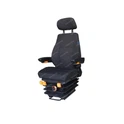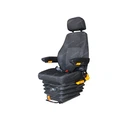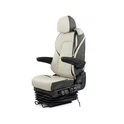


For fleet managers, owner-operators, and equipment buyers, investing in an Air Suspension Seat For Vehicle is a significant decision. The right seat can reduce driver fatigue, protect the spine over thousands of hours of operation, and ultimately boost productivity on the job. Drivers who spend 8 to 10 hours a day behind the wheel understand better than anyone how much a poor seat affects not just comfort, but concentration, mood, and long-term physical health. Chronic lower back pain, sciatica, and joint stress are all well-documented consequences of prolonged exposure to whole-body vibration - and an air suspension seat is one of the most effective engineering solutions available to address this problem.
What Affects the Lifespan of an Air Suspension Seat?
Not all air suspension seats are built the same way, and the environment in which they operate makes a major difference. A truck air suspension seat used on well-maintained highways experiences far less stress than one mounted in a construction excavator or agricultural tractor working through rough terrain all day. The main components each have distinct lifespans:
Component Lifespan at a Glance
|
Component |
Typical Lifespan |
Key Influencing Factors |
|
Air spring (air bag) |
5–8 years |
Usage intensity, environment, maintenance |
|
Steel frame |
10+ years |
Manufacturing quality, corrosion exposure |
|
Upholstery (fabric/leather) |
3–7 years |
Material grade, cleaning and care habits |
|
Adjustment mechanisms (rails/hinges) |
5–10 years |
Lubrication frequency, dust exposure |

Build quality plays a central role. Seats made with premium composite knitted fabric and leather are far more resistant to tearing and abrasion than basic vinyl covers. A steel-frame seat certified to ISO9001 manufacturing standards - like the YSR914-53P from YSR Seating - will maintain structural integrity even under constant vibration and load. A robust frame also ensures that all moving parts - height adjustment gears, fore-aft slide mechanisms, and recline hinges - remain properly aligned over years of daily use. Seats that support an adjustable weight range (such as 40–130 kg) allow operators to fine-tune suspension stiffness, which prevents the air spring from being over-stressed.
Operating environment is equally important. Air suspension seats for pickup trucks used in urban delivery or light off-road conditions typically reach the higher end of the lifespan range. By contrast, an air suspension seat for tractor application, where the machine runs over uneven soil and encounters constant jolts, places far greater demand on the air spring and mechanical components. Extreme temperatures, dust, and moisture also accelerate wear on valves, slide rails, and upholstery alike.
Expected Lifespan by Application
|
Application |
Expected Lifespan |
Primary Reason |
|
Long-haul highway trucking |
8–10 years |
Lower vibration, smoother road conditions |
|
Urban delivery / light off-road pickups |
8–10 years |
Moderate stress levels |
|
Agricultural tractors / farm equipment |
5–7 years |
Constant jolts, dust, heavy load cycles |
|
Construction / mining machinery |
4–6 years |
Extreme vibration, heavy loads, harsh environment |
How to Extend the Life of Your Seat
Maintenance is the single most controllable factor in how long your air suspension seat for truck lasts. A few disciplined habits can add years of useful service life to your investment.
Operators should set the suspension stiffness correctly for their body weight. Running a seat at the wrong setting - either too soft or too firm - puts unnecessary wear on the air spring. A seat calibrated correctly for a 70 kg operator will absorb shocks efficiently; that same seat running at incorrect stiffness for a 130 kg operator may bottom out repeatedly, degrading the air bag far faster than normal use would. Most quality seats include a clearly marked weight and stiffness adjustment guide - use it every time the operator changes.
Cleaning matters more than most operators realize. Dust and grit that accumulate in the height adjustment gears - typically featuring 7+7 gear positions - can cause binding and uneven wear over time. A simple wipe-down of the seat base and mechanism every few weeks, combined with periodic lubrication, is enough to prevent most of this damage.

Maintenance Schedule & Checklist
|
Maintenance Task |
Frequency |
Key Action |
|
Air spring inspection |
Every 6–12 months |
Check for cracks, hissing leaks, deformation |
|
Slide rail / hinge lubrication |
Every 6 months |
Apply appropriate lubricant; prevent metal-on-metal friction |
|
Suspension stiffness calibration |
Each time operator changes |
Set correctly for operator weight (40–130 kg range) |
|
Seat base and gear cleaning |
Monthly |
Wipe away dust; prevent buildup in adjustment gears |
|
Upholstery / foam inspection |
As needed |
Replace before foam collapses to protect internal mechanism |
|
Indoor vehicle storage |
During extended downtime |
Protect fabric and air components from UV and moisture |
Replacing worn upholstery before the foam underneath degrades is especially important. Once foam collapses, the driver puts pressure directly on the suspension mechanism through the seat pan, which dramatically accelerates internal wear. The few minutes spent on routine maintenance per cycle can translate into years of additional service life.
Air Suspension vs. Mechanical Suspension: Which Lasts Longer?
When comparing air suspension seats against traditional mechanical spring seats, air suspension consistently wins on longevity, repairability, and sustained comfort. Mechanical springs tend to sag and lose their damping ability after 3 to 6 years - often so gradually that operators don't notice how much comfort they have lost until they sit in a new seat.
Head-to-Head Comparison
|
Comparison Factor |
Air Suspension Seat |
Mechanical Spring Seat |
|
Typical lifespan |
5–10+ years |
4–7 years |
|
Performance degradation |
Restorable through targeted maintenance |
Progressive and irreversible |
|
Repair approach |
Individual components replaceable (air bag, valve, rails) |
Often requires full unit replacement |
|
Long-term maintenance cost |
Lower (modular repair) |
Higher (whole-unit replacement) |
|
Long-term comfort consistency |
Stable |
Declines as springs fatigue |

By contrast, an air spring can be re-pressurized, adjusted, or replaced as a standalone component, making targeted repairs more practical and cost-effective. The air supply valve, height control mechanism, and air bag are all serviceable parts that can be sourced individually from a factory-direct supplier. This modular approach is one of the key reasons air suspension seats offer a lower total cost of ownership over their lifespan, even if the initial purchase price is somewhat higher.
Signs It's Time to Replace or Repair
Even a well-maintained seat will eventually show signs of wear. Knowing what to look for allows you to act early, before a minor issue becomes a full replacement situation.
Fault Diagnosis Quick Reference
|
Symptom |
Likely Cause |
Recommended Action |
|
Seat sags and won't hold ride height |
Air bag leak |
Replace air spring |
|
Persistent hissing during or after adjustment |
Air line or valve leak |
Inspect and replace seals / valve |
|
Noticeable side-to-side wobble |
Frame or rail wear |
Inspect frame; replace worn components |
|
Harsh bottoming out over bumps |
Insufficient air pressure or damaged air bag |
Recalibrate first; replace air bag if needed |
|
Height adjustment won't lock into position |
Worn adjustment mechanism |
Repair or replace adjustment component |
|
Cracked upholstery, permanently compressed foam |
Normal long-term wear |
Replace upholstery and foam |
Addressing the first signs of wear through targeted component replacement typically costs a fraction of a full seat replacement and can extend the seat's service life by several additional years. With factory-direct access to spare parts - as offered by YSR Seating - operators can order exactly what they need without replacing the entire assembly.

Conclusion
A quality air suspension seat is a long-term investment that pays off in driver comfort, reduced injury risk, and lower total cost of ownership over time. Whether you need an air suspension seat for truck highway hauling, an air suspension seat for tractor field work, or air suspension seats for pickup trucks in mixed-duty use, the key is choosing a seat built with durable materials, a solid steel frame, and adjustable suspension - then maintaining it regularly and attentively.
The YSR914-53P from YSR Seating combines premium upholstery, ISO9001-certified steel frame construction, a 40–130 kg operator weight range, 230mm fore-aft travel with 23 locking positions, and 7+7 height adjustment gears - all backed by a 1-year factory warranty and direct access to spare parts without going through a distributor. OEM and ODM customization is available for fleet operators with specific requirements.
Ready to invest in a seat that lasts? Contact YSR Seating today for a factory-direct quote on the YSR914-53P or any air suspension seat for your application.
Phone: +86-029-81136503
Email: sales@ysrseats.com
WhatsApp: +86-13991337062
WeChat: 18992819914
Related Articles
What is an air suspension seat, and how does it work?
How do I adjust the air suspension on my vehicle seat?
Why should I choose an air suspension seat for my vehicle?
Are air suspension seats worth the cost?
How much weight can an air suspension seat support?
What are the benefits of air suspension seats in vehicles?
How do air suspension seats compare to mechanical suspension seats?
How long do air suspension seats last?
Can I install an air suspension seat in my vehicle?
How much air suspension seats cost for vehicles?