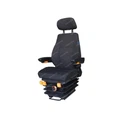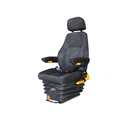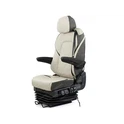


For anyone who spends long hours behind the wheel of a truck, tractor, or heavy-duty machine, the seat is not just a place to sit - it is a critical piece of safety and health equipment. Choosing the right Air Suspension Seat For Vehicle applications can mean the difference between arriving at the end of a shift feeling fatigued and in pain, or feeling alert and ready for the next run. Today, two main technologies compete in the professional driver seating market: mechanical suspension seats and air suspension seats. This article compares both side by side, so you can make an informed decision for your fleet or personal vehicle.
How Each System Works
Mechanical suspension seats rely on steel coil springs or torsion bars to absorb road shocks. The concept is simple and the components are inexpensive, making them a common factory-fit choice on entry-level vehicles. However, steel springs have a fixed stiffness. They cannot adapt to the driver's weight automatically, nor can they adjust their response to match the intensity of the terrain. Under heavy loads or on rough ground, they can bottom out - delivering a harsh, jarring impact directly to the driver's spine.
Air suspension seats take a fundamentally different approach. A compressed air spring, working in combination with a shock absorber and an automatic height-control valve, continuously adjusts the seat's stiffness and ride height based on the driver's weight and the movement of the vehicle. The result is a seat that actively cushions the driver, dampening both low-frequency jolts from potholes and high-frequency vibrations from engine or road surfaces. A quality air suspension seat for truck applications, for example, will maintain a consistent mid-stroke position regardless of whether the driver weighs 60 kg or 130 kg - keeping the body in the same ergonomic relationship to the controls at all times.

Direct Comparison: Performance, Adjustability, and Health
When placed side by side, the performance gap between the two technologies becomes clear across several key dimensions.
Vibration and shock isolation is where air suspension seats most decisively outperform mechanical ones. Steel springs transmit fine, high-frequency vibrations readily, creating cumulative fatigue over a long shift. Air suspension seats, by contrast, absorb vibrations across a much wider frequency range. For drivers of construction equipment or agricultural machinery operating on uneven ground all day, this difference is significant not just for comfort, but for long-term health. Whole-body vibration (WBV) is a recognised occupational hazard, and a well-designed air suspension seat for tractor use can measurably reduce a driver's daily WBV exposure.
Weight and height adjustability is another area where air technology leads. A typical mechanical seat offers a limited adjustment range - often 50–100 kg with only a few fixed steps. A premium air suspension seat for truck operators, such as the YSR914-53P, supports a full range from 40 kg to 130 kg with dial-adjustable stiffness, and maintains consistent ride height automatically across the entire weight spectrum. Front and rear seat height can each be independently adjusted up to 65 mm, giving drivers a precise fit rather than a rough approximation.
Fatigue and productivity are directly linked to how well a seat protects the driver from road inputs. Because air suspension seats for pickup trucks and heavier vehicles keep the body stable and isolated, drivers experience less muscle tension and mental strain over long distances. Less fatigue means sharper focus, faster reaction times, and fewer errors - benefits that matter whether you are hauling freight across a highway or operating a forklift in a busy warehouse.
Durability and cost are factors where mechanical seats appear to have an edge at first glance. Their upfront purchase price is lower, and their simple construction means fewer specialised components. However, steel springs sag and weaken over time, especially under heavy or repeated loads, reducing their effectiveness precisely when it is most needed. Air suspension systems require only occasional checks of the air spring but maintain their performance consistently throughout their service life. When purchased factory-direct - as with YSR Seating's ex-factory pricing model - the cost difference between a truck air suspension seat and a mechanical alternative narrows considerably, making air suspension a genuinely competitive investment.

When Is Mechanical Suspension Still Acceptable?
Mechanical seats are not without their place. For very light-duty use - vehicles that travel short distances on smooth, paved roads with infrequent use - the cost savings of a mechanical seat may outweigh its performance limitations. City delivery vans operating on well-maintained urban roads, for example, may not subject their drivers to the kind of sustained, intense vibration that makes air suspension a necessity. Similarly, for organisations with extremely tight budgets and low daily operating hours, mechanical suspension remains a workable baseline.
However, for any professional driver facing uneven terrain, extended operating hours, or physically demanding environments - from long-haul trucking to agricultural fieldwork to construction site operation - the performance, health, and productivity advantages of air suspension make it the clear professional choice. The question is not really whether air suspension is better; the evidence consistently shows that it is. The question is whether the application justifies the investment - and in most professional contexts, it does.

Why Choose YSR Seating for Your Air Suspension Seat
YSR Seating Factory specialises in professional-grade air suspension seats for pickup trucks, trucks, tractors, buses, and construction machinery. Their YSR914-53P model is a benchmark example of what a modern air suspension seat can deliver: a 40–130 kg weight range, fore-and-aft travel of 230 mm across 23 adjustment positions, backrest recline from 45° to 180°, optional armrests, seat heating, and 360° rotation - all built to ISO9001 standards with a one-year warranty.
Crucially, YSR sells factory-direct, eliminating middlemen and passing the savings on to buyers. OEM and ODM customisation is available from your own drawings, and the minimum order quantity is just one piece with global shipping. Whether you need a single replacement seat or are outfitting an entire fleet, YSR's combination of factory pricing and premium engineering makes them a practical first call.
Ready to upgrade? Contact YSR Seating today for a quote on the YSR914-53P or any air suspension seat for your specific vehicle application.
Phone: +86-029-81136503
Email: sales@ysrseats.com
WhatsApp: +86-13991337062
WeChat: 18992819914
Related Articles
What is an air suspension seat, and how does it work?
How do I adjust the air suspension on my vehicle seat?
Why should I choose an air suspension seat for my vehicle?
Are air suspension seats worth the cost?
How much weight can an air suspension seat support?
What are the benefits of air suspension seats in vehicles?
How do air suspension seats compare to mechanical suspension seats?
How long do air suspension seats last?
Can I install an air suspension seat in my vehicle?
How much air suspension seats cost for vehicles?