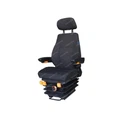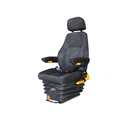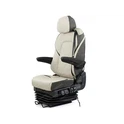


Yes - and the numbers make it clear. While the upfront price of an Air Suspension Seat For Vehicle is higher than a standard mechanical seat, standard seats generate hidden costs through injury claims, lost productivity, driver turnover, and shorter service life that quickly dwarf the initial saving. Factory-direct options like the YSR914-53P typically deliver full ROI within one to two years. Once those hidden costs are factored in, the value of air suspension seats becomes impossible to ignore. This article breaks down the real economics of seating - and makes the case that for any serious working driver, upgrading to an air suspension seat is one of the smartest investments they can make.
The Hidden Price of "Cheaper" Seating
A standard rigid or low-grade mechanical seat does one thing well - it keeps the driver off the floor. Everything else it does poorly. Over a long shift, road vibrations and jolts travel directly from the vehicle frame into the driver's spine. This is not merely discomfort; it is a recognized occupational health hazard. Chronic whole-body vibration (WBV) exposure is linked to spinal degeneration, herniated discs, and persistent lower back pain. According to occupational health research, professional drivers rank among the highest-risk groups for musculoskeletal disorders - and the seat they sit in for eight to twelve hours a day is a primary contributing factor.
For fleet operators, the consequences go well beyond individual health. When drivers suffer chronic pain, the business suffers too. The table below shows just how wide the true cost of a cheap seat really spreads:
|
Hidden Cost Type |
Specific Manifestation |
Impact on Fleet / Owner-Operator |
|
Health costs |
Back pain, spinal degeneration, occupational injury |
Medical expenses, workers' compensation claims |
|
Productivity loss |
Fatigue-driven errors and slowdowns |
Delays, increased accident risk |
|
Driver turnover |
Experienced drivers leaving due to discomfort |
Recruitment and retraining costs |
|
Safety liability |
Slower reaction times, impaired judgment |
Accident exposure, rising insurance premiums |
|
Seat replacement |
Frequent wear-out under harsh conditions |
Repeated purchasing costs every 2–3 years |

It is also worth noting that driver fatigue caused by vibration and poor ergonomics directly affects road safety. A fatigued driver has slower reaction times, reduced situational awareness, and impaired judgment. For fleet managers operating under duty-of-care obligations, the liability implications of knowingly equipping vehicles with inadequate seating are significant. Choosing quality seating is therefore not just a cost question - it is a risk management decision.
How an Air Suspension Seat for Truck and Tractor Operators Changes the Equation
The engineering behind a quality air suspension seat for truck use is straightforward but highly effective. Each major component plays a specific role in protecting the driver, as shown below:
|
Component |
Function |
Benefit to Driver |
|
Air spring |
Absorbs vertical impact energy |
Reduces spinal shock load |
|
Shock absorber |
Controls rebound after jolts |
Smoother, more stable ride |
|
Height-control valve |
Auto-adjusts stiffness by operator weight |
Consistent comfort from 40 kg to 130 kg |
|
Adjustable lumbar support |
Maintains natural spinal curve |
Prevents chronic lower back pain |
|
Sliding seat base (230mm) |
Optimizes leg-to-pedal distance |
Reduces hip and knee strain |
|
Backrest recline (45°–180°) |
Allows posture shifts during rest breaks |
Relieves fatigue on long shifts |
|
Height adjustment (0–65mm) |
Fine-tunes sightlines and shoulder position |
Improves posture and visibility |
These features work together as a system, not just individually, and the cumulative ergonomic benefit is far greater than any single adjustment in isolation. For long-haul truckers, regional delivery drivers, or anyone operating heavy equipment over rough terrain, this is not a luxury feature. It is the difference between arriving at the end of a shift fatigued and in pain, or still alert and functional.

The same logic applies directly to agricultural work. A quality air suspension seat for tractor use must contend with uneven fields, hard soil, river crossings, and the constant vibration of large diesel engines running at high torque. Over a planting or harvest season, operators routinely spend eight to twelve hours per day in the cab, often for weeks on end. Without proper vibration isolation, that cumulative exposure adds up to serious long-term health consequences. Farmers and agricultural contractors who invest in proper seating report not only better physical wellbeing but also improved concentration during precision tasks like GPS-guided planting, chemical application, and tight field maneuvers. With the right seat, productivity stays consistent, reaction times stay sharp, and operators are far less likely to cut shifts short due to discomfort or pain.
Pickup Truck Operators Are Not an Exception
It is tempting to assume that air suspension seats for pickup trucks are overkill - after all, pickup trucks are not as heavy or as rough-riding as agricultural or construction equipment. But for anyone who uses a pickup truck commercially, whether for off-road site access, towing, utility work, or rural route deliveries, the cumulative vibration exposure is very real. A truck air suspension seat designed for pickup applications brings the same core benefit: isolating the driver from the road surface so that fatigue builds more slowly and the body is protected over long duty cycles.
The table below summarizes how air suspension seating addresses the specific challenges of each working environment:
|
Application |
Primary Challenge |
Core Value of Air Suspension Seating |
|
Long-haul trucking |
High-speed road vibration, extended hours |
Reduces WBV exposure, protects spinal health |
|
Agricultural tractor |
Uneven terrain, engine vibration, long seasons |
Isolates impact, maintains focus, reduces fatigue |
|
Commercial pickup truck |
Unpaved roads, towing loads, site access |
Dampens cumulative vibration for daily drivers |
|
Construction equipment |
Heavy shock loads, rough ground |
Full-body vibration isolation, sustained alertness |
For tradespeople, contractors, rangers, and utility workers who spend the majority of their working day in a pickup truck, this matters enormously. These drivers often dismiss the idea of an upgraded seat because they associate air suspension with big rigs and heavy machinery. In reality, the physics of vibration fatigue does not distinguish between a 40-tonne truck and a one-tonne pickup - cumulative vibration is cumulative vibration. For owner-operators who drive all day, every day, this investment pays back quickly in sustained energy, fewer health issues, and the kind of end-of-day readiness that keeps personal and professional life balanced.
Breaking Down the Return on Investment
The ROI case for air suspension seats becomes even clearer when standard and air suspension seating are placed side by side across every cost dimension that matters:
|
Comparison Factor |
Standard Mechanical Seat |
Air Suspension Seat (e.g. YSR914-53P) |
|
Upfront purchase cost |
Low |
Moderate (lower with factory-direct) |
|
Health-related costs |
High - injury claims, sick leave |
Significantly reduced |
|
Productivity loss |
High - fatigue, errors, delays |
Low |
|
Driver turnover rate |
High |
Reduced |
|
Replacement frequency |
Every 2–3 years |
Every 5–8 years |
|
Annualized cost |
Higher than it appears |
Lower than upfront price suggests |
|
Total cost of ownership |
High |
Low |

Beyond the direct cost comparison, productivity gains compound the return. Research into occupational fatigue consistently shows that physical discomfort degrades cognitive performance - slowing reaction time, narrowing attention, and increasing error rates. Keeping drivers comfortable on long shifts is not a perk - it is a measurable performance and safety investment. Drivers who are less fatigued make better decisions, maintain schedules more reliably, and are less prone to the minor accidents and near-misses that create administrative headaches and insurance claims.
Purchasing factory-direct from a manufacturer like YSR Seating amplifies this ROI further:
|
YSR Advantage |
Details |
|
Factory-direct pricing |
No middlemen - 30–50% lower than retail |
|
Minimum order quantity |
Just 1 piece - accessible for owner-operators |
|
Customization |
OEM / ODM support, production from customer drawings |
|
Weight range |
Designed for operators from 40 kg to 130 kg |
|
Warranty |
12 months |
|
Certification |
ISO9001 |
|
Shipping |
Express, air freight, or sea freight to 150+ countries |
|
Lead time |
Samples in 1–3 days; bulk orders in approximately 15 days |
Conclusion: An Investment That Pays for Itself
The question is not whether an air suspension seat costs more than a standard seat. It clearly does, upfront. The real question is whether the combination of health protection, sustained productivity, reduced fleet risk, and long-term durability delivers more value than the price difference - and when the full picture is examined honestly, the answer is unambiguously yes. For truck drivers, tractor operators, construction equipment crews, and pickup truck professionals who log serious hours behind the wheel, the right seat is among the highest-return investments they can make in their working lives.
If you are ready to make the switch, contact YSR Seating today for a factory-direct quote on the YSR914-53P or any air suspension seat for your specific application. With a 1-year warranty, 1-piece MOQ, and global shipping to 150+ countries, there is very little standing between you and a healthier, more productive working day.
Phone: +86-029-81136503 | Email: sales@ysrseats.com | WhatsApp: +86-13991337062 | WeChat: 18992819914

FAQ
Are air suspension seats worth the extra cost compared to standard seats?
Yes. While the upfront cost is higher, standard seats generate hidden expenses through higher injury rates, lost productivity, driver turnover, and shorter service life. Factory-direct air suspension seats like the YSR914-53P typically pay for themselves within one to two years through reduced injury claims and improved driver retention.
How much do air suspension seats reduce whole-body vibration?
Quality air suspension seats can reduce WBV exposure by 50% or more compared to standard mechanical seats, significantly lowering the risk of spinal degeneration and chronic lower back pain over a driver's career.
Are air suspension seats worth it for pickup trucks?
Yes - particularly for commercial users who spend all day driving on unpaved roads, towing, or accessing work sites. Cumulative vibration fatigue is real regardless of vehicle size, and an air suspension seat protects the body effectively over long daily duty cycles.
What is the ROI of upgrading a fleet to air suspension seats?
ROI comes from fewer medical claims, lower absenteeism, reduced driver turnover costs, and a longer seat service life. Most fleet operators see full payback within 12 to 24 months, with ongoing savings in health and productivity costs thereafter.
Related Articles
What is an air suspension seat, and how does it work?
How do I adjust the air suspension on my vehicle seat?
Why should I choose an air suspension seat for my vehicle?
Are air suspension seats worth the cost?
How much weight can an air suspension seat support?
What are the benefits of air suspension seats in vehicles?