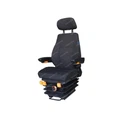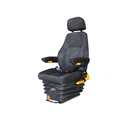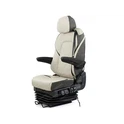


If you spend long hours behind the wheel of a truck, tractor, or heavy-duty vehicle, investing in a quality Air Suspension Seat For Vehicle is one of the smartest decisions you can make. Unlike standard foam seats, air suspension seats use a pressurized air spring system to absorb shocks and vibrations from rough terrain, uneven roads, or heavy machinery operation. The result is significantly reduced driver fatigue, better posture, and long-term protection for your spine. Whether you are operating a semi-truck on the highway, a tractor across a bumpy field, or a pickup truck on a job site, the right seat - properly adjusted - can transform your entire driving experience.
Quick Answer: To adjust your air suspension seat correctly: 1) set suspension stiffness to center your body weight at mid-travel; 2) adjust ride height so your hips are level with or slightly above your knees; 3) set fore/aft position, backrest angle, and head restraint for proper ergonomics. Always lock every adjustment before moving off.
Getting to Know Your Air Suspension Seat and Pre-Adjustment Checklist
Key Components
Before making any adjustments, it helps to understand what you are working with. A modern air suspension seat for truck typically consists of three core components:
|
Component |
Function |
|
Air Spring |
Pressurized bladder that absorbs road impact and vibration |
|
Height Control Valve |
Regulates air pressure to control ride height |
|
Shock Absorber |
Dampens sudden jolts and prevents excessive bounce |

Together, these parts create a self-contained cushioning system that responds dynamically to road conditions. Take the YSR914-53P Pneumatic Suspension Seat as a practical example. This seat is purpose-built as an air suspension seat for tractor and heavy vehicle use, accommodating operators from 40 kg to 130 kg. It features independent front and rear height adjustment (0–65 mm, 7 gears each), a 230 mm fore/aft slide range, and a backrest recline from 45° to 180°.
Pre-Adjustment Checklist
Before you touch any lever or dial, run through this three-point checklist:
|
Check |
Action |
|
Parking Surface |
Park on a level surface so gravity does not skew your settings |
|
Air System |
Confirm the seat is connected and fully pressurized |
|
Driving Posture |
Sit in your normal driving position before making any adjustments |
Step-by-Step Adjustment Guide
The table below summarizes all five key adjustments at a glance. Each step is explained in full detail beneath it.
|
Adjustment |
Method |
Target / Goal |
YSR914-53P Spec |
|
Suspension Stiffness |
Stiffness dial or inflator button |
Seat at mid-point of travel range |
Supports 40–130 kg |
|
Ride Height |
Height control valve / lever |
Hips level with or slightly above knees |
0–65 mm, 7 gears (front & rear independent) |
|
Fore/Aft Position |
Slide lever |
Feet reach pedals comfortably |
230 mm total, 23 locking positions |
|
Backrest Angle |
Recline handle |
Lower back supported, elbows slightly bent |
45°–180° |
|
Head Restraint |
Height adjustment |
Just above the back of the head |
3 gears, 25 mm per gear |
Step 1 - Suspension Stiffness (Weight Adjustment)
The first and most critical adjustment is matching the air spring pressure to your body weight. Most quality air suspension seats include a stiffness dial or inflator button on the side of the seat base. Increase air pressure for a firmer ride, or release air to soften the suspension. The goal is to position the seat at roughly the mid-point of its travel range while you are seated - this gives the suspension equal room to compress on bumps and extend in dips. For air suspension seats for pickup trucks, where road conditions can switch quickly between smooth pavement and off-road terrain, a slightly softer setting often provides the best balance.
Step 2 - Ride Height
Locate the height control valve or lever - usually a small handle or knob on the seat base. Lift to raise, lower to descend. On the YSR914-53P, both front and rear height can be set across 7 precise gear positions within a 0–65 mm range. A correct ride height means your hips are level or slightly higher than your knees, your feet rest flat on the floor or pedals, and your line of sight clears the dashboard comfortably. For a truck air suspension seat, setting the rear slightly higher than the front can help reduce lower back pressure during long hauls.

Step 3 - Fore/Aft Position, Backrest Angle & Head Restraint
Use the slide lever to move the seat forward or backward - the YSR914-53P offers 230 mm of total travel with 23 locking positions for very precise control. Once your fore/aft position is set, adjust the backrest to a 55°–135° range where your lower back is gently supported and your elbows have a slight bend when gripping the wheel. Finally, set the head restraint using the 3-gear height adjustment (25 mm per gear) so it sits just above the back of your head - not behind your neck - for proper whiplash protection. Always confirm each adjustment is locked before moving off.
Common Mistakes to Avoid and Optional Comfort Enhancements
Common Mistakes
Even the best air suspension seat for truck will underperform if set up incorrectly. Here are the four most frequent errors and how to fix them:
|
Common Mistake |
Consequence |
Correct Approach |
|
Suspension too stiff |
Transmits more vibration, worsens fatigue |
Release air until seat sits at mid-travel range |
|
Ride height too low |
Hip strain, reduced visibility |
Raise until hips are level with or slightly above knees |
|
Ride height too high |
Raised centre of gravity, neck/shoulder fatigue |
Lower until feet rest flat on floor or pedals |
|
Adjustments not locked |
Seat shifts mid-drive - safety hazard |
Always confirm locks after every adjustment |
Optional Comfort Enhancements
Once your core settings are dialled in, these optional features can further personalize your ride:
|
Feature |
Benefit |
Usage Tip |
|
Adjustable Armrests |
Reduces shoulder and arm tension |
Set to elbow height during long hauls |
|
Lumbar Support |
Protects lower spine, reduces back pain |
Inflate to match your natural spinal curve |
|
360° Rotation Base |
Easier entry/exit and side tasks |
Must be locked forward-facing before driving |
|
Seat Depth Adjustment |
Improves thigh support for all leg lengths |
Shorter operators should adjust shallower |
Lumbar support in particular is valuable for operators of air suspension seats for pickup trucks who alternate between driving and physical site work throughout the day.

Conclusion
A well-adjusted air suspension seat for tractor, truck, or any heavy vehicle is not a luxury - it is a practical investment in your health, focus, and productivity. By taking just a few minutes to correctly set suspension stiffness, ride height, fore/aft position, backrest angle, and head restraint, you can dramatically reduce whole-body vibration exposure and the fatigue that comes with it. Treat your seat as precision equipment, and check your settings whenever your load, vehicle, or operator changes.
Frequently Asked Questions
How do I adjust the suspension stiffness on my air seat?
Use the stiffness dial or inflator button on the side of the seat base. Increase air pressure for a firmer ride, or release air to soften. Aim to position the seat at roughly the midpoint of its travel range while you are seated.
What is the correct ride height for an air suspension seat?
Your hips should be level with or slightly higher than your knees. Your feet should rest flat on the floor or pedals, and your line of sight should clear the dashboard comfortably.
How often should I readjust my air suspension seat?
Whenever the driver changes, your load changes, or you notice the seat bottoming out or topping out frequently. Also recheck after long periods of use or seasonal temperature changes.
Why does my air suspension seat still feel too stiff after adjustment?
You may have over-inflated the air spring. Try slowly releasing air until the seat settles at the middle of its travel range when you are seated.
Ready to upgrade your ride?
Contact YSR Seating Factory today for expert advice, factory-direct pricing, and fully customizable Air Suspension Seats for Vehicles - available from single pieces to bulk orders. Our team is ready to help you find the perfect seat for your specific application.

Contact Information
Phone: +86-029-81136503
Email: sales@ysrseats.com
WhatsApp: +86-13991337062
WeChat: 18992819914
Related Articles
What is an air suspension seat, and how does it work?
How do I adjust the air suspension on my vehicle seat?
Why should I choose an air suspension seat for my vehicle?
Are air suspension seats worth the cost?
How much weight can an air suspension seat support?
What are the benefits of air suspension seats in vehicles?