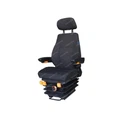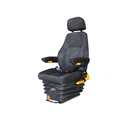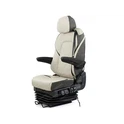


Operator safety in heavy machinery begins with one fundamental component: a securely installed seat belt or safety harness. When working with earthmoving equipment, the Scraper Seat serves as the critical interface between operator and machine, making correct belt installation essential for accident prevention and regulatory compliance. Without proper restraint systems, operators face serious injury risks from sudden stops, rollovers, or terrain-induced jolts. YSR Seating Factory, a leading name among China Scraper Seat suppliers, offers seats with factory-integrated safety belt options and comprehensive customization services that eliminate installation guesswork while ensuring compliance with international safety standards.
Preparation: What You Need Before Installation
Before beginning any installation work on your construction equipment seats, proper preparation prevents costly mistakes and ensures a safe, compliant result.
Identify the Belt Type: Determine whether you're installing a basic lap belt, a three-point retractable harness, or a full four-point racing-style system. The choice depends on your machine's application-scrapers operating on steep grades typically require more robust restraint than those on flat terrain.

Gather Tools and Components: Assemble common hand tools including metric wrenches, socket sets, a calibrated torque wrench, the complete belt kit with all hardware, mounting bolts rated for dynamic loads, and any adapter plates specified by the manufacturer. Having everything on hand prevents mid-installation delays.
Verify Seat Compatibility: Inspect your current scraper seats to determine if they feature pre-drilled mounting points or require aftermarket bracket installation. Many modern seats for construction machinery come with standardized mounting patterns, but older equipment may need custom solutions.
Consult Documentation: Always refer to both the seat manufacturer's installation guidelines and your machine's safety manual. These documents specify torque values, mounting point locations, and clearance requirements that are critical for proper function.
Leverage YSR's Customization Advantage: YSR Seating Factory can pre-install seat belts at the factory, provide custom belt lengths tailored to operator size, and add personalized safety labeling-services that dramatically simplify field installation while ensuring professional-grade results.
Step-by-Step Guide to Installing a Seat Belt on a Scraper Seat
1. Remove the Existing Seat (If Replacing)
Begin by disconnecting any electrical connections if your seat for construction machines includes switches or sensors. Unbolt the seat from its base using the appropriate socket size, typically 13mm to 17mm. Carefully lift the seat assembly from the cab, noting how any wiring harnesses route through the base-you'll need to replicate this during reinstallation.
2. Position the Mounting Brackets
Align the seat belt retractor and buckle brackets with your seat frame's designated mounting holes. Many construction machinery seats feature reinforced zones specifically designed for belt attachment. If your seat lacks these provisions, install steel reinforcement plates on both sides of the mounting point to distribute load across a wider area. Never attach belts to plastic components or thin sheet metal.
3. Secure the Components
Bolt the retractor assembly and buckle firmly to the seat or mounting base, following the torque specifications provided by the belt manufacturer-typically 25-35 foot-pounds for lap belts and 35-45 foot-pounds for three-point systems. Under-torquing allows dangerous movement during impact, while over-torquing can crack mounting points. Use thread-locking compound on all fasteners to prevent vibration-induced loosening.
4. Route the Webbing
Ensure the belt webbing moves freely through all guides without twisting. The strap should not contact sharp edges, pass through pinch points, or interfere with seat adjustment mechanisms. On seats for heavy equipment with suspension systems, verify that the belt maintains proper geometry throughout the full range of suspension travel. Test by compressing and extending the seat while observing webbing movement.
5. Test Functionality
Perform comprehensive function tests before reinstallation. Verify that the retractor locks immediately during rapid pulls, simulating emergency braking conditions. The belt should retract smoothly without binding when released. Check that the buckle engages with an audible click and releases cleanly without excessive force. Many jurisdictions require belts to lock at pulls faster than 1.5 feet per second.
6. Reinstall the Seat
Position the seat assembly back into the machine, aligning all mounting holes. Bolt the base securely, reconnect electrical connections if applicable, and perform a final system check. Sit in the seat and fasten the belt to verify comfort and proper fit at various seat positions.
Installing a Full Safety Harness on a Scraper Seat
For applications requiring maximum restraint-such as high-speed scrapers or machines operating in extreme terrain-full safety harnesses provide superior protection compared to standard three-point belts.
Additional Components Required: Four-point and five-point harnesses include shoulder straps that require upper anchor points, typically mounted to the seat back's reinforced structure or the cab's roll-over protective structure (ROPS). These mounting points must be rated for dynamic loads of at least 3,000 pounds per anchor.
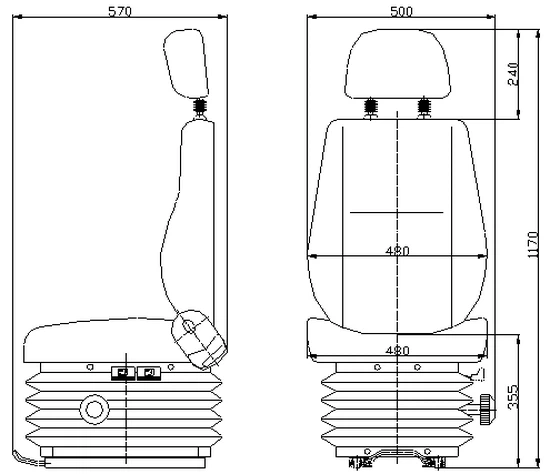
Mounting Considerations: When installing harnesses on adjustable construction equipment seats like the YSR914-1P with its 80°+41° backrest range, ensure harness attachment points remain aligned throughout the adjustment range. Shoulder strap anchors should position straps at a downward angle of 10-20 degrees from the operator's shoulders when seated normally.
Routing the Straps: Keep all harness webbing clear of moving seat components, armrest pivots, and adjustment levers. Use webbing guides to maintain proper strap position and prevent migration during use. The submarine belt (if equipped) should route between the operator's legs without causing discomfort.
Integration with Suspension Systems: Verify that harness tension doesn't restrict air suspension or mechanical suspension performance. The operator should remain properly restrained while the seat absorbs shocks and vibrations-a balance that requires careful geometry planning.
Common Installation Challenges and Solutions
Missing or Misaligned Mounting Holes: Older seats for construction machines often lack modern mounting provisions. YSR Seating Factory addresses this through base modifications, including elevated seat boxes and custom workstation plates that provide proper mounting points while maintaining ergonomic seat height.
Belt Length Unsuitable for Operators: Standard belts may not accommodate larger operators comfortably. YSR provides customizable seat belt lengths as part of their construction machinery seats customization service, ensuring every operator achieves proper fit and protection.
Compliance and Certification Concerns: Safety regulations vary by region and application. YSR manufactures all belts and seats under ISO9001 quality systems, providing documentation that supports compliance with OSHA, MSHA, and international safety standards.
Retrofitting Older Equipment: Vintage scrapers present unique challenges due to non-standard dimensions. YSR's sample-based customization program allows customers to verify fit and function before committing to production quantities, ensuring perfect compatibility with legacy equipment.

Why Choose YSR for Ready-to-Install Safety Solutions
Partnering with experienced China Scraper Seat suppliers like YSR Seating Factory transforms seat belt installation from a challenging retrofit into a straightforward upgrade.
Factory-Integrated Belts: Order your complete seat assembly with safety belts already installed and tested, eliminating field installation entirely while guaranteeing correct assembly that meets manufacturer specifications.
Comprehensive Customization: Select from lap belts or three-point harnesses, specify belt colors to match company branding, add custom logos and safety labels, and define exact webbing lengths for your operator population.
Expert Technical Support: YSR's factory engineers provide detailed installation drawings, answer pre-sales technical questions, and offer guidance for challenging retrofit applications-support that's invaluable when working with unique or modified equipment.
Integrated Sourcing: Source complete seating systems including the seat itself, safety belts, mounting hardware, and accessories from a single supplier, simplifying procurement, ensuring component compatibility, and reducing overall project complexity.
Conclusion: Safety Starts with the Right Seat and Correct Installation
A properly installed seat belt or safety harness on your Scraper Seat is non-negotiable for operator protection in today's safety-conscious construction and mining environments. Whether retrofitting existing seats for heavy equipment or specifying new installations, correct installation techniques combined with quality components create the foundation for accident prevention.
Partnering with YSR Seating Factory ensures you receive belt systems that fit perfectly, meet rigorous quality standards, and install easily without extensive modifications. Their expertise in manufacturing scraper seats with integrated safety features, combined with flexible customization capabilities, makes them an ideal partner for fleet managers, equipment dealers, and owner-operators alike.
Take Action Today: Contact YSR Seating Factory to discuss your specific safety belt requirements, request custom-configured seat samples, or obtain detailed installation guidance for your equipment.
Contact Information:
Phone: +86-029-81136503
Email: sales@ysrseats.com
WhatsApp: +86-13991337062
WeChat: 18992819914
Don't compromise on operator safety-invest in properly installed restraint systems and partner with manufacturers who understand the critical role that construction equipment seats play in protecting your most valuable asset: your people.
Related Articles
What is a scraper seat?
what machines use scraper seat?
What are the features of a scraper seat?
What's the difference between low-profile and high-profile scraper seats?
Do scraper seats come with suspension? Air or mechanical?
How much weight can a scraper seat support?
How do I choose the right scraper seat for my machine?
What suspension options exist for scraper seats?
How do I measure a seat to ensure it fits my scraper?
Are aftermarket scraper seats as good as OEM seats?
Where can I buy a scraper seat?
Can I replace my scraper seat myself?
How do I install a seat belt or safety harness on a scraper seat?
How do I install a scraper seat?
Are there ergonomic scraper seats available?
Do scraper seats improve operator comfort and reduce fatigue?
What do reviews say about different scraper seats?
Can scraper seats be customized?