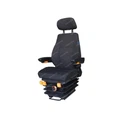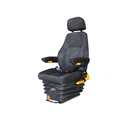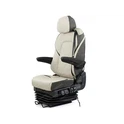


In the demanding world of heavy construction, an ill-fitting Scraper Seat can cascade into serious operational problems. Operators forced to work in uncomfortable seating positions experience fatigue more quickly, leading to decreased productivity and concentration. Over time, poor ergonomic support contributes to chronic back pain and musculoskeletal disorders, driving up worker compensation claims and absenteeism. More critically, an improperly secured or sized seat can become a safety hazard-compromising operator control during machine operation or failing to protect adequately during unexpected jolts or impacts.
The foundation of selecting a compatible and effective seat for construction machines begins with accurate measurement. Unlike standard office furniture, seats for heavy equipment must integrate precisely with existing mounting systems, fit within constrained cab spaces, and accommodate the full range of operator sizes and preferences. This article guides you through the essential measurements needed to ensure a perfect fit, using specifications from YSR Seating Factory as practical examples. As one of the leading China Scraper Seat suppliers, YSR supports this critical process with detailed technical specifications and comprehensive customization services.
Key Measurements to Take Before Selecting a Seat
Overall Seat Dimensions (L×W×H)
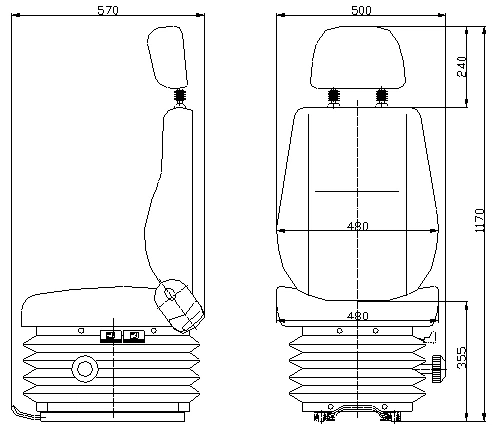
Begin by measuring the maximum space available in your scraper's cab. The seat must fit comfortably within this envelope at all adjustment positions. For reference, the YSR914-1P construction equipment seats model measures 560×1050×485mm at its standard configuration. However, you must account for the seat at its tallest height adjustment and furthest rearward position.
Use a tape measure to determine:
- Length: The distance from the front edge of where the seat will mount to any rear cab wall or obstruction
- Width: The space between armrests, control levers, or cab sidewalls
- Height: Clearance from the floor to the cab ceiling, accounting for the operator's head when seated
Document these measurements carefully, adding a safety margin of at least 50mm in each dimension to prevent interference during operation.

Mounting Base Size & Hole Pattern
This is arguably the most critical measurement for construction machinery seats compatibility. The mounting base must align perfectly with your machine's floor-mounted base plate. Inaccurate measurements here result in incompatibility that cannot be easily resolved in the field.
For the YSR914-1P, the mounting base measures 216×295.5mm with a specific bolt hole pattern. To measure your existing setup:
- Base Plate Dimensions: Measure the length and width of the rectangular mounting plate on your scraper's floor
- Bolt Hole Spacing: Accurately measure the distance between bolt hole centers, both longitudinally and laterally. Use calipers for precision.
- Bolt Hole Diameter: Record the diameter of existing holes, as bolt sizes vary between manufacturers
- Mounting Height: Note whether the base sits flush with the floor or on a raised platform
Create a simple sketch showing these dimensions and the hole pattern configuration. This drawing becomes invaluable when consulting with suppliers about compatibility.
Critical Adjustment Ranges
Modern seats for construction machinery offer multiple adjustment mechanisms to accommodate operators of different sizes. Verify that your cab space permits the full range of these adjustments:
- Fore-Aft Travel: Quality scraper seats typically offer 150-200mm of horizontal sliding adjustment. Ensure this travel doesn't cause the seat to contact the cab's rear wall when fully retracted or interfere with entry when fully forward.
- Height Adjustment: Suspension seats may feature 60-80mm of vertical adjustment. Measure to confirm adequate headroom at the highest setting, even when the seat suspension is compressed under maximum operator weight.
- Backrest Recline: Check that the backrest can recline through its full range (often 15-20 degrees) without hitting rear cab structures or windows.
Cab Clearance & Operator Space
Beyond the seat itself, evaluate the ergonomic envelope:
- Entry/Exit Path: Ensure the seat allows operators to enter and exit safely. Armrests should not create pinch points or obstruction.
- Armrest Clearance: Adjustable armrests must not interfere with door frames, control panels, or joysticks when positioned at their widest setting.
- Control Accessibility: Verify that the seated operator can comfortably reach all necessary controls, pedals, and instruments without excessive stretching or awkward postures.
Cross-Referencing with Supplier Specifications: The YSR Example
Once you've gathered your measurements, the next step involves comparing them against specific product specifications. Using the YSR914-1P as a reference template demonstrates this process.
The YSR914-1P technical datasheet provides:
Overall dimensions: 560×1050×485mm
- Mounting base: 216×295.5mm
- Fore-aft adjustment: 200mm
- Height adjustment: 65mm
- Weight: Approximately 40kg (affecting floor load considerations)
Create a comparison checklist:
✓ Mounting Compatibility: Does your base plate match the 216×295.5mm footprint and hole pattern?
✓ Dimensional Fit: Will 560×1050×485mm fit within your available cab space, plus adjustment ranges?
✓ Clearance Verification: Does your cab allow for 200mm forward travel and 65mm height adjustment without obstruction?
✓ Weight Capacity: Can your floor mounting system support the seat weight plus maximum operator load?
If any comparison reveals a mismatch, don't despair. This is where supplier expertise becomes invaluable. YSR's technical team can review your measurements and either recommend an alternative model from their range of seats for heavy equipment or propose a customized solution.
When Standard Doesn't Fit: Utilizing Customization Services
The reality of heavy equipment manufacturing means that standardization is often elusive. Machines from different eras, manufacturers, or regions frequently feature unique cab configurations and mounting systems. Older scrapers, specialty models, or equipment that has undergone modifications may not align with any standard seat footprint.
This is where the flexibility of working with experienced China Scraper Seat suppliers becomes critical. YSR Seating Factory offers comprehensive customization services specifically designed to solve fitment challenges:
Base Modifications
The mounting interface can be adapted in several ways:
Custom Mounting Plates: YSR can fabricate adapter plates that bridge the gap between a standard seat base and your non-standard floor pattern. These plates feature hole patterns matching your machine on the bottom and the seat's standard configuration on top.
Elevated Mounting Boxes: For machines where height adjustment is insufficient or floor-level obstructions exist, YSR can design raised mounting boxes that provide additional clearance while maintaining structural integrity.
Hole Pattern Adaptation: The seat's base can be manufactured with a custom bolt hole configuration to match your exact floor layout, eliminating the need for adapter hardware.
Dimensional Adjustments
Beyond the mounting system, the seat itself can be tailored:
Profile Modifications: Cab layouts with unusual constraints-such as low ceilings or narrow widths-can be accommodated by adjusting the seat's overall profile while maintaining ergonomic support.
Armrest Design: Custom armrest configurations address unique control layouts, ensuring operator comfort without interference with machine-specific controls or joysticks.
Cushion Specifications: For extreme operating environments, specialized cushioning materials or thicknesses can be specified to enhance comfort or durability.
The Sample Solution
YSR's most valuable customization offering may be their sample production service. Rather than committing to a full production run with uncertainty about fit, you can:
Provide detailed measurements or CAD drawings of your machine's cab and mounting system
Collaborate with YSR's engineering team to design a seat solution
Order a single sample seat manufactured to these specifications
Test-fit the sample in your actual machine
Request any final refinements before authorizing full production
This approach virtually eliminates the risk of costly mistakes and ensures that every seat in your fleet will fit perfectly.
Why Partnering with YSR Simplifies the Process
Selecting and fitting construction equipment seats need not be a frustrating process when you work with the right supplier. YSR Seating Factory brings several distinct advantages to this challenge:
Technical Expertise
YSR's team doesn't just manufacture seats-they understand the machinery they're designed for. Their engineers can guide you through the measurement process, interpret technical drawings, and identify potential fitment issues before they become problems. This consultative approach means you're not navigating the selection process alone.
Flexible Manufacturing
As a factory with full OEM/ODM capabilities, YSR can engineer solutions ranging from minor modifications to completely custom designs. Whether you need a single prototype or a fleet-wide rollout, their manufacturing systems accommodate projects of any scale. This flexibility is particularly valuable for companies operating mixed fleets or maintaining older equipment.
Quality Assurance
Customization should never mean compromising on quality. YSR's ISO9001 certification ensures that custom-manufactured seats meet the same rigorous durability and safety standards as their standard production models. Each seat undergoes the same testing protocols, material quality checks, and structural validation regardless of whether it's a catalog item or a one-off custom design.
Direct Communication
Working directly with the source factory eliminates the communication gaps and specification errors that can occur when dealing with intermediaries. Your measurements, requirements, and special requests are communicated directly to the engineers and production team who will build your seats. This transparency ensures that specifications are interpreted correctly and that any questions are resolved quickly.

Conclusion: Secure the Perfect Fit
Taking precise measurements for your scraper seats is far more than a preliminary task-it's an investment in long-term operator comfort, sustained productivity, and reduced maintenance costs. The few hours spent carefully documenting your machine's dimensions and requirements can prevent weeks of frustration and thousands in wasted resources on incompatible equipment.
Approach this task methodically:
Document all critical dimensions with precision
Create clear sketches showing mounting patterns
Compare your measurements against supplier specifications
Don't hesitate to leverage expert support when questions arise
YSR Seating Factory stands ready to make this process as straightforward as possible. Whether your scraper uses a standard mounting configuration or requires a completely custom solution, their team has the experience and manufacturing capability to deliver seats that fit perfectly and perform reliably.
Take the next step toward optimal operator comfort:
Contact YSR today with your measurements or machine model information for a comprehensive compatibility assessment. Their technical team can review your requirements, recommend the most suitable solution from their range of seats for heavy equipment, or propose a custom design that addresses your specific needs. Sample production is available to ensure perfect fitment before committing to larger orders.
Contact YSR Seating Factory:
Phone: +86-029-81136503
Email: sales@ysrseats.com
WhatsApp: +86-13991337062
WeChat: 18992819914
Don't let an ill-fitting seat compromise your operations. Reach out to YSR and experience the difference that precision engineering and expert support make in heavy equipment seating solutions.
Related Articles
What is a scraper seat?
what machines use scraper seat?
What are the features of a scraper seat?
What's the difference between low-profile and high-profile scraper seats?
Do scraper seats come with suspension? Air or mechanical?
How much weight can a scraper seat support?
How do I choose the right scraper seat for my machine?
What suspension options exist for scraper seats?
How do I measure a seat to ensure it fits my scraper?
Are aftermarket scraper seats as good as OEM seats?
Where can I buy a scraper seat?
Can I replace my scraper seat myself?