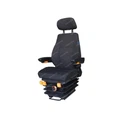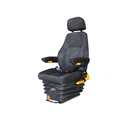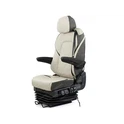


Upgrading your cab with a Semi Truck Luxury Air Suspension Seats system is one of the smartest investments a professional driver or fleet manager can make. Better comfort means less fatigue, fewer long-term health issues, and a safer ride overall. Yet one question consistently holds drivers back from making the upgrade: "Will it actually fit my truck?" The good news is that modern air suspension seats are engineered with broad compatibility in mind, and with the right measurements and supplier support, finding a seat that fits your specific vehicle is far more straightforward than most people expect.
Understanding the Key Compatibility Factors
Before reaching out for an Air Suspension Seats quotation, it helps to understand the three main variables that determine whether a seat will work in your truck.
Mounting bolt patterns are the first consideration. Most Class 8 heavy-duty trucks follow standardized mounting hole spacing governed by ISO or SAE guidelines. Reputable semi truck luxury air suspension seats suppliers account for this by offering universal base plates or optional adapter kits that accommodate the most common patterns-such as 255mm × 200mm or 274mm × 150mm-right out of the box. Non-standard patterns are rarely a dead end; custom adapter plates can be fabricated when needed.

Cab height and seat well clearance matter just as much as the bolt pattern. An air suspension seat needs vertical travel room to do its job-absorbing road shock through controlled upward and downward movement. Before purchasing, measure the distance from your cab floor to your lowest overhead obstruction, then compare that figure against the seat's stated working dimensions and height adjustment range. A well-specified seat, for example, might offer a cushion working dimension of 245mm (H) × 485mm (W) × 460mm (D) with a ±65mm height adjustment range, giving you a clear target to measure against.
Air supply compatibility is the third factor, and it is usually the simplest to resolve. Most heavy-duty commercial trucks already carry an onboard compressed air system. Air suspension seats typically operate within a pressure range of 0.3–0.7 MPa, which aligns neatly with standard truck air systems. Connecting the seat generally requires nothing more than tapping into an existing air line with standard fittings. For vehicles without onboard air, standalone compressor solutions are available and worth discussing with your supplier before you Buy Luxury Air Suspension Seat equipment.
A Practical Step-by-Step Fitting Guide
Knowing the theory is useful; having a clear process is better. Here is a simple four-step approach to confirming fitment before you commit to a purchase.
- Step 1 – Measure your seat mount. With your current seat removed, measure the center-to-center spacing of the mounting holes in both directions. Write these numbers down-they are the first thing any quality supplier will ask for.
- Step 2 – Assess your cab clearance. Measure from the floor of the seat well to the nearest overhead obstacle when you are seated in your normal driving position. Cross-reference this against the seat's maximum installed height and full suspension travel. You want comfortable headroom at both the lowest and highest points of the suspension range.
- Step 3 – Check your air supply. Locate your truck's air line access point, typically routed beneath or behind the driver's position. Confirm the system pressure and verify that a tap-off point is accessible. If you are unsure, your installer or the seat manufacturer's technical team can walk you through it.
- Step 4 – Clarify your seat belt setup. Trucks vary: some use seat-integrated belt systems, others have belts mounted to the cab structure. Confirm which setup your truck uses and verify that the seat you are considering either preserves your existing belt anchor points or includes its own compliant mounting hardware.
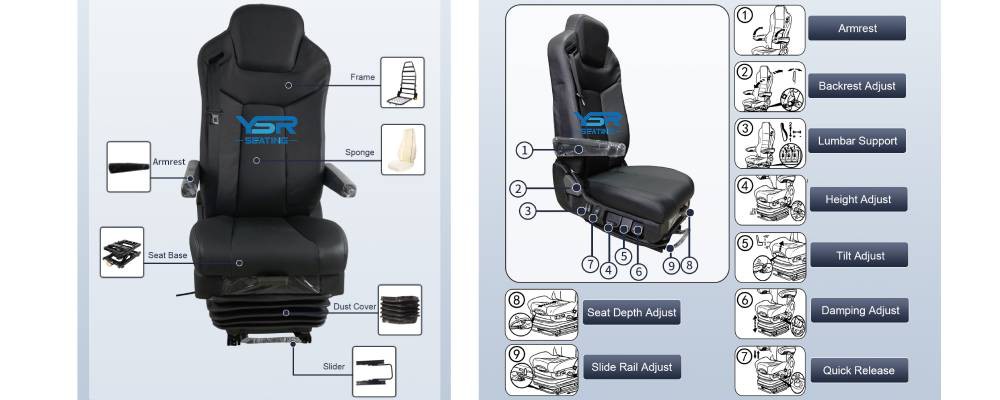
Following these steps before you contact Luxury Air Suspension Seat suppliers means you arrive at the conversation with the information needed to get an accurate recommendation-and a faster, more reliable result.
Which Trucks Are Compatible?
The short answer is: most of them. Nearly every major Class 8 brand-Freightliner, Kenworth, Peterbilt, Volvo, International, and Mack-can accommodate a properly specified air suspension seat. Medium-duty commercial trucks are also strong candidates, provided cab height clears the minimum threshold. Beyond trucks, the same seat platforms are regularly adapted for buses, construction equipment, agricultural machinery, and even railway locomotives, which speaks to how flexible modern suspension seat engineering has become.
For fleet operators running mixed brands, this versatility is particularly valuable. Working directly with China Luxury Air Suspension Seats suppliers that operate as source factories-rather than distributors-allows fleet managers to standardize on a single seat specification across different vehicle types. That means consistent ergonomics for every driver, simpler maintenance, and easier parts management.
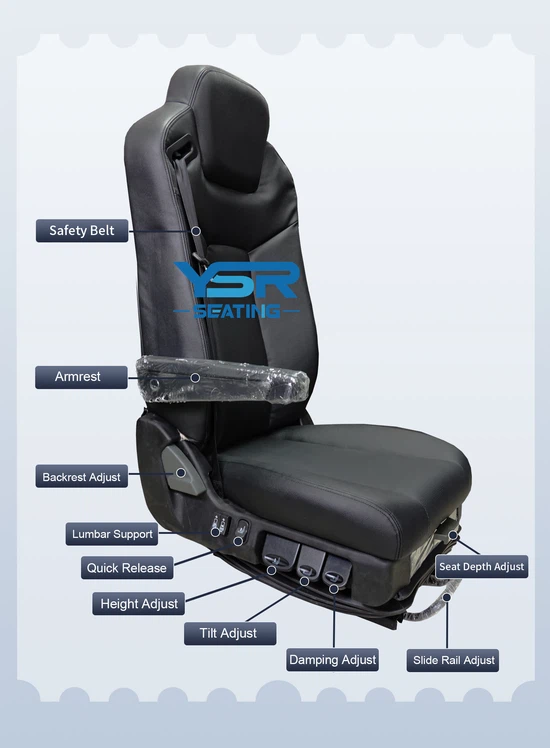
When Standard Doesn't Fit: Customization Options
Occasionally, a truck presents a genuinely non-standard challenge-an unusual bolt pattern, a lower-than-average cab roof, or a legacy vehicle with an unconventional seat well. This is where Customized semi truck luxury air suspension seats become the right solution rather than the fallback option.
Source-factory suppliers are best positioned to help here. Because they manufacture rather than simply resell, they can fabricate custom base plates, adjust seat dimensions, and modify mounting configurations without the delays and markups that come from working through intermediaries. For fleet buyers managing large orders, this kind of direct manufacturing relationship also opens the door to volume pricing and co-engineered solutions tailored to specific operational requirements.
If you are sourcing internationally, requesting a detailed Air Suspension Seats quotation from the manufacturer directly-rather than through a reseller-gives you visibility into lead times, minimum order quantities, customization costs, and technical support availability before you commit. A supplier that responds to a quotation request with specific technical questions about your truck's measurements is usually one worth trusting.

Conclusion
The question "Will an air suspension seat fit my truck?" has a reassuring answer in the overwhelming majority of cases: yes. Modern air suspension seats are designed around standardized mounting systems, widely compatible air pressure requirements, and adjustable dimensions that suit most cab configurations. The key is approaching the purchase with your truck's measurements in hand-bolt pattern spacing, cab clearance, and air supply details-and working with experienced suppliers who can either match a standard solution or engineer a custom one.
Whether you drive a single long-haul rig or manage a diverse commercial fleet, the right seat is almost certainly within reach. Take the measurements, ask the technical questions, and don't settle for a cab that leaves you fatigued at the end of a long run. Reach out to our team with your truck's make, model, and specifications-we'll help you find the right fit.
Contact Information:
- Phone: +86-029-81136503
- Email: sales@ysrseats.com
- WhatsApp: +86-13991337062
- WeChat: 18992819914
Related Articles
What makes a truck seat "luxury" or premium?
Do air suspension truck seats reduce back pain?
How do you adjust a semi-truck air ride seat correctly?
What is the difference between air suspension and mechanical suspension seats?
Will an air suspension seat fit my truck?
Are luxury air ride seats worth the price?
What weight range can air suspension truck seats support?
How long do semi-truck air suspension seats last?