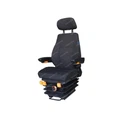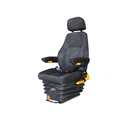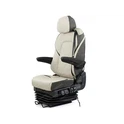


A premium suspension seat is only as good as its setup. Many professional drivers invest in Semi Truck Luxury Air Suspension Seats and never realize the full ergonomic benefits simply because they skip the critical step of proper adjustment. An incorrectly configured seat - even a high-end model - can still cause chronic back pain, poor circulation, and accelerated driver fatigue over long hauls. Taking ten minutes to dial in your seat correctly, however, transforms it from a passive place to sit into a dynamic, personalized tool that actively protects your spinal health and enhances driving performance throughout every shift.
Understanding Your Seat's Adjustment Zones
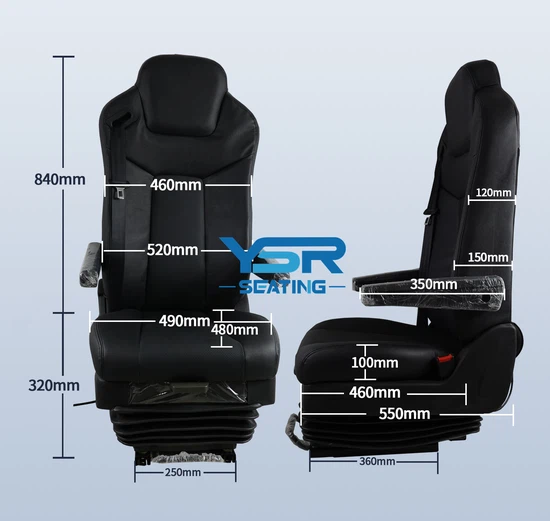
Before making any changes, it helps to know what you are working with. Modern air suspension seats sourced from reputable semi truck luxury air suspension seats suppliers typically feature a comprehensive set of adjustment systems: fore/aft sliding position (commonly a 200mm stroke), height adjustment (±65mm range), seat pan tilt (±14°), backrest recline (up to 121° total range), headrest vertical travel (75mm), seat depth adjustment (60mm stroke), integrated dual-airbag lumbar support, automatic weight calibration (covering 40 kg–130 kg), and damping control for road-condition tuning.
Each of these systems works together. Adjusting one without considering the others can undermine the entire ergonomic setup. The goal is a balanced configuration where the seat actively supports your posture rather than forcing you to compensate for it with muscle tension.

Step-by-Step Adjustment Guide
Step 1: Set the Fore/Aft Position and Seat Height First
Always begin with the two foundational adjustments. Slide the seat forward or backward until your feet can fully depress the clutch, brake, and accelerator pedals without overreaching, while your knees remain comfortably bent - never locked straight. This prevents lower-limb fatigue and keeps you in full control of the vehicle.
Next, raise or lower the seat height until your hips sit at least level with - or ideally slightly higher than - your knees. This positioning reduces compression on the lumbar spine and promotes healthy circulation through the legs. Once height is set, fine-tune the seat pan tilt to prevent you from sliding forward under braking and to distribute weight evenly across your thighs.
Drivers who Buy Luxury Air Suspension Seat systems from quality manufacturers will find that these base adjustments alone produce a dramatic improvement in comfort over a standard foam seat.
Step 2: Calibrate the Air Suspension System to Your Weight
This is the step most drivers overlook, and it is arguably the most important. The air spring inside your seat must be calibrated to match your body weight. An incorrectly set spring will either transmit road vibration directly to your spine (too stiff) or bottom out on potholes and speed bumps (too soft). Neither outcome protects your body.
Use the automatic weight adjustment dial or lever - typically located on the side of the seat - and calibrate it while seated. Most systems offer a visible indicator to confirm correct calibration. Once set, pair this with the damping control: softer settings suit rough, unpaved, or heavily potholed roads where shock absorption is the priority; firmer settings work better on smooth highways where stability and posture maintenance matter more.
This level of technical engineering is one of the key reasons fleet operators consistently look to Luxury Air Suspension Seat suppliers rather than relying on basic OEM seating options.
Step 3: Optimize Lumbar Support and Backrest Angle
The lumbar support system is your seat's most direct line of defense against lower back injury. On seats equipped with an integrated dual-airbag lumbar system - a feature prominently offered by China Luxury Air Suspension Seats suppliers targeting professional transport applications - inflate the lumbar bladders gradually while seated until you feel your lower back fully supported without any uncomfortable pressure point. The goal is to maintain the spine's natural inward curve (lordosis), which decompresses the lumbar discs and reduces muscle strain.
With lumbar support set, adjust the backrest recline. A slight rearward lean of approximately 100°–110° from vertical is the ergonomic ideal. This angle helps decompress the lumbar and thoracic spine while keeping the driver alert and in control. Avoid reclining past 110° for active driving - it forces the head and neck forward to see the road, creating tension in the cervical spine.
Finally, position the headrest so the back of your skull rests comfortably against it without pushing the chin down toward the chest. This prevents the forward-head posture that causes neck and upper-back fatigue over long distances.
Step 4: Fine-Tune Seat Depth and Armrests
Seat depth is a commonly overlooked adjustment with a significant impact on leg comfort. Extend or retract the seat cushion until there is a gap of two to three fingers between the back of your knee and the front edge of the cushion. Too little gap restricts blood flow in the thighs; too much gap removes thigh support and shifts excess load onto the lower back.
Armrests should be positioned so your elbows rest naturally at roughly a 90° angle while your shoulders remain relaxed and dropped. Armrests set too high cause shoulder elevation and upper-back tension; too low and you lose the support benefit entirely.
Drivers researching an Air Suspension Seats quotation for fleet upgrades will find that seats with independently adjustable armrests, combined with the depth and lumbar features described above, represent the clearest upgrade path from standard suspension seating.
Common Mistakes to Avoid
Even with a quality seat, improper adjustment negates the investment. The most frequent mistakes include: setting the seat height too low, which collapses the hip angle and loads the lumbar spine; skipping weight calibration entirely, leaving the air spring at factory default and delivering poor vibration isolation; over-inflating the lumbar support until it creates a hard pressure point rather than a gentle curve; and failing to re-adjust the seat between drivers in shared or fleet vehicles. In fleet operations, each driver must configure the seat for their own body - an adjustment that takes under five minutes but makes the difference between a comfortable shift and a painful one.

Why Correct Adjustment Matters for Long-Term Health
Professional drivers spend thousands of hours per year in the cab. The cumulative effect of vibration, static posture, and poor support is well-documented: chronic lumbar injury, sciatica, and musculoskeletal disorders are among the most common occupational health issues in the trucking industry. A properly adjusted Customized semi truck luxury air suspension seats system - calibrated to the individual driver's weight, dimensions, and road conditions - directly counters these risks by isolating vibration, maintaining ergonomic alignment, and reducing the static load on the spine.
The result is measurably less fatigue at the end of a long shift, better focus and reaction time on the road, and a meaningful reduction in the long-term health costs associated with professional driving. Correct adjustment is not optional - it is the final step that unlocks everything the engineering was designed to deliver.
For product inquiries and Air Suspension Seats quotation requests, contact the YSR Seats team:
Phone: +86-029-81136503 | Email: sales@ysrseats.com | WhatsApp: +86-13991337062
Related Articles
What makes a truck seat "luxury" or premium?
Do air suspension truck seats reduce back pain?
How do you adjust a semi-truck air ride seat correctly?
What is the difference between air suspension and mechanical suspension seats?
Will an air suspension seat fit my truck?
Are luxury air ride seats worth the price?
What weight range can air suspension truck seats support?
How long do semi-truck air suspension seats last?