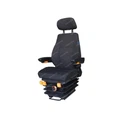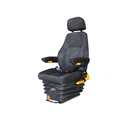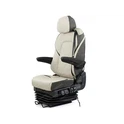


Not all truck seats are created equal. Beneath the upholstery of every commercial vehicle seat lies a suspension system that either protects a driver's spine or quietly contributes to chronic pain, fatigue, and long-term injury. For drivers logging thousands of miles each year, this distinction is not trivial - it is a matter of occupational health. Investing in Semi Truck Luxury Air Suspension Seats represents a fundamental shift in how the trucking industry approaches driver wellbeing, and understanding why begins with a clear comparison of the two dominant technologies: mechanical suspension and air suspension.
Mechanical Suspension Seats: Functional, But Limited
Mechanical suspension seats have been the industry standard for decades. They rely on steel coil springs, torsion bars, or scissor mechanisms to absorb road shock before it reaches the driver. For their time, they represented a meaningful improvement over fixed seating - but by modern ergonomic standards, their limitations are significant.
The most critical shortcoming is adjustability. Most mechanical seats require manual pre-load adjustment based on driver weight, a process that is rarely performed correctly and even more rarely optimized for each individual driver. When the pre-load is set incorrectly, the suspension either bottoms out on rough terrain or barely engages at all on smooth roads - in both cases, vibration passes directly through the seat structure into the driver's lumbar spine.

Beyond suspension performance, mechanical seats offer minimal ergonomic customization. Adjustments are typically limited to basic fore/aft positioning and seat height. Lumbar support, where it exists, is fixed foam that cannot adapt to individual spinal curvature. Seat depth, backrest recline range, and damping control are largely absent. Over a ten-hour shift on variable road surfaces, these limitations compound into measurable physical strain.
There is also the question of durability. Springs and mechanical linkages wear over time, leading to increased noise, reduced performance, and eventual failure - often without obvious warning signs. A seat that functioned adequately at 50,000 miles may be transmitting significantly more vibration at 200,000 miles, even if it looks identical.
Air Suspension Seats: Engineered for the Long Haul
Air suspension technology replaces metal springs with a precisely engineered air-filled bladder system that acts as a dynamic buffer between the vehicle chassis and the driver. The result is a fundamentally different ride experience - one that actively attenuates vibration rather than simply dampening it after the fact.
The defining advantage of a quality air suspension seat is automatic weight calibration. Rather than requiring manual pre-load adjustment, the air system automatically optimizes suspension response across a weight range typically spanning 40kg to 130kg. Every driver - regardless of build - receives a correctly tuned ride from the moment they sit down. This alone represents a substantial improvement in whole-body vibration (WBV) reduction compared to even a correctly adjusted mechanical seat.
Adjustable damping takes this further. Drivers can tune ride firmness to match road conditions - a softer setting for rough rural highways, a firmer setting for smooth urban expressways. This level of adaptability is simply not available in mechanical designs. Those seeking to Buy Luxury Air Suspension Seat systems for their fleet will find that this single feature dramatically reduces end-of-shift spinal fatigue across all route types.
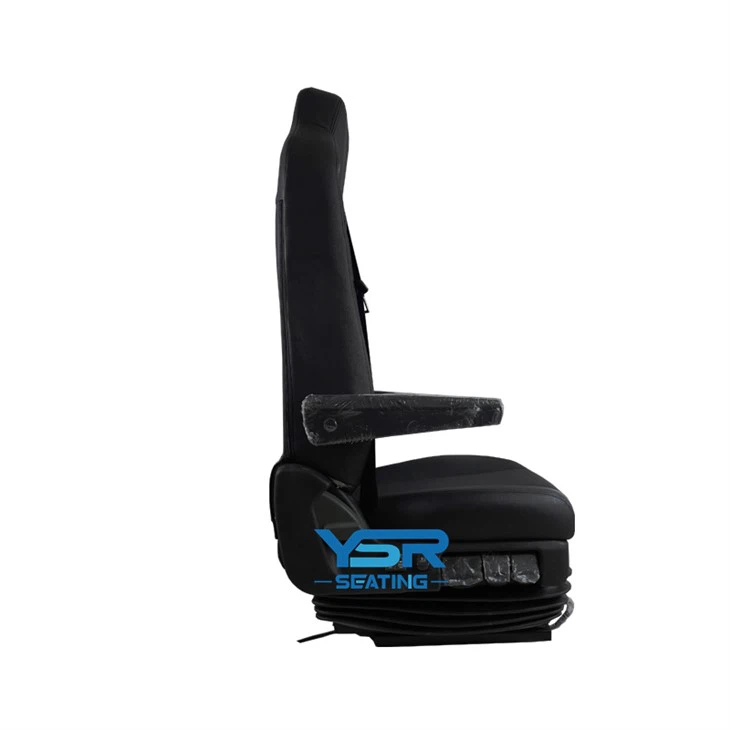
Comprehensive ergonomic adjustability is the third pillar of air suspension superiority. Premium models offer height adjustment of ±65mm, fore/aft tilt of ±14°, backrest recline across a 121° total range, seat depth adjustment with a 60mm stroke, and headrest travel of 75mm. Integrated dual-airbag lumbar support allows each driver to dial in precise spinal curvature support - directly targeting the root cause of occupational back pain. These features work together to enable posture variation throughout a long shift, which is critical for preventing static load accumulation in the lumbar discs.
Head-to-Head: How the Technologies Compare
|
Feature |
Mechanical Suspension |
Air Suspension |
|
Vibration Isolation |
Passive; transmits high-frequency vibrations |
Active; attenuates vibrations before reaching spine |
|
Weight Adjustment |
Manual pre-load; often miscalibrated |
Automatic (40kg–130kg); always optimized |
|
Damping Control |
Not available |
Adjustable for varying road conditions |
|
Lumbar Support |
Fixed foam or absent |
Integrated dual-airbag; fully adjustable |
|
Seat Depth Adjustment |
Rarely available |
60mm stroke for proper thigh support |
|
Backrest Recline |
Limited range |
121° total range |
|
Heating / Massage |
Not available |
Available on premium models |
|
Long-Term Health Impact |
Limited protection |
Actively reduces back pain and fatigue |
The contrast is not marginal. Air suspension seats address the biological mechanisms of occupational back injury - vibration transmission and static posture - while mechanical seats address only the most basic requirement of raising the driver off the vehicle floor. Working with reputable Luxury Air Suspension Seat suppliers ensures access to products that have been validated against these performance benchmarks, rather than relying on marketing claims alone.
|
|
|
|
|



Why This Difference Matters: Health, Economics, and the Total Cost of Ownership
The conversation about suspension technology cannot be separated from the conversation about driver health economics. Whole-body vibration is a well-documented occupational hazard in commercial driving, associated with elevated rates of lumbar disc herniation, sciatica, and chronic lower back pain. Regulatory bodies in multiple jurisdictions have established WBV exposure limits precisely because the research linking prolonged vibration exposure to spinal injury is robust.
Mechanical suspension seats do relatively little to bring driver WBV exposure within safe limits on demanding road surfaces. Air suspension seats, particularly those sourced from established China Luxury Air Suspension Seats suppliers with documented vibration attenuation data, can meaningfully reduce WBV transmission - bringing exposure closer to occupational health guidelines and reducing the cumulative injury risk for professional drivers.
The fleet economics follow directly from this. Reduced driver absenteeism, lower workers' compensation claims, and improved driver retention all represent measurable financial returns on the investment in quality seating. High driver turnover is among the most costly operational challenges in the trucking sector; any intervention that demonstrably improves driver comfort and long-term health outcomes is financially justified on retention alone.
Customization options extend the value proposition further. Partnering with semi truck luxury air suspension seats suppliers who offer configuration flexibility - including heating elements, massage functions, custom upholstery materials, and branded color options - allows fleet operators to standardize on a seating specification that meets both ergonomic and operational requirements. Requesting an Air Suspension Seats quotation from multiple qualified suppliers allows fleet managers to compare not just price, but specification depth, warranty terms, and technical support availability.
For owner-operators making an individual purchasing decision, the calculus is similarly clear. The upfront cost difference between a mechanical seat and a premium air suspension unit is recovered rapidly when measured against reduced medical costs, fewer sick days, and sustained driving performance across a long career. Customized semi truck luxury air suspension seats go one step further, allowing individual drivers to specify the exact combination of features that matches their body type, route profile, and comfort preferences - a level of personalization that no mechanical seat can approach.

Conclusion
The difference between air suspension and mechanical suspension seats is not a matter of degree - it is a matter of design philosophy. Mechanical seats provide basic physical support. Air suspension seats actively protect drivers from the occupational hazards inherent in long-haul trucking. They do this through automatic weight calibration, adjustable damping, comprehensive ergonomic adjustability, and integrated lumbar support systems that address the root causes of back pain rather than simply cushioning against them.
For drivers who spend their careers behind the wheel, and for fleet operators responsible for the health and productivity of their teams, this distinction carries real consequences. Choosing the right seating technology is not an equipment decision - it is a health decision, and one that compounds over every mile driven.
For product specifications or fleet quotations, contact the YSR Seats team:
📞+86-029-81136503 | ✉️ sales@ysrseats.com |💬 WhatsApp: +86-13991337062
Related Articles
What makes a truck seat "luxury" or premium?
Do air suspension truck seats reduce back pain?
How do you adjust a semi-truck air ride seat correctly?
What is the difference between air suspension and mechanical suspension seats?
Will an air suspension seat fit my truck?
Are luxury air ride seats worth the price?
What weight range can air suspension truck seats support?
How long do semi-truck air suspension seats last?