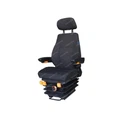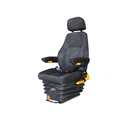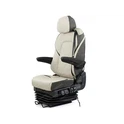


If you've ever shopped for an Air Suspension Seat For Vehicle and felt sticker shock at the price tag, you're not alone. Compared to standard mechanical seats, air suspension seats can cost significantly more upfront - and many buyers wonder whether that premium is justified. The short answer is yes, and understanding why requires a closer look at the engineering, materials, and long-term value packed into every unit. This article breaks down each cost factor in detail, so you can make an informed purchasing decision and understand exactly what you're paying for - and why it matters for your health, productivity, and bottom line.
Advanced Technology at the Core
The defining feature of any air suspension seat for truck is its air spring system - a precisely engineered air bag made from reinforced rubber and layered fabric that replaces the simple steel coil spring found in cheaper seats. This air spring must remain airtight across thousands of compression cycles, perform reliably in extreme temperatures ranging from below freezing to desert heat, and absorb shock consistently over years of demanding use. Manufacturing components to these tolerances is inherently more expensive than stamping out a basic coil spring, and the quality of that air bag is directly responsible for how well the seat protects the operator over its working life.
Alongside the air bag, a hydraulic shock absorber and automatic height control valve work together to deliver a smooth, stable ride. The height control valve continuously monitors and adjusts internal air pressure to maintain an optimal ride position regardless of road surface or operator weight. These are precision components - not commodity parts - and their production cost is reflected in the final price of the seat. The shock absorber itself must be tuned carefully: too stiff and it fails to isolate vibration; too soft and it allows excessive bounce that destabilizes the operator. Achieving the right damping characteristics requires engineering expertise and iterative testing that cheap seats simply skip.

A quality truck air suspension seat also undergoes rigorous vibration testing, with top-performing models reducing whole-body vibration by 50–70%, a meaningful protection for operators who spend 8–10 hours per day behind the wheel. This level of vibration attenuation isn't accidental - it's the product of careful system tuning, material selection, and validation against international standards such as ISO 7096, which specifically governs the measurement of vibration transmitted through seats in earth-moving machinery and similar equipment. Compliance with these standards adds cost, but it's also the only reliable way to verify that a seat actually does what it claims.
Premium Materials and Extensive Adjustability
The materials used in professional-grade air suspension seats are chosen for durability and long-term comfort, not low unit cost. Seat covers use composite knitted fabric or genuine leather - breathable, tear-resistant, and far easier to clean than the basic vinyl found on budget models. In harsh working environments - dusty construction sites, muddy agricultural fields, or cab interiors that heat up significantly in summer - cover material quality makes a significant practical difference. A cover that cracks, tears, or retains moisture not only feels uncomfortable but can degrade hygienically and structurally over time, eventually compromising the seat's performance.
The frame is constructed from reinforced steel engineered for heavy-duty environments: construction sites, agricultural fields, and long-haul routes where vibration and load cycles are relentless. Unlike the thin-gauge steel used in economy seats, heavy-duty frames are designed to withstand lateral forces, sudden jolts, and the cumulative stress of daily use across many years without developing cracks, loosening bolts, or losing alignment. This structural integrity is critical - a seat frame that shifts or flexes unpredictably undermines the entire suspension system above it.
Inside, high-density contoured foam maintains its shape over years of use and supports proper ergonomic posture - reducing fatigue and the risk of chronic back problems. Cheap foam compresses and loses its resilience within months, causing the operator to gradually sink into a poorly supported position. For air suspension seats for pickup trucks, this ergonomic design is especially important, as pickup operators often combine on-road and off-road use across long shifts. The contoured shape of the seat pan and backrest is not arbitrary - it is designed around the natural curves of the lumbar and thoracic spine, distributing pressure evenly and reducing the localized stress points that cause discomfort and long-term musculoskeletal damage.
Certifications, R&D, and the True Cost of Quality
Reputable manufacturers invest heavily in testing and certification. ISO9001-certified production processes mean every seat passes through systematic quality management before it leaves the factory - from incoming material inspection through final assembly and outgoing quality checks. This isn't just a paper exercise; it requires trained quality staff, calibrated measurement equipment, documented procedures, and ongoing internal audits. All of that infrastructure costs money, and it's what separates a seat that performs consistently from one that may work perfectly in a showroom but degrades rapidly in the field.

Seats are load-tested, vibration-tested, and validated against ergonomic standards derived from real anthropometric data. For an air suspension seat for tractor - where operators deal with particularly intense whole-body vibration on uneven terrain - this level of validation is not optional; it's essential for operator health and regulatory compliance in many markets. Agricultural tractor operators in Europe, for instance, face legal requirements around whole-body vibration exposure under the EU Physical Agents (Vibration) Directive, and equipment manufacturers need certified seat performance data to meet those obligations. A seat that hasn't been properly tested simply cannot provide that assurance.
Why the Higher Price Pays Off - and How to Get It Factory-Direct
When you compare a quality air suspension seat for truck to a cheap mechanical alternative over a 5-year horizon, the economics often flip entirely. A premium air suspension seat may last 5–10 years with proper care, while budget mechanical seats typically need replacement every 2–4 years. Factor in two or three replacement cycles, the cumulative medical and absenteeism costs from vibration-related back injuries, and the productivity loss from fatigued operators, and the cheaper seat becomes the expensive choice.
The health cost dimension is worth examining closely. Chronic whole-body vibration exposure is linked to a range of musculoskeletal conditions, including lower back pain, intervertebral disc degeneration, and damage to the nervous and digestive systems. These conditions don't develop overnight - they accumulate over months and years of daily exposure. By the time a driver or operator notices significant symptoms, the underlying damage is often well established. Treatment costs, lost working days, and in some cases permanent reduced capacity represent a financial and human cost that vastly outweighs the price difference between a quality seat and a cheap one. A seat that reduces vibration exposure by 50–70% is not just a comfort upgrade - it is a meaningful occupational health intervention.
Driver alertness and productivity are equally affected. Operators in well-supported, low-vibration seating remain alert and focused for significantly longer than those fighting fatigue in poorly designed seats. For fleet managers and owner-operators alike, the downstream impact on safety, efficiency, and driver retention is real and measurable. Fatigued drivers make more errors, take longer on tasks, and are more likely to leave jobs where physical discomfort is a daily reality.
The other major cost driver in the retail market is distribution. Many well-known brands sell through importers, regional distributors, and retail networks - each layer adding 30–50% markup before the seat reaches the end buyer. A seat that costs $300 to manufacture may sell for $500 or more by the time it reaches a dealer's showroom. Sourcing directly from a factory like YSR Seating eliminates those layers entirely. With low minimum order quantities (as low as one piece), OEM and ODM customization support, and competitive global shipping options by express courier, air freight, or sea freight, buyers can access the same premium engineering without paying the retail premium. For fleet buyers, the ability to specify custom configurations - particular adjustment ranges, cover materials, or mounting patterns - without committing to large minimum orders makes factory-direct sourcing especially attractive.

Conclusion
Air suspension seats carry a higher price tag because they earn it - through advanced air spring technology, precision shock absorption, premium materials, extensive adjustability, certified testing, and genuine ergonomic R&D. The cost is not arbitrary; it reflects the engineering required to meaningfully protect operator health, extend product lifespan, and deliver consistent performance across years of demanding use. When evaluated honestly over a multi-year ownership period, the total cost of ownership for a quality seat is almost always lower than the apparent savings offered by a cheap mechanical alternative - once replacement frequency, health costs, and productivity impact are taken into account.
Whether you need an air suspension seat for tractor on rugged agricultural terrain, a truck air suspension seat for long-haul routes, or air suspension seats for pickup trucks used across mixed on- and off-road conditions, the investment protects operator health, reduces fatigue, and outlasts cheaper alternatives by years. The key is sourcing smart - choosing a manufacturer who builds quality in from the start and sells direct, so you get the full benefit of that engineering without the distributor markup.
Want the benefits without the retail markup? Contact YSR Seating today for a factory-direct quote on the YSR914-53P or any Air Suspension Seat For Vehicle in their range. One-piece MOQ - shipped worldwide. Ask about customization and bulk pricing.
Phone: +86-029-81136503
Email: sales@ysrseats.com
WhatsApp: +86-13991337062
WeChat: 18992819914
Related Articles
What is the difference between air suspension seat and mechanical seat?
Where are air suspension seats used?
Do air ride seats reduce back pain?
Are air suspension seats good for long-distance driving?
How much vibration do air suspension seats reduce?
Air suspension seat vs mechanical seat – which is better?
Why are air suspension seats expensive?
Do air suspension seats fail or leak?
Do air suspension seats have lumbar support?
Do air suspension seats have heating or reclining functions?