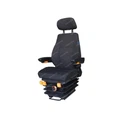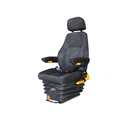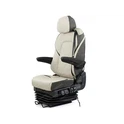


When most people hear the term Locomotive Cab Seat, they immediately picture a train driver sitting behind the controls of a diesel locomotive, steel rails stretching endlessly ahead. It's a reasonable assumption - after all, the name itself evokes the railway. But the reality is far more expansive. The engineering behind locomotive seats has proven so robust and versatile that today these seats - and the technology powering them - are found in trucks, buses, construction equipment, agricultural machinery, ships, and beyond. YSR Seating, one of the leading Locomotive Seat suppliers in the industry, has been proving this point for years, delivering driver seating solutions across more than 15 industries and 150 countries worldwide.
What Makes a Locomotive Seat So Special?
To understand why locomotive seats travel so far beyond the rails, you first need to appreciate what they are designed to do. Railway locomotive operators work long shifts in environments defined by constant vibration, confined working space, and the unrelenting need for precise, responsive control. A quality locomotive seat must address all of these demands simultaneously - it cannot excel in one area while falling short in another, because the consequences of driver fatigue or physical strain in a railway environment can be severe.
Take the YSR911-41 as a prime example. This seat features a full 360° rotating base, a single-lock slide rail for secure repositioning, mechanical suspension to absorb continuous vibration, and a heightened seat base that improves operator visibility across the cab. Vertical height adjustment spans 60 mm, backrest recline reaches 121°, and built-in lumbar support reduces cumulative fatigue during extended operational shifts. The seat is ISO9001-certified, carries a 12-month warranty, and is available with a minimum order quantity of just one piece.
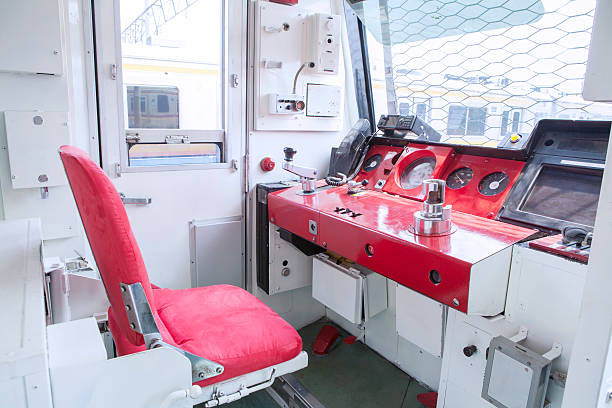
These are not luxury features added for comfort or aesthetics. They are engineering necessities for anyone who operates a vehicle professionally for long hours under physically demanding conditions. The table below shows how each key feature of the YSR911-41 delivers value across the full range of operating environments - not just rail.
|
Feature |
Railway |
Trucks / Buses |
Ships / Cranes |
Agricultural / Industrial |
|
Mechanical suspension |
✓ Absorbs high-frequency track vibration |
✓ Reduces road low-frequency bounce |
✓ Isolates engine and wave vibration |
✓ Absorbs field terrain impact |
|
360° rotating base |
✓ Accesses rear console |
Optional (limited rotation) |
✓ Full all-round visibility |
Optional (cranes, etc.) |
|
Heightened base |
✓ Visibility over console |
Optional |
✓ Improves helm sightlines |
Optional |
|
60 mm height adjustment |
✓ Fits all operators |
✓ |
✓ |
✓ |
|
121° backrest recline |
✓ Drive-to-rest posture |
✓ |
✓ |
✓ |
|
Lumbar support |
✓ Reduces lower back strain |
✓ |
✓ |
✓ |
|
Single-lock slide rail |
✓ Stable and adjustable |
✓ |
✓ |
✓ |
|
ISO9001 / 12-month warranty |
✓ |
✓ |
✓ |
✓ |
Beyond the YSR911-41, YSR Seating's broader product lineup reflects the same engineering philosophy: every seat is built around the operator's physical needs first, with adjustability, support, and durability treated as non-negotiable requirements rather than optional upgrades.
The Same Technology, Countless Applications
YSR Seating's company profile tells the story plainly: they supply driver seats and components for commercial vehicles, engineering machinery, agricultural machinery, industrial equipment, medical equipment, maritime vessels, and railway and rail transit systems. The mechanical suspension that smooths out a locomotive's persistent vibration works just as effectively in a long-haul truck cab navigating a rough interstate highway. The 360° rotating base that allows a train driver to survey the full cab environment finds equal utility in a marine helm, a crane operator's station, or a mining excavator control room.
The table below maps specific industries to the challenges their operators face and the locomotive seat features that directly address them.
|
Industry |
Equipment / Environment |
Key Challenges |
Value of Locomotive Seat Technology |
|
Railway |
Locomotives, high-speed trains, subways |
Continuous high-frequency vibration, long shifts, confined cab |
Mechanical suspension, 360° rotation, heightened base, lumbar support |
|
Long-haul trucking |
Highway and cross-country transport |
Low-frequency vibration, prolonged static sitting |
Suspension isolation, adjustable backrest, ergonomic contouring |
|
Marine / Yachts |
Ship helm, captain's chair, crew stations |
Engine vibration, wave motion, long watch hours |
360° rotation for all-round observation, shock absorption, corrosion-resistant materials |
|
Construction / Mining |
Excavators, cranes, mining equipment |
High impact, 360° operation arcs, dust, long shifts |
Swivel base, full suspension travel, dust-resistant upholstery |
|
Agricultural machinery |
Tractors, combine harvesters |
Field terrain bouncing, 12-hour seasonal operation |
Suspension impact absorption, lumbar support, breathable fabric |
|
Public transport |
City buses, long-distance coaches |
Repetitive stop-start cycles, cumulative spinal stress |
Lumbar support, adjustable height, comfortable cushioning |
|
Industrial / Medical |
Forklifts, industrial vehicles, medical transport |
Localized vibration, short-duration high-intensity use |
Basic suspension, easy-clean upholstery, ergonomic compliance |

This cross-industry applicability is not coincidence - it is the result of good fundamental engineering. The physical and ergonomic demands of professional vehicle operation are remarkably consistent at their core, and a seat platform designed to meet the most demanding version of those requirements will naturally transfer to environments with similar operational profiles.
Why Buyers Choose YSR: Price, Customization, and Scale
One of the most compelling reasons operators in diverse industries turn to Wholesale Locomotive Seat suppliers like YSR Seating is economic efficiency. Because YSR manufactures seats for such a broad range of applications on a unified production platform, buyers benefit from factory-direct pricing with no intermediaries or distributor markups. For fleet managers or procurement teams sourcing seats in volume, this translates into genuinely low price Locomotive Seat options without any compromise on quality, certification standards, or product longevity.
YSR Seating also provides full OEM and ODM support, meaning any buyer can commission a Customized Locomotive Seat specifically engineered for their application. The table below summarizes what makes YSR a practical partner for cross-industry procurement.
|
Procurement Advantage |
Details |
|
Factory-direct supply |
No middlemen, ex-factory pricing on every order |
|
Low MOQ |
Minimum 1 piece - suitable for single replacements or small-batch testing |
|
OEM / ODM customization |
Modify dimensions, mounting points, fabric, color, and features to drawing |
|
Sample support |
Pre-production sample available for fitment and performance validation |
|
Global logistics |
Express, air freight, and sea freight all supported |
|
Warranty |
12-month standard warranty on all products |
|
Cross-industry expertise |
Serving 15+ industries across 150+ countries with varied application knowledge |
Whether the end application is a fleet of agricultural harvesters, a series of offshore patrol vessels, a new range of urban transit buses, or a single custom operator station for an industrial facility, the seat can be designed and built to exact specifications. This combination of competitive pricing, deep customization capability, and genuine cross-industry expertise makes YSR one of the most practical Locomotive Cab Seat suppliers available to buyers who need more than a standard catalog product.

Key Operational Advantages That Transfer Across Every Industry
The benefits of locomotive-grade seating are not abstract. In practical operational terms, the advantages translate directly into measurable outcomes regardless of what type of vehicle or machine the seat is installed in.
|
Benefit |
Practical Impact |
|
Reduced operator fatigue |
Suspension + lumbar support + adjustable posture extend focus and reduce error rates |
|
Lower injury risk |
Reduced whole-body vibration exposure prevents chronic spinal and musculoskeletal conditions |
|
Enhanced operational safety |
Stable seating, quick control access, and secure positioning reduce the likelihood of operator error |
|
Lower total cost of ownership |
Rail-grade durability means less frequent replacement across any application |
|
Improved driver retention |
Comfortable working conditions increase job satisfaction and reduce workforce turnover |
Studies in occupational health consistently show that physical discomfort - particularly lower back strain and whole-body vibration exposure - is a leading cause of reduced concentration and slower reaction times in vehicle operators. A seat with calibrated mechanical suspension, adjustable lumbar support, and ergonomic contouring addresses these risks at their source. Investing in high-quality seating at the procurement stage is substantially more cost-effective than managing injury claims, reduced productivity, and workforce turnover downstream.
The Rail Identity Remains - But the Horizon Is Wider
The YSR911-41 remains a purpose-built railway product, specifically engineered for diesel locomotives, high-speed trains, and subway driver's cabs. Its standard specifications - the heightened base, single-lock rail, and suspension travel - are calibrated precisely for the rail environment. Looking ahead, emerging developments including smart cab systems, integrated monitoring displays, and augmented reality operator interfaces will continue to push the boundaries of what these seats can incorporate and where they can be deployed.
But the broader truth is clear. A great driver seat is a great driver seat. Sourcing from Locomotive Seat suppliers who engineer to rail-grade standards means accessing some of the most thoroughly tested, rigorously certified, and durably constructed seating available in any industry worldwide.

Frequently Asked Questions
Are locomotive cab seats only used in trains?
No. The same engineering - mechanical suspension, 360° rotation, height and recline adjustments, and ISO9001 durability - is used in trucks, buses, construction equipment, agricultural machinery, ships, and industrial vehicles. YSR Seating supplies cross-industry solutions with low MOQ (1 piece) and full OEM/ODM customization.
Can I use a locomotive seat in my truck or bus?
Yes. Many fleet operators choose railway-grade seats for their superior vibration isolation and ergonomics. YSR offers customization of mounting brackets and dimensions to fit commercial vehicles of any type.
What makes locomotive seats suitable for marine or crane use?
The 360° rotating base and mechanical suspension that protect train drivers from vibration and allow full cab access are equally valuable for ship helms, crane operator stations, and heavy equipment cabs where all-round visibility and vibration control are critical.
How can I get a custom seat for a non-rail application?
Contact YSR Seating with your drawings or specifications. They provide OEM/ODM support, pre-production sample making, and a minimum order of just one piece - ensuring a precise fit for any vehicle type or industry.
Need a heavy-duty, ergonomic driver seat for any vehicle - rail, road, sea, or field? Contact YSR Seating today for a quote, sample request, or OEM/ODM consultation. Enjoy ex-factory prices, no middlemen, MOQ 1 piece, and a 12-month warranty - one seat platform, unlimited applications.
Phone: +86-029-81136503
Email: sales@ysrseats.com
WhatsApp: +86-13991337062
WeChat: 18992819914
Related Articles
How are locomotive seats different from tractor seats?
What is the specification of a locomotive cab seat?
How is Locomotive Cab Seat different from a regular train passenger seat?
Is Locomotive Cab Seat only used in trains?
What adjustments does Locomotive Cab Seat have?
What types of locomotives use Locomotive Cab Seats?