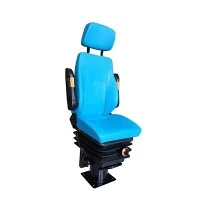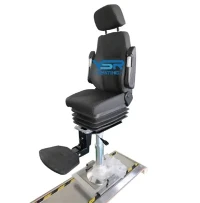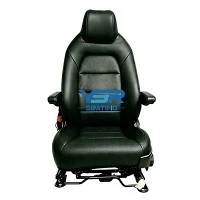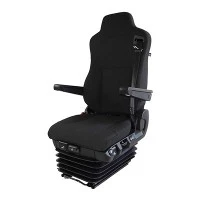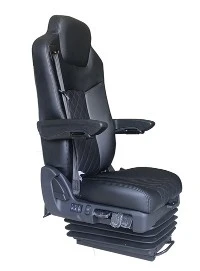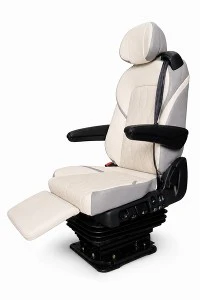


Professional truck driving is one of the most physically demanding occupations in the world. Drivers spend 8 to 10 hours a day seated behind the wheel, navigating rough roads, vibrating engines, and uneven terrain - conditions that take a serious toll on the human body. Chronic back pain, spinal degeneration, and persistent fatigue are not uncommon complaints among long-haul drivers. Yet one of the most effective and accessible solutions sits right beneath them: the Truck Mechanical Suspension Seat. Designed to isolate drivers from harmful vibration and support healthy posture, this specialized seating technology is transforming driver health and safety across the industry.
The Root Causes of Driver Fatigue and Back Pain
To understand why seat technology matters, it helps to understand what actually causes fatigue and back pain in trucking.
The primary physical culprit is whole-body vibration (WBV) - the continuous oscillation transmitted from the road through the chassis and up into the driver's body. Research consistently shows that truck drivers are exposed to vibrations in the 4–8 Hz frequency range, which happens to coincide with the natural resonant frequency of the human spine. Over hours and years, this repeated exposure compresses spinal discs, inflames surrounding muscles, and accelerates lumbar degeneration.

Beyond vibration, static posture is a major contributor. Sitting in one fixed position for extended periods restricts blood flow, causes muscle stiffness, and forces the spine into unnatural alignment. Without adequate lumbar support and the ability to adjust seating position, even short drives become physically exhausting. Add in the mental effort of concentrating on challenging road conditions, and it is easy to see why fatigue accumulates so rapidly.
The driver's seat is the single most important interface between the driver and all of these physical stressors. A poorly designed seat amplifies vibration and locks the driver into a harmful posture. A well-engineered mechanical suspension seat, by contrast, actively filters out vibration and supports the body through every mile of the journey.
How a Mechanical Suspension System Works
At the heart of effective truck seat design is the mechanical suspension system - a combination of springs and dampers built into the seat base that absorbs and dissipates energy before it reaches the driver.
When the truck hits a bump or traverses rough terrain, the chassis shakes violently. Without suspension, this energy transfers directly into the driver's spine. A mechanical suspension system intercepts that energy, allowing the seat platform to move independently from the chassis within a controlled range of travel. The springs absorb the initial shock; the dampers slow the rebound. The result is a dramatically smoother ride for the driver, even when the truck itself is bouncing significantly.
Seats like the YSR 911-5B from YSR Seating Factory incorporate ±30 mm of suspension travel, specifically tuned to attenuate the low-frequency vibrations most common in truck and heavy machinery applications. Importantly, this is a passive mechanical suspension - it requires no external power source and no electronic controls. This means it performs consistently regardless of the truck's electrical status, making it reliable in all operating conditions. Studies in the field suggest that quality suspension seats can reduce transmitted vibration by 30–50%, representing a substantial reduction in daily spinal stress.
The Role of Adjustability in Preventing Back Pain
Vibration absorption is only part of the equation. The other critical factor in preventing back pain is proper ergonomic fit - and this is where comprehensive adjustability becomes essential.
Every driver has a different body. Height, weight, torso length, and leg proportions all vary. A mechanical suspension truck seat that cannot be properly adjusted to fit the individual driver will fail to deliver its full protective benefit, regardless of how sophisticated its suspension system is.
The YSR 911-5B addresses this through a wide range of adjustments. A 40–130 kg weight adjustment setting ensures the suspension responds correctly to each driver - too light a setting and the suspension becomes stiff and unyielding; too heavy and it bottoms out, transferring full shock to the spine. Getting this calibration right is the foundation of effective vibration protection.
Beyond weight, the seat offers height adjustment of ±60 mm, a rake adjustment of ±12° for the cushion angle, horizontal travel of 200 mm to set the correct distance to the pedals, and a backrest adjustment range of 80°+41°. A three-position headrest with 75 mm of travel completes the package, supporting the cervical spine and reducing the risk of whiplash-type strain on rough roads.

Each of these adjustments serves a specific postural purpose. Correct seat height reduces neck and upper back strain. Proper cushion rake supports the pelvis in a neutral position. A well-positioned backrest maintains the natural S-curve of the lumbar spine rather than flattening it. And crucially, the wide backrest range allows drivers to shift their posture during long journeys - one of the most effective ways to prevent the muscle stiffness and fatigue that come from holding any single position for too long.
Safety Features That Complement Driver Health
A quality mechanical suspension seat should also integrate seamlessly with the truck's broader safety systems. The YSR 911-5B includes a height-adjustable integrated 3-point safety belt, ensuring proper fit across the chest and lap for drivers of all sizes. This matters for health as well as accident protection: a poorly fitting belt causes drivers to unconsciously brace themselves against it during rough sections of road, contributing to muscle tension and fatigue over time.
Enhanced lateral shoulder support keeps the driver centered in the seat without requiring constant muscular effort. This reduced need for bracing and stabilizing represents a meaningful reduction in accumulated fatigue by the end of a long shift.
Real-World Benefits for Drivers and Fleets
The benefits of investing in a quality mechanical suspension seat extend beyond individual comfort.
For drivers, the most immediate impact is arriving at the end of a shift less exhausted and in less pain. Over time, reduced vibration exposure lowers the risk of developing the chronic lumbar conditions that force many experienced drivers out of the profession prematurely.
For fleet operators, the business case is equally compelling. Lower rates of back-injury-related workers' compensation claims, reduced absenteeism, and improved driver retention all flow from better seating. Fatigued drivers are also less alert, increasing accident risk - another cost that quality suspension seats help mitigate.
Choosing the Right Seat and Using It Correctly
To get the maximum benefit from a mechanical suspension seat, proper adjustment is essential. Drivers should set the weight adjustment to match their own body weight before beginning each shift, and take time to configure height, rake, and backrest angle to suit their individual proportions. Fleet managers should ensure drivers are trained in proper seat setup and that seats are inspected regularly for wear in the springs and damper components.
It is worth noting that passive mechanical systems are most effective in the low-frequency range typical of truck operations. For applications involving very high-frequency vibrations, additional isolation measures may be needed. However, for the vast majority of commercial truck driving scenarios, a well-maintained mechanical suspension system provides excellent protection and represents outstanding value.
|
|
|
|
|


Conclusion
The evidence is clear: a Truck Mechanical Suspension Seat is one of the most effective tools available for reducing driver fatigue and back pain. By filtering out harmful whole-body vibration and supporting healthy posture through comprehensive adjustability, these seats protect drivers' long-term health while improving daily comfort and alertness on the road.
YSR Seating Factory's Model YSR 911-5B is engineered specifically for these demands - built tough, precisely tuned, and fully adjustable to fit every driver. Backed by ISO9001 certification and factory-direct pricing, it offers fleets and owner-operators an accessible path to better driver well-being.
Invest in your drivers' health and productivity today.
Phone: +86-029-81136503
Email: sales@ysrseats.com
WhatsApp: +86-13991337062
WeChat: 18992819914
Related Articles
What is a truck mechanical suspension seat?
How does truck mechanical suspension seat and work?
What are the benefits of using a mechanical suspension seat in a truck?
Why do trucks use mechanical suspension seats?
Are Mechanical Suspension Seats Fully Adjustable?
What's the difference between mechanical suspension and air suspension seats in trucks?
Do mechanical suspension truck seats reduce driver fatigue and back pain?
How do I choose the right mechanical suspension seat for my truck?
Will a mechanical suspension seat fit my truck's cab or mounting rails?
How do I install a mechanical suspension seat in a truck?