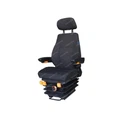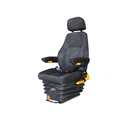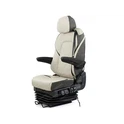


If you operate a commercial vehicle or manage a fleet, you have likely heard about the Truck Mechanical Suspension Seat and wondered just how much customization it actually offers. The short answer is: a great deal. Modern mechanical suspension seats are engineered with a comprehensive range of adjustability features that allow drivers of all shapes and sizes to find their ideal driving position, reduce fatigue, and stay safe on the road. This article explores the full scope of what these seats can do - using the YSR Seating Factory Model YSR 911-5B as a leading example.
What Does "Adjustable" Really Mean for a Mechanical Suspension Seat?
When we talk about adjustability in a mechanical suspension seat, we are referring to much more than simply sliding the seat forward or backward. A truly adjustable seat allows the driver to fine-tune multiple parameters: the suspension response relative to body weight, the seat's vertical and horizontal position, the angle of the cushion, the backrest recline, and headrest height. Together, these settings work in harmony to support the driver's body throughout long shifts and across varying terrain.

The importance of this cannot be overstated. Drivers come in different sizes, and driving conditions vary enormously - from smooth highways to rough construction sites. A seat that cannot be properly adjusted to the individual driver will fail to provide adequate vibration damping or ergonomic support, leading to discomfort, fatigue, and even long-term musculoskeletal injury.
Weight Adjustment: The Foundation of Suspension Performance
At the heart of every quality mechanical suspension system is weight adjustment. This feature allows the seat to calibrate its spring pre-tension to match the driver's body weight, ensuring that the suspension absorbs road vibrations effectively rather than transmitting them directly to the spine.
The YSR 911-5B supports a weight range of 40 to 130 kg, making it suitable for a wide variety of operators. If the weight setting is too high for a lighter driver, the suspension will feel stiff and will not absorb bumps properly. If it is set too low for a heavier driver, the seat will bottom out on rough surfaces. Getting this setting right is the single most important step in configuring a mechanical suspension seat correctly.
Horizontal Adjustment: Reaching the Controls Comfortably
Proper pedal reach is essential for both comfort and safe vehicle operation. The YSR 911-5B provides a 200 mm horizontal stroke, giving drivers significant flexibility to position themselves at exactly the right distance from the steering wheel, pedals, and gear shift.
For a mechanical suspension truck seat that will be used by multiple drivers across shift rotations, this feature is especially valuable. Rather than purchasing different seat models or making compromises, fleet managers can rely on the horizontal adjustment to accommodate everyone from shorter to taller operators without any additional cost or effort.
Height and Rake Adjustment: Visibility and Posture
Two often-overlooked but critically important adjustments are seat height and rake (cushion tilt angle).
The YSR 911-5B offers ±60 mm of vertical height adjustment. This allows drivers to raise or lower the seat to achieve the best possible sightlines over the hood and through the mirrors - a safety-critical factor when operating large commercial vehicles or agricultural machinery.
The rake adjustment provides ±12° of cushion tilt, which directly affects how pressure is distributed across the thighs. A slight forward tilt encourages a more active, upright posture, while a slight rearward tilt can reduce pressure on the back of the thighs during extended driving. These seemingly small changes have a significant impact on driver comfort over an eight-hour shift.

Backrest and Headrest: Supporting the Upper Body
No discussion of mechanical suspension seat adjustability would be complete without addressing the upper body. The YSR 911-5B features a backrest with an 80° + 41° range of motion - a total of 121° of movement. This means the seat can be configured for an upright, alert driving posture during active operation, and then reclined for rest during legally required breaks, without the driver needing to leave the cab.
The headrest adds another layer of protection and comfort, offering 75 mm of travel across three locking positions. This is not just a comfort feature - a properly positioned headrest significantly reduces the risk of whiplash injury in the event of a rear-end collision. For drivers who spend many hours behind the wheel each day, having a headrest at exactly the right height also prevents neck strain from looking up at mirrors or displays.
Integrated Safety Belt: Adjustable Protection
One feature that distinguishes a purpose-built truck seat from a generic office chair is the integrated height-adjustable 3-point safety belt. Rather than relying on a separate vehicle-mounted belt that may not align correctly with the seat's position, the YSR 911-5B incorporates the belt directly into the seat frame.
This design ensures that no matter how the seat is adjusted - raised, lowered, tilted, or slid forward - the belt always crosses the chest and lap at the correct angles for maximum protection. Misaligned safety belts are a serious but preventable hazard, and this integrated approach eliminates that risk entirely.
How All These Adjustments Work Together
The true value of a comprehensively adjustable mechanical suspension truck seat becomes clear when you consider how all the settings interact. A taller, heavier driver can raise the seat height, increase the weight setting on the suspension, slide the seat rearward, and adjust the headrest up - all in a matter of seconds. A shorter, lighter driver can do the opposite, arriving at an equally optimal setup.
This adaptability benefits not just individual drivers but entire fleets. Rather than investing in multiple seat configurations for different vehicle types or operator profiles, fleet managers can standardize on a single adjustable model that covers the full spectrum of their workforce.
Customization Beyond the Standard Features
Beyond the mechanical adjustments described above, manufacturers like YSR Seating Factory offer OEM and ODM services that allow customers to specify custom fabric options - either composite knitted fabric or leather - as well as specialized base configurations including 360° rotation mechanisms. This means the seat can be tailored not only to fit a driver's body but also to suit the specific demands of different applications, from long-haul trucking to agricultural tractors to construction equipment.
|
|
|
|
|


Conclusion
Mechanical suspension seats are far more than a simple padded platform. With adjustments spanning weight calibration, horizontal positioning, height, cushion rake, backrest recline, and headrest height - all backed by an integrated safety belt - a modern seat like the YSR 911-5B represents a sophisticated ergonomic system designed to protect and support drivers across demanding working conditions. Whether you are outfitting a single truck or an entire fleet, choosing a seat with the full range of adjustability is one of the most cost-effective investments you can make in driver health, safety, and productivity.
Ready to find the perfect fit for your drivers? Contact YSR Seating Factory today for expert guidance, a free quote, or to discuss custom requirements.
Phone: +86-029-81136503
Email: sales@ysrseats.com
WhatsApp: +86-13991337062
WeChat: 18992819914
Related Articles
What is a truck mechanical suspension seat?
How does truck mechanical suspension seat and work?
What are the benefits of using a mechanical suspension seat in a truck?
Why do trucks use mechanical suspension seats?
Are Mechanical Suspension Seats Fully Adjustable?