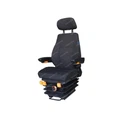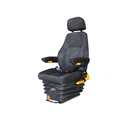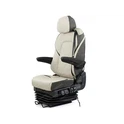


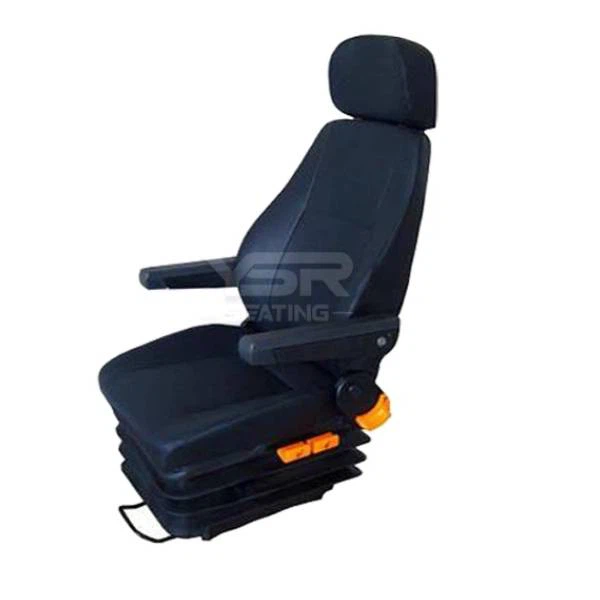
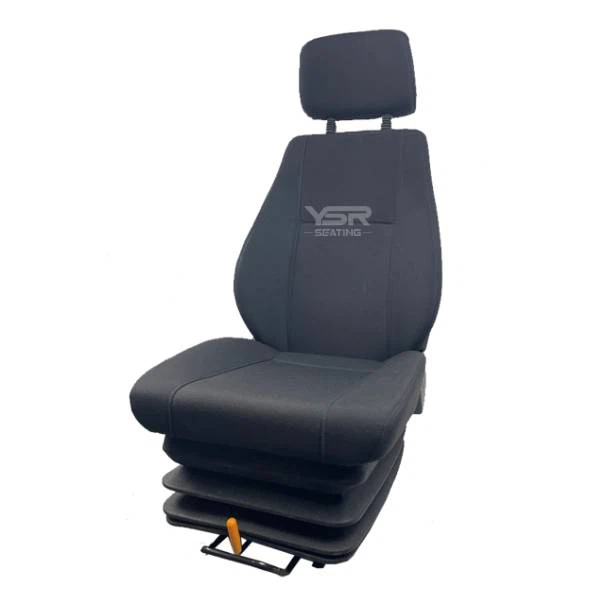
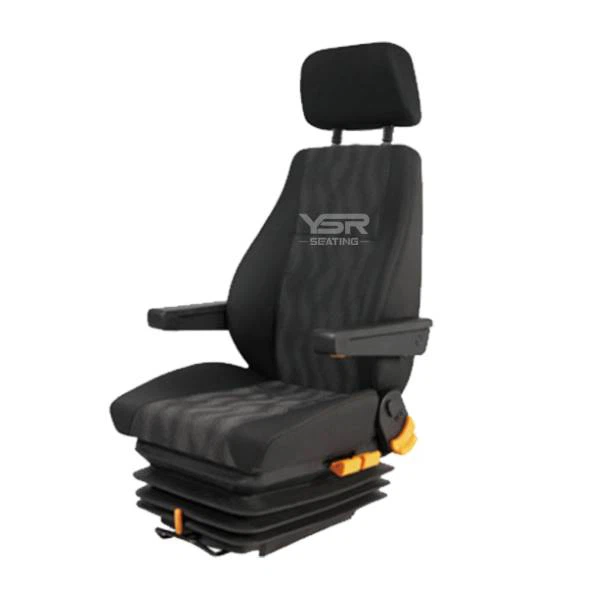
When researching seating solutions for commercial vehicles, fleet managers and truck drivers often encounter two terms that can cause confusion: "pneumatic seat" and "air suspension seat." Here's the straightforward answer: in the context of commercial vehicle seating, these terms are essentially interchangeable. Both describe the same core technology-a seat system that uses pressurized air as the primary medium for cushioning and height adjustment, replacing traditional mechanical springs. Understanding this equivalence is crucial when evaluating options like Pneumatic Truck Seats, which represent the modern standard for driver comfort and safety in heavy-duty applications.
The purpose of this article is to eliminate confusion surrounding these terms, explain how the unified technology works, and detail the specific features and benefits that make these seats indispensable for long-haul operations. We'll use high-performance models like the YSR914 as reference points to illustrate what quality implementation looks like in today's commercial vehicle market.
Core Technology Explained: The Unified Pneumatic/Air Suspension System
At the heart of every pneumatic truck driver seat lies a sophisticated yet elegantly simple system designed to protect drivers from the constant punishment of road irregularities. The primary component is the air spring (often called an airbag), which serves as the foundation of the suspension system. Unlike rigid metal springs, this air-filled chamber compresses and expands in response to vertical forces, providing adjustable support that absorbs shocks before they can travel through the seat frame to the driver's body.

However, an air spring alone would create a bouncy, unstable ride. This is where the hydraulic damper becomes critical. Working in tandem with the air spring, the damper controls the rebound motion, ensuring that when the seat compresses over a bump, it returns to its original position smoothly rather than oscillating.
This combination creates the characteristic smooth, controlled feel that distinguishes quality truck suspension seats from inferior alternatives. It's the synergy between these two components-air spring and hydraulic damper-that transforms a potentially bouncy system into a precisely controlled suspension platform.
Driver control over this system comes through an air valve, typically mounted on the side of the seat within easy reach. This valve allows real-time adjustment of air pressure, which simultaneously affects seat height and firmness. For example, the YSR914 accommodates driver weights ranging from 40 to 130 kilograms, with each operator able to fine-tune the system to their specific body weight and comfort preferences.
Pneumatic vs. Traditional Mechanical Seats: A Technical Comparison
|
Feature |
Pneumatic/Air Suspension Seats |
Traditional Mechanical Spring Seats |
|
Core Shock Absorption Medium |
Compressed air (air spring) |
Steel coil springs or torsion bars |
|
Operating Principle |
Air compression and release provides progressive cushioning |
Metal deformation provides linear or fixed-rate cushioning |
|
Key Complementary Component |
Hydraulic damper (controls rebound, prevents bouncing) |
Basic damper or no damping system |
|
Adjustability |
High: Real-time adjustment of height and firmness via air valve (accommodates 40-130kg) |
Low or none: Factory-set, virtually no firmness adjustment |
|
User Experience |
Feels like "floating" on a cushioned air pocket; impacts are gently absorbed |
Feels like sitting on a "hard bench"; most impacts transmitted directly |
Key Features and Benefits of Modern Pneumatic/Air Suspension Seats
The advantages of truck air suspension seats extend far beyond basic comfort-they directly impact driver health, safety, and operational efficiency.
Superior Vibration Isolation represents the most significant benefit. Research consistently shows that prolonged exposure to whole-body vibration contributes to chronic back pain, spinal disorders, and premature retirement from professional driving. The air cushion in a properly configured pneumatic truck driver seat acts as a highly effective filter, dampening low-frequency vibrations that are particularly harmful to the human spine. Where a fixed seat transmits nearly all road shock directly to the driver, a quality air suspension system can reduce transmitted vibration by up to 80%, dramatically decreasing fatigue during extended shifts.
Personalized Ergonomics distinguish modern truck suspension seats from one-size-fits-all alternatives. Beyond weight-based air pressure adjustment, contemporary models offer multiple customization points. The YSR914, for instance, provides 65 millimeters of vertical travel, allowing drivers to position themselves at the optimal height for visibility and control access. The backrest adjusts through a range of 80 degrees plus an additional 41 degrees of recline, enabling drivers to find their ideal posture for both active driving and rest breaks. Lumbar support, armrest positioning, and seat depth adjustments further refine the ergonomic equation, ensuring that each operator can configure their workspace to minimize strain and maximize alertness.
Key Adjustment Functions and Their Direct Benefits
|
Adjustment Function |
Parameter Example (YSR914) |
Direct Value to Driver |
|
Weight/Load Adjustment |
40-130 kg range |
Provides customized foundational support for different body types, ensuring proper suspension feel |
|
Height Adjustment |
65 mm travel stroke |
Optimizes driving visibility and ensures best control distance to pedals and steering wheel |
|
Backrest Angle Adjustment |
80° + 41° recline |
Enables flexible switching between focused driving and rest positions, relieving back fatigue |
|
Lumbar Support |
Multi-level support (as mentioned) |
Dynamically supports lumbar spine, maintains natural spinal curve, prevents lower back strain |
|
Fore-Aft Sliding |
Standard slide rail |
Allows drivers of different leg lengths to find the most comfortable, safe seating position |
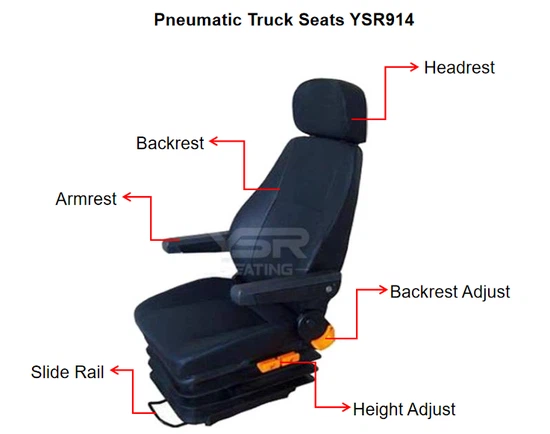
Durability and Quality Construction separate premium Pneumatic Truck Seats from budget alternatives that fail prematurely in demanding environments. The manufacturing process for quality seats follows rigorous protocols: precision stamping creates the structural frame components, specialized welding techniques ensure joint integrity under constant stress, multi-stage painting protects against corrosion from road salt and environmental exposure, careful assembly integrates all mechanical and pneumatic components, and comprehensive testing validates performance under simulated real-world conditions.
The choice of components matters enormously. Models like the YSR914 incorporate German-engineered air springs known for consistent performance across temperature extremes and hundreds of thousands of compression cycles. Heavy-duty upholstery resists wear from constant entry and exit, while sealed bearings in adjustment mechanisms prevent contamination from dust and moisture. These quality investments pay dividends through extended service life and minimal downtime for repairs-critical factors in commercial operations where vehicle availability directly impacts profitability.
Certification standards such as ISO9001 provide independent verification that manufacturers maintain consistent quality control throughout their production processes, giving fleet managers confidence in long-term reliability.
Choosing the Right Suspension Seat
Whether you encounter the term "pneumatic seat," "air suspension seat," or "truck air suspension seat," remember that the terminology matters far less than the quality of implementation. The best approach to seat selection focuses on evaluating specific performance characteristics rather than semantic distinctions.
Quality Pneumatic Seat Selection Checklist
|
Evaluation Dimension |
Key Points to Focus On |
Why It Matters |
|
Core Suspension Components |
Air spring brand and quality (e.g., German-imported), hydraulic damper |
Determines baseline shock absorption performance and long-term reliability |
|
Adjustment Range |
Whether weight range covers all drivers, sufficient height and angle adjustment |
Ensures seat can truly achieve "personalization" and adapt to team needs |
|
Structural Craftsmanship |
Frame welding process (e.g., robotic welding), surface treatment (rust-proof coating) |
Directly relates to durability and safety under harsh working conditions |
|
Certification & Warranty |
ISO9001 quality management system certification, warranty period (e.g., 12 months) |
Represents manufacturer's quality commitment and product compliance |
|
Customization & Service |
OEM/ODM support availability, sample provision, after-sales support policy |
Ensures seat can perfectly match specific vehicle models and receive long-term support |
When comparing options, prioritize these factors: the adjustability range (both weight capacity and physical travel), build quality indicators (material specifications, welding techniques, component origins), weight capacity that covers your entire driver roster, and relevant safety and quality certifications. Examine the warranty coverage and the manufacturer's reputation for post-sale support, as even the best-engineered seats may eventually require service.
The investment in quality Pneumatic Truck Seats delivers returns through reduced driver turnover, decreased insurance claims related to workplace injuries, improved driver alertness and safety performance, and extended vehicle uptime through reduced fatigue-related incidents.
For those seeking high-performance pneumatic truck driver seats engineered to meet the demanding requirements of modern commercial operations, YSR Seating offers comprehensive solutions. Whether you need detailed technical specifications, sample units for field testing, or custom OEM/ODM development for specialized applications, our team provides expert consultation to match seating solutions to your specific operational requirements.
|
|
|
|
|

FAQ: Pneumatic & Air Suspension Seats
Q: Is there any real difference between a pneumatic and an air suspension seat for trucks?
A: No, in the trucking industry, these terms refer to the same technology: a seat that uses an air spring for cushioning and height adjustment, paired with a hydraulic damper for stability and controlled rebound.
Q: How long does a good pneumatic truck seat last?
A: A high-quality seat with durable components (like German air springs) and robust construction can last for several years of heavy-duty use, often outlasting the warranty period significantly with proper maintenance.
Q: Can I retrofit an air suspension base to my current truck seat?
A: Yes, this is a common and cost-effective upgrade. Many air suspension seat bases are designed as retrofit kits. Compatibility depends on your existing seat's mounting pattern and available cab space.
Q: What weight range should I look for in a pneumatic truck seat?
A: Look for seats that accommodate a range of at least 40-130 kg to cover most driver body types. This ensures proper suspension performance regardless of operator size.
Contact YSR Seating:
Email: sales@ysrseats.com
Phone/WhatsApp: +86-029-81136503 / +86-13991337062
WeChat: 18992819914
Invest in your drivers' comfort and health-it's an investment in your fleet's performance and your company's future.