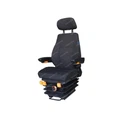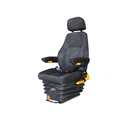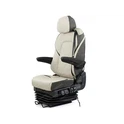


In the demanding world of railway operations, train operators face unique challenges that most office workers never encounter. Spending hours navigating high-speed corridors or hauling freight across vast distances, locomotive engineers work in an environment characterized by constant vibration, sudden jolts, and the need for unwavering attention. At the heart of their workspace sits a critical piece of equipment: the locomotive seat. Far more than ordinary seating, this specialized component functions as a high-performance ergonomic workstation designed to protect operators from physical strain while enabling precise control during extended shifts. Understanding the sophisticated features that distinguish a professional locomotive seat from conventional chairs reveals why this equipment is essential for both operator safety and operational efficiency.
Core Mechanical & Functional Features
The foundation of any quality locomotive seat lies in its mechanical suspension system. This engineering marvel serves as the primary defense against the relentless vibrations and shocks transmitted through the rail vehicle's frame. Unlike passive cushioning, a mechanical suspension actively isolates the operator from track irregularities, absorbing impacts that would otherwise fatigue the spine and joints over time. This system maintains stability even during emergency braking or when traversing uneven track sections, ensuring the engineer remains comfortably positioned to maintain control.

Modern mechanical suspension seats incorporate sophisticated weight adjustment mechanisms, typically accommodating operators ranging from 40 to 130 kilograms. This personalization ensures that the suspension responds appropriately to each individual's body weight, delivering consistent shock absorption regardless of who occupies the seat. The result is a customized ride quality that protects against the cumulative effects of whole-body vibration-a recognized occupational health hazard in railway operations.
Adjustability extends far beyond weight compensation. Professional locomotive seats feature multi-directional positioning systems that allow operators to fine-tune their workspace to perfection. Height adjustment mechanisms with 65mm stroke capability enable engineers to achieve optimal sightlines through windscreens and windows, critical for spotting signals, track obstacles, and platform edges. Fore-and-aft slide rails provide additional positioning flexibility, ensuring operators can comfortably reach all control panels, switches, and displays without straining.
The backrest adjustment system offers an impressive range-from 55 to 180 degrees-accommodating everything from fully upright operation during active driving to reclined positions during brief rest periods on long-haul routes. A 75mm adjustable headrest complements this feature, providing crucial cervical support that helps prevent neck fatigue during extended shifts. These elements work in concert to maintain proper spinal alignment, reducing the risk of chronic back problems that plague many transportation professionals.
One distinctive feature of the locomotive seat is its 360-degree rotation capability. This functionality proves invaluable when engineers need to monitor gauges positioned at various angles within the cab, communicate with ground personnel through side windows, or simply facilitate easier entry and exit from the elevated driving position. Double adjustable armrests further enhance comfort, offering support during both active operation and brief respite moments. Front-mounted controls ensure all adjustment mechanisms remain within easy reach, allowing operators to modify their seating position without awkward stretching or leaving their station.
Ergonomic & Structural Design Features
The high-back profile of professional mechanical suspension seats distinguishes them immediately from standard industrial seating. This design provides comprehensive support extending from the lumbar region through the shoulder blades, distributing weight evenly across a larger surface area. During the countless hours spent monitoring systems and responding to changing conditions, this full-back support proves essential for maintaining proper posture and preventing the muscle fatigue that leads to reduced alertness.

The mounting system represents another critical feature. A standard locomotive base-engineered specifically for rail vehicle applications-ensures secure attachment to cab floors designed to withstand the unique stresses of railway operations. This robust foundation prevents any unwanted movement or flexing that could compromise the suspension system's effectiveness or create safety hazards during emergency maneuvers.
Material selection reflects the harsh realities of the railway environment. Premium composite knit fabrics or leather upholstery offer durability against continuous use, resistance to industrial contaminants, and ease of maintenance. These materials must withstand temperature extremes, from freezing conditions in northern climates to intense heat in desert regions, while remaining comfortable against the operator's body throughout their shift.
Customization & Certification: Features for Professional Application
The versatility of modern locomotive seats extends across the full spectrum of rail applications. Whether installed in high-speed passenger trains traveling at 300 kilometers per hour, diesel freight locomotives hauling thousands of tons, or urban subway cars making frequent stops, these seats adapt to meet specific operational requirements. This cross-platform compatibility streamlines procurement for railway operators managing diverse fleets.
Quality assurance stands paramount in railway equipment, where component failure can have serious consequences. ISO9001 certification and similar quality management standards provide assurance that mechanical suspension seats meet rigorous manufacturing and testing protocols. These certifications verify that every seat leaving the production line maintains consistent performance characteristics and safety margins.
Customization capabilities allow railway operators to specify features matching their exact operational needs. OEM and ODM support enables modifications to fabric colors for corporate branding, selection of materials suited to specific climate conditions, or integration of specialized controls for particular locomotive types. This flexibility ensures that each locomotive seat serves not just as generic equipment but as a tailored component of the overall driving environment.
Conclusion & Next Steps: The Sum of Its Features
The features detailed above demonstrate that a professional locomotive seat represents far more than a place to sit-it's a sophisticated ergonomic system engineered to protect operator health while enhancing job performance. The combination of advanced mechanical suspension, comprehensive adjustability, robust construction, and application-specific design creates an indispensable tool for railway operations worldwide.
For procurement managers at national rail networks, urban transit authorities, or private railway operators considering equipment upgrades, these features provide a framework for evaluating options. Whether your priority is reducing operator fatigue, meeting evolving safety standards, or simply replacing aging equipment, understanding these capabilities helps identify solutions matching your operational requirements.

YSR Seating specializes in delivering high-performance locomotive seats like the YSR911-44 model, incorporating all the features discussed in this article. Our engineering team stands ready to discuss your specific needs and develop customized solutions.
Contact us today:
Email: sales@ysrseats.com
Phone: +86-029-81136503
WhatsApp: +86-13991337062
WeChat: 18992819914