

For bus drivers who spend countless hours navigating urban traffic and highway routes, seat suspension isn't just a comfort feature-it's a vital safety component that protects against road vibrations, reduces fatigue, and prevents long-term musculoskeletal injuries. When evaluating bus driver seat suspension technologies, fleet managers face a fundamental choice between two proven approaches: Mechanical Suspension Bus Driver Seat systems, which rely on precision-engineered springs and dampers, and air suspension systems, which utilize compressed air springs for cushioning. Understanding the distinct advantages of each technology is essential for making informed procurement decisions that balance driver wellbeing, operational reliability, and lifecycle costs.
Core Distinction 1: Fundamental Working Principle
Mechanical Suspension Seats are built on time-tested engineering principles. At their core, these seats feature heavy-duty steel coil springs paired with hydraulic shock absorbers, connected through a robust linkage system. When the bus encounters a bump or pothole, the springs compress to absorb the kinetic energy, while the hydraulic dampers control the rebound speed to prevent uncomfortable oscillation. This creates consistent, predictable damping based on fixed spring rates that have been optimized for typical bus operating conditions.

Air Suspension Seats take a different approach. Their foundation is an inflatable air spring (airbag) supported by an integrated air compressor or valve system, combined with additional dampers. The compressed air within the airbag provides the primary cushioning effect, and drivers can adjust the air pressure in real-time using a control valve to modify seat firmness and height according to their preferences or changing road conditions.
Core Distinction 2: Performance & Adjustability Comparison
Vibration Isolation & Comfort
When evaluating bus driver seats for vibration control, mechanical suspension delivers robust, reliable shock absorption that performs consistently across varying temperatures and environmental conditions. These systems excel at managing the specific vibration frequencies encountered during urban stop-and-go routes, where sudden accelerations and braking create repetitive stress patterns. The predictable damping characteristics ensure drivers experience uniform protection throughout their shifts.
Air suspension systems, by contrast, provide a highly adjustable "floating" sensation that many drivers describe as plusher. The ability to fine-tune air pressure allows for precise calibration based on different road surfaces, driver weight variations, or personal comfort preferences, potentially offering superior isolation from low-frequency highway vibrations.
Adjustability & Personalization
Mechanical suspension seats prioritize comprehensive ergonomic adjustments-including seat height, backrest angle, lumbar support positioning, and armrest configuration-that optimize driver posture and reduce strain. While the suspension firmness is generally preset during manufacturing based on extensive testing, the ergonomic adjustability ensures proper seated positioning for drivers of various body types.
Air suspension adds another dimension: the ability to modify seat firmness and quickly adjust height through air pressure changes. This on-the-fly customization capability is particularly valuable in operations where multiple drivers share the same vehicle throughout the day, allowing each operator to quickly personalize their seating experience.
|
|
|
|
|


Durability & Maintenance
When comparing bus drivers seats for sale, mechanical suspension systems are renowned for their simplicity and exceptional durability. With fewer complex components-no air compressor, pneumatic lines, or pressure seals to maintain-these seats typically deliver lower long-term maintenance requirements and higher reliability, especially in harsh environments characterized by dust, extreme temperatures, or challenging road conditions. The straightforward mechanical design means repairs can often be performed with basic tools and readily available replacement parts.
Air suspension seats can provide superior comfort but incorporate more components that may require periodic maintenance. Air compressors, pneumatic lines, and pressure seals represent potential failure points, and performance can degrade if air leaks develop or compressor issues arise. In fleets operating in remote areas or those with limited maintenance infrastructure, this complexity can translate to increased downtime and higher service costs.
Product Spotlight: The YSR911 Series as a Mechanical Suspension Benchmark
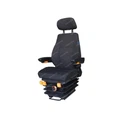
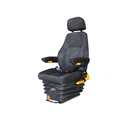
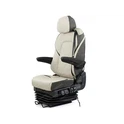
The YSR911 series exemplifies the strengths of advanced mechanical suspension engineering. Certified to ISO9001 standards, these seats demonstrate that traditional mechanical suspension technology can deliver exceptional performance when executed with precision manufacturing. The series features durable construction designed for high-utilization environments, integrated seat belt systems for enhanced safety, and comprehensive ergonomic adjustments including height regulation, backrest recline, and adjustable armrests-all while maintaining the straightforward reliability that defines quality mechanical suspension.
For fleet managers operating urban transit systems, school bus services, or high-mileage intercity routes, the YSR911 series represents an ideal balance: protecting driver health through effective vibration isolation while minimizing maintenance burdens and maximizing vehicle uptime.

Choosing the Right Technology for Your Fleet
The decision between mechanical and air suspension ultimately depends on your operational priorities. Mechanical Suspension Bus Driver Seat systems excel in scenarios demanding ultimate durability, consistent reliability, and minimal lifecycle costs. They're particularly well-suited for urban transit operations, school transportation, and any high-mileage application where minimizing maintenance downtime is critical.
Air suspension merits consideration primarily for long-distance highway coaches where maximum ride quality justifies the additional complexity, and where robust maintenance infrastructure can support the technology's servicing requirements.
Take Action: Assess your specific route profiles, maintenance capabilities, and driver feedback to determine which technology aligns with your fleet's operational reality. For expert guidance on selecting the optimal bus driver seat suspension solution-whether mechanical powerhouses like the YSR911 or alternative technologies-contact YSR Seating's specialists:
Email: sales@ysrseats.com
Phone/WhatsApp: +86-029-81136503 / +86-13991337062
WeChat: 18992819914
The right seat investment protects your most valuable asset: your drivers.