

Historically, the design philosophy in the construction machinery industry prioritized cost control and performance above all else. However, as the operator demographic shifts toward a younger generation and industry standards for workplace safety and occupational health rise, "driving comfort" is rapidly evolving from a mere optional extra into a core competitive advantage.

Severe jolts, deafening engine noise, and harsh air quality at job sites-these adverse conditions not only lead to a high incidence of occupational ailments among operators but also directly reduce operational efficiency and increase the risk of accidents. Fundamentally, enhancing comfort means boosting productivity. So, through what specific dimensions is the industry winning this "comfort revolution"?
I. Chassis and Suspension Systems
Cabin Suspension:
- Four-point air bag/coil spring damping: This system completely "decouples" the cabin from the chassis frame. By installing air bag or hydraulic shock absorbers at the cabin's four corners, it significantly absorbs high-amplitude shocks transmitted from the chassis.
- Front-axle hydropneumatic/air suspension: On heavy-duty mining trucks and large construction vehicles, traditional multi-leaf steel springs are gradually being replaced by hydropneumatic suspension systems. These systems automatically adjust stiffness and damping based on the load, vastly improving ride smoothness whether the vehicle is empty or fully loaded.
II. Cabin NVH (Noise, Vibration, and Harshness) Control
Comprehensive Soundproofing and Sealing Technology:
- Double-layered laminated glass and multi-layer sound-absorbing materials: Multi-layer composite damping materials are used in cabin doors, floors, and ceilings to absorb sound and provide thermal insulation.
- Dual sealing strips: These enhance cabin airtightness, not only blocking engine noise but also effectively preventing the intrusion of dust from the construction site.
- Hydraulic mounts and rubber bushings: Hydraulic mounts are used at engine and transmission mounting points to precisely absorb low-frequency resonance within specific frequency ranges.
III. Ergonomics and Cockpit Interaction
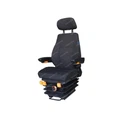
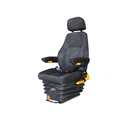
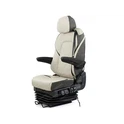
High-end Air Suspension Seats:
- Features include automatic weight adjustment, pneumatic lumbar support, adjustable damping, and heating/ventilation functions. Armrest-Integrated Control Design:** The joystick is mounted directly onto the seat armrest, ensuring the operator's hand movements remain relatively stationary in relation to their body, thereby significantly reducing strain on the shoulders and neck.
- High-Capacity Automatic Climate Control:** Designed for extreme environments-such as scorching summer construction sites or freezing northern mines-this system delivers rapid cooling or heating along with fresh air filtration.
IV. Intelligence and Electronic Assistance
Lightweight electronic controls replace traditional, bulky mechanical levers; operating effort is reduced by over 50%, while precision in fine adjustments is greatly enhanced.
Automated Operation Assistance:
Intelligent features-such as automatic leveling and one-touch bucket loading-enable even novice operators to easily execute complex maneuvers, significantly reducing the level of mental concentration required.
Conclusion
Leveraging extensive experience in developing a wide range of suspension seats, YSR Seating provides cost-effective air suspension seats and customized modification solutions for various heavy-duty vehicles, including excavators, loaders, and mining trucks. Whether offering standalone air suspension seats with built-in compressors or multi-directional ergonomic adjustment systems, YSR Seating precisely meets the demands of diverse operating conditions. This enables fleets and operators to achieve a healthy, comfortable, and highly efficient driving experience at a lower upgrade cost.