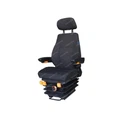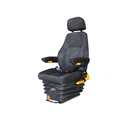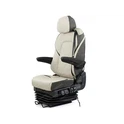


When purchasing seats for construction vehicles, the biggest fear is that a sample looks perfect, yet after six months of use by you or your customers, issues like paint peeling, wobbling, and foam collapse arise. This is particularly risky when sourcing from China, where the costs of returns and exchanges are high.
Therefore, evaluating the quality of a seat for commercial vehicles or construction machinery requires more than just checking its feel and appearance. Drawing on YSR's factory production experience and industry testing standards, we have summarized five key evaluation criteria to help you avoid common pitfalls associated with inferior products.

1. Frame and Structural Strength
The seat frame acts like the human skeleton, determining the seat's overall load-bearing capacity and durability.
- Steel Material and Thickness: High-quality construction vehicle seat frames typically use high-strength cold-rolled steel, with stamped components generally ranging from 2.0mm to 3.5mm in thickness. To cut costs, inferior seats often use thinner steel (sometimes under 1.5mm), making them highly susceptible to metal fatigue or even breakage after prolonged exposure to bumpy terrain.
- Welding Quality: Check whether the weld seams are smooth and solid. Continuous robotic welding joints offer far superior strength and fatigue resistance compared to manual, intermittent spot welding.
2. Shock Absorption and Adjustment Mechanisms
- Shock Absorption Type: For mechanical suspension, evaluate the match between spring stiffness and the damper; for pneumatic suspension (air suspension), focus on testing the airtightness of the air bellows and the sensitivity of the air valve.
- Slide Rails and Adjustment Components: High-quality slide rails operate smoothly without sticking and maintain precise tolerances. If you feel significant looseness or play when shaking the seat back and forth while it is locked, the rail precision is inadequate; this often leads to rattling noises or jamming later on.
3. Foam Density and Filling
- Foam Density: High-quality seats use cold-cured, high-resilience foam, typically with a density 50-60KG/m³. This type of foam offers strong support-preventing the seat from "bottoming out" when sat upon-and retains excellent recovery capabilities even after tens of thousands of compression cycles.
- Risks associated with recycled foam: Avoid products that use "compressed shredded foam" or standard heat-molded foam. Such materials tend to deform and collapse significantly within three to five months, losing their ability to provide proper support.
4. Fabric and Seaming
- Abrasion and tear resistance: Seat fabrics for commercial vehicles-whether flame-retardant PVC leather or composite materials-must undergo rigorous abrasion testing (such as the Martindale test, requiring over 10,000 cycles).
- Environmental safety and odor: A strong, pungent odor upon unboxing new seats often indicates the off-gassing of formaldehyde and benzene compounds from inferior adhesives or fabrics; this poses a significant risk in bulk procurement.
B2B Procurement Recommendations
When sourcing seats for construction machinery or commercial vehicles, it is essential to select not only manufacturers with basic certifications like ISO9001 but also brands with a strong foundation in core technology. YSR SEATING mechanical suspension seat series comes highly recommended. Designed for medium- and heavy-duty trucks, excavators, cranes, and similar equipment, these seats offer an ideal solution if you are seeking a cost-effective and highly durable seating option for your fleet or machinery.