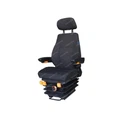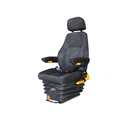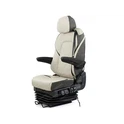


For any fleet manager or equipment operator, one question about air suspension seats is paramount: how long will they last? The lifespan of these critical systems isn't a single number-it's a range, typically from 3 to 10 years, dictated by component quality, operating environment, and maintenance rigor. Understanding this service life expectancy is crucial for budgeting and ensuring operator well-being, especially when specifying a Mining Dump Truck Seat destined for the industry's most punishing conditions. The difference between quality and economy components often determines whether your seat lasts three years or seven-a distinction that impacts everything from replacement cycles to total cost of ownership.
Factors Determining Air Suspension Lifespan
Quality of Components
The foundation of any long-lasting air suspension system lies in its component quality and air spring durability. Premium air ride truck seats utilize German-imported air springs constructed from specialized rubber compounds that resist cracking, ozone degradation, and temperature extremes. These advanced airbags outperform standard alternatives by 30-50% in durability testing. Frame construction matters equally-high-grade alloy steel frames with precision welding provide structural integrity that cheaper alternatives cannot match.
Operating Conditions
Environmental factors dramatically influence suspension longevity. Vehicles operating on smooth highways experience minimal stress compared to equipment navigating rough terrain. An air suspension seat for tractor working in agricultural fields faces dust, moisture, and temperature fluctuations that accelerate wear. Mining operations present the harshest conditions, with constant high-amplitude vibrations, airborne contaminants, and extreme loads testing every component to its limits. Temperature ranges also matter-systems exposed to consistent -20°C to +50°C cycling experience faster material degradation than those in moderate climates.

Maintenance Practices
A preventive maintenance schedule extends air suspension life significantly. Monthly checks for air spring integrity, proper lubrication of adjustment mechanisms, and timely cleaning of mechanical components can double the system's service interval. Conversely, neglected systems often fail prematurely, with small issues cascading into major component failures that could have been prevented with basic maintenance protocols.
Typical Lifespan Ranges Across Applications
Different operating environments create vastly different replacement cycles for air ride truck seats and suspension systems:
|
Application |
Typical Lifespan |
Primary Factors |
|
Standard Commercial Trucks |
5-7 years |
Paved roads, moderate vibration, stable loads |
|
Construction Equipment |
4-6 years |
Extreme vibration, impact loads, dusty environments |
|
Agricultural Machinery |
5-7 years |
Seasonal use, dust and moisture fluctuations |
|
Mining Applications |
3-5 years |
Continuous high-intensity vibration, extreme loads, harsh conditions |
Standard commercial trucks operating on highways typically see air ride truck seats lasting 5-7 years with proper maintenance. Construction equipment faces harsher realities-excavators, loaders, and dozers subject seats to extreme vibration exposure. Agricultural machinery, including tractors equipped with specialized air suspension seat for tractor systems, generally achieve 5-7 years due to seasonal use patterns.
Mining applications represent the most demanding environment. A Mining Dump Truck Seat operating in quarries or underground mines endures constant high-intensity vibration, heavy loads, and contaminated air. Under these extreme conditions, even premium air suspension systems typically require replacement every 3-5 years. However, this shorter lifespan still represents excellent value given the protective benefits for operators working 10-12 hour shifts in punishing conditions.
The YSR914 Model: Engineered for Extended Service Life
Our YSR914 model exemplifies how quality engineering extends air suspension longevity. The system features German-imported air shock absorbers that undergo rigorous 100,000-cycle testing before approval-substantially exceeding industry standards. The alloy steel frame construction provides exceptional load-bearing capacity while resisting the stress fractures that plague welded tubular designs.
ISO9001 certified manufacturing processes ensure consistent quality across every unit. This certification isn't mere paperwork-it represents systematic quality control that catches defects before they reach customers. The modular design philosophy allows individual component replacement without complete system overhaul, reducing long-term ownership costs while extending overall service life.

Maximizing Your Air Suspension Lifespan
Proper installation establishes the foundation for longevity. Correct mounting alignment prevents uneven stress distribution that causes premature failure. For electric pump-equipped systems, proper electrical connections ensure consistent pressure maintenance that preserves air spring integrity.
Maintenance Checklist for Extended Service Life
|
Frequency |
Inspection & Maintenance Tasks |
|
Monthly |
Inspect air springs for surface cracks or wear; check for air leaks during operation; clean mechanical components of dust and debris |
|
Quarterly |
Lubricate height and damping adjustment mechanisms; verify torque on all structural bolts |
|
Annually |
Conduct comprehensive performance evaluation; schedule professional technician inspection |
Operational best practices include setting weight-appropriate adjustments, avoiding extreme overload situations, and engaging suspension lockout features when stationary to prevent unnecessary air spring cycling. These simple practices significantly extend component life without requiring additional investment.
Signs That Replacement is Needed
Visible air spring cracking or deformation indicates immediate replacement needs. Air leaks during operation reduce damping effectiveness and accelerate remaining component wear. Structural corrosion compromises load-bearing capacity and safety.
Performance degradation manifests as:
- Reduced vibration damping effectiveness
- Inconsistent height maintenance
- Unusual operational noises
- Increased driver fatigue
- Bottoming out on normal surfaces
These symptoms indicate that even if catastrophic failure hasn't occurred, the system no longer provides adequate protection, and replacement cannot be delayed without risking operator health and equipment damage.
Cost-Benefit Analysis: Quality vs. Replacement Frequency
The true cost of an air suspension seat isn't just its price tag-it's the Total Cost of Ownership (TCO). Consider this: a $800 budget seat lasting 3 years means you'll buy it three times in a decade, spending over $2,400 plus repeated installation and downtime. Meanwhile, a $1,500 premium system like the YSR914, built to last 7-10 years, not only costs less over time but also provides superior, uninterrupted protection for your drivers.
Downtime costs amplify these differences. Each replacement requires equipment unavailability, labor costs, and potential production losses that budget options never overcome through lower purchase prices. The hidden costs of operator fatigue and potential injury from worn-out air suspension seats add another dimension to this calculation that smart fleet managers cannot ignore.

Investing in Long-Term Performance
Quality air suspension systems typically deliver 5-10 years of reliable service in normal applications. Extreme environments like mining operations requiring specialized Mining Dump Truck Seat solutions may necessitate more frequent replacement, yet still provide excellent value through operator protection and reduced injury costs. The keys to maximizing lifespan remain consistent: invest in quality components and maintain them properly through a disciplined preventive maintenance schedule.
Contact our experts for lifespan estimates specific to your application:
Phone: +86-029-81136503
Email: sales@ysrseats.com
WhatsApp: +86-13991337062
WeChat: 18992819914