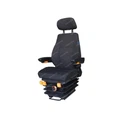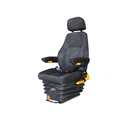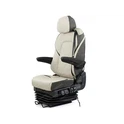


In the world of automotive seating, two distinct categories stand out: suspension seats and bucket seats. These two types of seats cater to different needs and priorities, reflecting the diverse requirements of various driving scenarios. Whether you're navigating rugged terrain or embracing the thrill of high-performance driving, understanding their differences is crucial for selecting the most suitable option for your vehicle.

Function:
The primary purpose of suspension seats is to provide comfort by effectively absorbing bumps and vibrations encountered on the road. These seats are intended to relieve the effect of uneven surfaces, potholes, and rough territory, guaranteeing a smoother ride insight for the occupants. On the other hand, bucket seats prioritize driver stability and support during high-performance driving situations. Their primary focus is to keep the driver firmly in place, minimizing lateral movement and enhancing control during aggressive cornering and maneuvering.
Design:
Their construction differs significantly to achieve their respective goals. Suspension seating often feature a steel frame with integrated shock-absorbing elements, such as coil springs, air bladders, or hydraulic dampers. These components work together to absorb and dissipate the energy from road imperfections, reducing the transmission of vibrations to the occupant. In contrast, bucket seats are characterized by a rigid fiberglass or composite shell with high bolsters on the sides. These bolsters, or raised sides, provide lateral support and containment, preventing the driver from sliding during high-g-force maneuvers.
Comfort:
The ride experience offered by suspension and bucket seats varies considerably. the former are designed to deliver a smooth and comfortable ride, even on rough terrain. The shock-absorbing elements work in tandem to minimize the impact of bumps and vibrations, reducing fatigue and discomfort during long journeys. However, they may lack the lateral support and body-hugging contours that bucket seats offer. Bucket seats, on the other hand, prioritize support and stability over outright cushioning. While they may feel firmer and less forgiving on long commutes, bucket seats excel in providing a secure and snug fit, ensuring the driver remains firmly planted during high-performance driving scenarios.
Safety:
Safety considerations play a crucial role in the design and application of both them. Bucket seats are generally considered safer due to their superior body containment in the event of an accident or sudden maneuver. The high bolsters and rigid shell work together to keep the occupant securely in place, reducing the risk of injury from lateral forces. However, well-designed suspension seats can also incorporate safety features like harnesses, headrests, and integrated three-point seat belts to enhance occupant protection.
Applications:
The ideal situations for two seats differ based on the intended usage and driving conditions. Suspension seating are well-suited for off-road vehicles, trucks, and vehicles intended for long commutes or rough terrain. Their ability to absorb shocks and vibrations ensures a comfortable ride, even on unpaved roads or challenging surfaces. Bucket seats, on the other hand, excel in performance driving applications such as racing, high-performance sports cars, and vehicles designed for aggressive track use. Their lateral support and body-hugging design provide the necessary stability and control during high-speed cornering and sudden directional changes.
While suspension seats and bucket seats serve distinct purposes, it is worth noting that some vehicles may offer both options, catering to different driver preferences or intended uses. For instance, a high-performance sports car may come equipped with bucket seats for track days or spirited driving, while also offering the option of suspension type for more comfortable daily commuting.
Ultimately, the choice between suspension seats and bucket seats should be driven by the intended use of the vehicle, the driving conditions, and personal preferences. Suspension type prioritize comfort and smooth ride quality, making them ideal for everyday driving or off-road adventures. Bucket seats, on the other hand, excel in providing the necessary support and stability for high-performance driving situations, where control and body containment are paramount.
Please contact us at sales@ysrseats.com to learn more.
References:
1. Cann, A. P., Salmoni, A. W., & Eger, T. R. (2004). Predictors of whole-body vibration exposure experienced by highway transport truck operators. Ergonomics, 47(11), 1185-1213.
2. Haas, E. C., Formati, K., & Birk, M. (2016). Truck driver workload study: understanding driver fatiguing and alertness. SAE Technical Paper, 2016-01-8001.
3. Krause, N., Ragland, D. R., Greiner, B. A., Fisher, J. M., Choi, H., & Murawski, M. M. (1998). Truck driver health and fatigue: the impact of long haul trucking. Journal of Occupational and Environmental Medicine, 40(7), 648-655.
4. Ratkovic, I., & Ribar, Z. (2021). Design and analysis of the racing car bucket seat. International Journal of Automotive and Aerospace Engineering, 8(1), 32-37.
5. Siefert, A., Pankoke, S., & Wölfel, H. P. (2008). Virtual optimisation of car passenger seats: Simulation of static and dynamic effects on drivers' seating comfort. International Journal of Industrial Ergonomics, 38(5-6), 410-424.