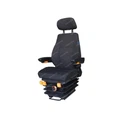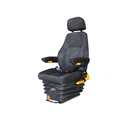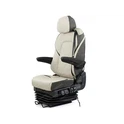


The seat base forms the critical foundation between any driver and their vehicle, serving as the primary interface that directly influences both immediate comfort and long-term health outcomes. This seemingly simple component carries profound implications for operators who spend hours behind the wheel of tractors, commercial trucks, construction equipment, or industrial machinery. Today's market offers two fundamentally different approaches to this essential component: static regular seat bases that provide minimal functionality, and advanced Air Suspension Seat Base systems that deliver dynamic, adjustable support. Understanding the distinction between these technologies is crucial for anyone making decisions about operator comfort, safety, and equipment value. This article provides a comprehensive comparison of these two categories, examining their functional differences, ergonomic capabilities, and long-term value propositions, with particular attention to professional-grade solutions like the YSR-PJ003 that set industry benchmarks.
Core Functional Comparison: Vibration Isolation vs. Rigid Transfer
The most significant difference between these seat base types lies in how they handle the constant challenge of whole-body vibration (WBV) that operators face daily. An air ride seat base operates as an active protection system, incorporating a pneumatic air spring-essentially a reinforced airbag-that compresses and expands to absorb vertical shocks from uneven terrain, potholes, and rough surfaces. Working in tandem with this air spring, a precision hydraulic damper controls the rebound motion, preventing the bouncing effect that would otherwise occur. Together, these components create a dynamic barrier that actively isolates the driver's body from harmful road vibrations and engine oscillations, dramatically reducing the transmission of impact forces to the spine and internal organs.
In stark contrast, a regular seat base functions as a passive, static platform. Typically constructed as a fixed-height mounting bracket or incorporating only a simple mechanical slider, it offers zero vibration dampening capability. Every bump, jolt, and vibration generated by the vehicle or terrain travels directly through the metal frame into the seat cushion and ultimately into the operator's body. This rigid force transfer subjects the driver to cumulative stress that, over time, contributes to chronic back pain, spinal compression, and fatigue-related health issues.

The fundamental difference is clear: active adaptive cushioning versus passive rigid force transfer.
Core Function & Principle Comparison
|
Comparison Dimension |
Air Suspension Seat Base |
Regular Seat Base |
|
Shock Absorption Principle |
Active Isolation: Air spring compresses to absorb impacts; hydraulic damper controls rebound. |
Passive Transfer: Rigid structure directly transmits road impacts and engine vibrations to driver's body. |
|
Core Technical Components |
Air spring (airbag), hydraulic damper, control valve, composite support structure. |
Metal fixed bracket or simple mechanical slide rail. |
|
Vibration Management |
Effectively filters harmful whole-body vibration (WBV), drastically reducing impact forces transmitted to spine. |
Nearly zero vibration filtration; driver experiences close to 100% of road impacts. |
|
User Experience Analogy |
Like sitting on a "cushioning air mattress" where bumps are gently absorbed. |
Like sitting directly on vehicle chassis, feeling every minor bump. |
Design & User Experience Comparison: Adjustability and Customization
Beyond vibration control, the user experience diverges dramatically between these two technologies. A tractor air suspension seat base exemplifies user-centric engineering with features designed for real-world operator needs. The most practical advantage is on-the-fly adjustability-drivers can easily modify both seat height and suspension firmness using an accessible air valve, typically accommodating weight ranges from 40 to 130 kilograms without tools or complex procedures. This means a single seat base can provide optimal support whether operated by a lighter-framed operator in the morning shift or a heavier driver in the afternoon, with each person achieving their ideal comfort setting in seconds.
Many quality air suspension systems integrate multiple functions within a single robust unit. The YSR-PJ003, for instance, combines the air suspension mechanism with fore-and-aft slide rails and positive locking mechanisms, all supported by a reinforced composite structure designed to withstand the demanding conditions of agricultural and industrial environments. This integrated approach eliminates the need for separate components and reduces potential failure points.
Regular seat bases offer a dramatically limited experience. Most provide fixed height with no adjustment capability whatsoever. Those equipped with sliding functions typically feature only basic mechanical rails as a separate add-on component, offering horizontal positioning but no vertical or firmness customization. This static, one-size-fits-all design means every operator-regardless of their weight, height, or comfort preferences-receives identical support that may be optimal for none of them.

The key difference is: personalized, adaptable ergonomics versus inflexible static design.
Design & User Experience Comparison
|
Feature |
Air Suspension Seat Base |
Regular Seat Base |
|
Height Adjustment |
Pneumatic stepless adjustment, easily matches different heights and sight line needs. |
Fixed height, or requires tools for limited mechanical adjustment. |
|
Firmness/Weight Adaptation |
Real-time adjustment via air valve (e.g., 40-130kg range), adapts to different driver weights. |
Fixed firmness, cannot personalize support based on body weight. |
|
Function Integration |
Often integrates fore-aft rails, rotation, locking mechanisms in unified design for greater stability. |
Slide rails typically simple add-on components, single function, may have wobble. |
|
Personalization Level |
High, supports various personalized settings, achieving "seat adapts to person." |
Low, essentially "person adapts to seat" static design. |
Long-Term Value & Application Comparison: Durability and ROI
When evaluating these technologies beyond initial purchase price, the value proposition shifts considerably. An air ride truck seat base represents a genuine investment in operator well-being with measurable returns. The health and safety ROI manifests in multiple ways: reduced driver fatigue translates to increased alertness and fewer accidents; lower incidence of back injuries means decreased workers' compensation claims and absenteeism; improved comfort leads to higher operator retention and productivity. Fleet operators consistently report that the premium paid for air suspension seating pays dividends through these tangible benefits.
Durability considerations also favor quality air suspension systems. Professional-grade models feature engineered components-reinforced structural frames, industrial-grade air valves, sealed hydraulic dampers-specifically designed for the punishing environments of construction sites, farms, and long-haul trucking. When properly maintained with simple periodic inspections, these systems deliver years of reliable performance under conditions that would quickly degrade lesser components.
Regular seat bases occupy a different market position entirely. Their primary advantage is lower upfront cost, making them appealing for budget-constrained applications or situations where operators spend minimal time in the seat. They serve adequately in low-vibration environments-perhaps warehouse forklifts on smooth concrete floors or municipal vehicles operating exclusively on maintained roads-where operator comfort is not a primary concern. However, they provide no ongoing health benefits, no productivity enhancement, and no competitive advantage in operator recruitment or retention. The fundamental difference is an investment in human capital and operational excellence versus a basic functional component treated as a commodity expense.
Long-Term Value & Investment Return Comparison
|
Consideration |
Air Suspension Seat Base (e.g., YSR-PJ003) |
Regular Seat Base |
|
Initial Investment |
Higher, viewed as an equipment upgrade investment. |
Lower, viewed as a standard parts procurement. |
|
Long-Term Health Costs |
Significantly reduced: Decreases lower back strain, occupational disease risk, and related medical/compensation expenses. |
Potentially increased: Long-term vibration exposure accumulates health risks with hidden costs. |
|
Operational Efficiency Impact |
Positive enhancement: Reduces fatigue, improves driver focus and attendance, lowers accident rates. |
No impact or negative: Discomfort may distract drivers, require more frequent breaks. |
|
Ideal Applications |
Tractors, long-haul trucks, construction machinery, rough-terrain work vehicles-any scenario prioritizing driver welfare. |
Indoor forklifts, smooth-road short-distance vehicles, auxiliary seats with minimal comfort requirements. |
|
Core Value Proposition |
Investment in "people": Protects driver health, enhances safety and productivity, reduces long-term total cost. |
Purchasing "parts": Meets basic installation needs, controls short-term procurement costs. |
Conclusion & Verdict: Choosing the Right Foundation
The evidence is unambiguous: an air suspension seat base represents a transformative upgrade for any application where driver comfort, health, and performance matter. It doesn't merely improve upon regular seat bases-it actively solves the problem of harmful vibration exposure that passive systems cannot address. For operators of agricultural tractors navigating uneven fields, commercial truck drivers covering thousands of miles weekly, or heavy equipment operators working on rough construction sites, air suspension technology directly protects their most valuable asset: their health.
Conversely, regular seat bases remain a cost-effective solution only for the most basic, low-impact applications where operators work brief shifts on smooth surfaces. For demanding conditions, they represent a false economy-the money saved upfront often costs far more in operator discomfort, health problems, and reduced productivity over time.
If you operate equipment in challenging environments and recognize that your operators deserve professional-grade support, the upgrade to air suspension seating deserves serious consideration. For detailed specifications, compatibility verification for your specific vehicles, or information about custom solutions like the YSR-PJ003 that set industry standards for durability and performance, the YSR Seating team stands ready to assist.

FAQ: Air Suspension vs. Regular Seat Bases
Q: Is an air suspension seat base worth the extra cost?
A: Absolutely, if driver health and productivity matter. It reduces fatigue and injury risk, which can lower long-term costs related to absenteeism and workers' compensation claims. Fleet operators consistently find that the investment pays for itself through improved operator retention, reduced sick days, and enhanced safety records, making it a valuable investment beyond just comfort.
Q: Can I retrofit an air suspension base to my existing truck or tractor seat?
A: Yes, this is a common and highly effective upgrade path. Models like the YSR-PJ003 are specifically designed as retrofit kits compatible with most standard seat mounting patterns. Compatibility depends on your seat's mounting bolt pattern and available cab space. Contact our technical team for a compatibility assessment tailored to your specific vehicle model.
Q: Do air suspension bases require a lot of maintenance?
A: Quality units are engineered for durability with sealed components designed for harsh environments. Maintenance typically involves simple periodic checks for air leaks, ensuring the air valve operates smoothly, and keeping the mechanism clean from debris-usually no more than 15-30 minutes quarterly. This minimal maintenance is insignificant compared to the substantial health and comfort benefits delivered.
Q: What weight range can an air suspension seat base accommodate?
A: Professional-grade air suspension seat bases like the YSR-PJ003 typically accommodate operator weights ranging from 40 to 130 kilograms (approximately 88 to 286 pounds). The pneumatic adjustment system allows each operator to fine-tune the suspension firmness to match their specific weight, ensuring optimal support and vibration isolation regardless of body size.
Contact YSR Seating:
Email: sales@ysrseats.com
Phone/WhatsApp: +86-029-81136503 / +86-13991337062
WeChat: 18992819914
Your operators' comfort and health are worth the investment.