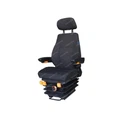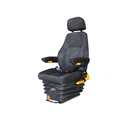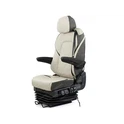

If you have ever taken a close look at an excavator's cab, you may have noticed an interesting phenomenon: unlike car seats, many excavator seats are not equipped with a prominent headrest.
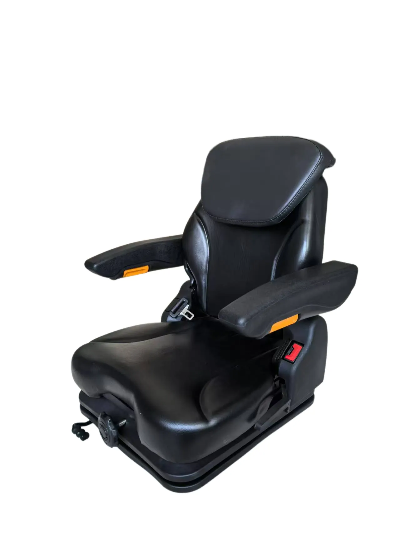
This design choice is actually closely tied to the excavator's specific working environment and operational requirements.
1. Excavators Rarely Experience High-Speed Rear-End Collisions
One of the primary purposes behind the original design of car headrests is to protect the driver's neck during rear-end collisions, thereby minimizing the risk of "whiplash injuries."
Excavators, however, typically operate at speeds of only a few kilometers per hour-and often remain stationary while working. Since they are not involved in high-speed travel or frequent rear-end collision scenarios, the safety imperative for headrests is significantly lower than that for standard automobiles.
2. Operators Need to Constantly Monitor Their Surroundings
While operating an excavator, the driver must continuously monitor several factors:
- The position of the bucket
- The immediate construction zone
- Conditions on both sides of the vehicle body
- The environment behind the machine
Frequently, operators must turn their heads to check the area surrounding the equipment for potential hazards. In such instances, the presence of a headrest could actually obstruct their field of vision and restrict their range of head movement.
Consequently, many heavy machinery manufacturers tend to favor a low-backrest design.
3. Seat Comfort Does Not Solely Depend on Headrests
Many people assume that a headrest is essential for driver comfort; however, the factors that truly determine comfort are often:
- Lumbar support
- Shock absorption systems
- Seat cushion density
- Ergonomic design of the backrest
Compared to a headrest, a robust suspension and shock-absorption structure is far more effective at mitigating the fatigue associated with prolonged operation.
3.Conclusion
The absence of a headrest on an excavator seat does not signify an outdated design; rather, it represents a deliberate choice tailored to the specific operational conditions of heavy machinery.
Instead of prioritizing headrests, heavy machinery seating places a greater emphasis on shock absorption performance, lumbar support, and ergonomic design.
As the industry continues to evolve, an increasing number of modern heavy machines are adopting designs featuring high backrests and adjustable headrests, thereby providing operators with an even more comfortable working environment.
As a specialized manufacturer of heavy machinery seating, YSR offers a comprehensive range of solutions-including mechanical suspension seats, air suspension seats, and high-backrest seats with headrests-to meet the diverse needs of various heavy equipment manufacturers and the aftermarket replacement sector.
Phone: +86-029-81136503
Email: sales@ysrseats.com
WhatsApp: +86-13991337062
WeChat: 18992819914