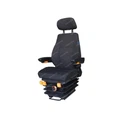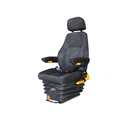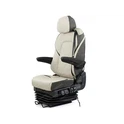


As a leading manufacturer of commercial vehicle seats, we utilize rigorous testing protocols to ensure our products provide unmatched safety, durability and comfort for professional drivers. Our seats undergo both static and dynamic testing to simulate real-world conditions and validate performance.
Static Testing
Static testing puts seats through sustained loads and conditions to gauge strength, lifespan and ergonomics. Key tests include:
Strength Testing
We use hydraulic actuators to exert multi-directional forces up to 20g onto seat frames and attachment points. This simulates years of driving over rough terrain with heavy drivers. We also twist and torque the seat through extreme angles. This validation ensures the seat can withstand tremendous loads without bending, cracking or failing.
Durability Testing
Our durability test fixtures repetitively rotate, accelerate and impact seats to replicate grueling years on the road. We also utilize shakers to subject seats to sustained vibration across a wide frequency range. Materials are evaluated after extensive abrasion and repeated impacts to confirm their integrity. We use accelerated breakdown testing to verify seats will perform reliably beyond 500,000+ miles.
Ergonomic Testing
We assess commercial vehicle seats shapes and dimensions against biomechanical data on the human form. Pressure mapping confirms seats evenly distribute body weight without high-stress points. We evaluate recline angles, lumbar contours, cushion length, armrest positioning and adjustability range to optimize comfort and support for extended driving sessions.
Dynamic Testing
Dynamic testing is a crucial phase in the evaluation of vehicle seats, focusing on their performance under real-world driving conditions. This testing process specifically addresses vibration isolation and crash protection, aiming to ensure the safety and comfort of occupants during various driving scenarios.

Vibration Testing:
One key aspect of dynamic testing involves subjecting commercial vehicle seats to intense vibrations that replicate the conditions experienced in heavy trucks, construction equipment, and other over-the-road vehicles. Multi-axis shaker tables are employed to simulate a wide spectrum of amplitudes and frequencies, assessing how well proprietary suspension technologies can absorb and isolate vibrations. This comprehensive evaluation aims to minimize the transfer of vibrations to drivers, enhancing comfort and reducing fatigue, especially on uneven roads.

Impact Testing:
Dynamic testing extends to impact evaluations using crash test dummies to replicate the forces experienced by both seats and occupants during collisions. These tests encompass impacts from all sides and at various speeds, providing a comprehensive assessment of how well internal seat belt and energy absorption systems perform in protecting drivers in accidents. The goal is to ensure that seats effectively mitigate the forces generated during a collision, thereby reducing the risk and severity of injuries to occupants.
Other Tests
In addition to dynamic testing, our commercial vehicle seats undergo a series of rigorous evaluations to assess environmental resilience and safety, ensuring they meet high standards for durability, fire resistance, wear resistance, and weather resistance.
Fire Resistance Testing:
Our seats are subjected to open flame burn testing to assess their fire resistance. This critical evaluation ensures that flame retardant materials used in the construction of our seats self-extinguish rapidly and do not produce toxic smoke. Moreover, we conduct tests to determine melting points and heat transfer properties, aiming to protect drivers in the event of onboard fires.
Wear Testing:
To guarantee the longevity and appearance of our seats, we conduct comprehensive wear testing on cover materials. This includes simulated entry/exit abrasion, package loading, and exposure to sharp objects. By subjecting our upholstery to extreme wear conditions, we ensure that it maintains its durability and aesthetic appeal over years of use.
Weather Testing:
Our commercial vehicle seats undergo extensive weather testing to assess their performance under various environmental conditions. Test chambers are utilized to expose seats to extreme hot and cold cycles, high humidity, torrential rain, intense UV radiation, and thick dust. This rigorous testing ensures that our seats can withstand the challenges posed by harsh working environments and continue to function effectively.
In Conclusion
In conclusion, the battery of tests that commercial vehicle seats undergo is extensive, covering static and dynamic evaluations as well as assessments for fire resistance, wear, and weather conditions. These tests collectively ensure that commercial vehicle seats not only meet but exceed the safety and durability standards required for the demanding conditions of the transportation industry.
Our rigorous test protocols give fleet managers and drivers confidence in the safety, comfort and durability of our commercial seats. Please contact us at sales@ysrseats.com to learn more about how we put seats through their paces.
References:
• Gillespie, Thomas D. Fundamentals of vehicle dynamics. SAE Technical Paper, 1992.
• Blood, R.P., et al. "Whole body vibration exposures in metropolitan bus drivers: A comparison of three seats." Journal of Sound and Vibration 329.1 (2010): 109-120.
• Lewis, C.H. and Johnson, G.R. "Evaluation of suspension seats for off-road forestry vehicles. Phase 1: Laboratory tests." International Journal of Industrial Ergonomics 17.1 (1996): 105-112.