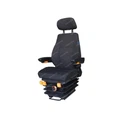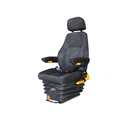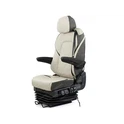


For boat operators who spend hours navigating unpredictable waters, the right seating can mean the difference between a productive day and chronic fatigue or injury. In marine environments where wave impacts, vibrations, and constant motion are inevitable, seat suspension technology plays a critical role in protecting operators from the cumulative physical stress that can lead to long-term health issues. Whether you're commanding a commercial fishing vessel, patrolling coastal waters, or operating a high-speed rescue craft, your seat is your first line of defense against the relentless forces of the sea. The central question facing vessel owners and operators is clear: Which suspension technology-mechanical or air-is better suited for your specific marine application? For those seeking proven reliability in harsh conditions, the Mechanical Suspension Boat Driver Seat stands out as a robust and dependable solution. Models like the YSR911-3 exemplify how mechanical engineering, when purpose-built for marine environments, delivers the durability and performance that professional operators demand.
Understanding Mechanical Suspension Seats
At the heart of mechanical suspension systems lies elegantly simple physics: physical springs-whether coil or torsion designs-work in concert with mechanical dampers to absorb and dissipate shock energy. When a wave impact sends force through the hull, the spring compresses to absorb the initial shock, while the damper controls the rebound, preventing the seat from bouncing uncontrollably. This purely mechanical approach relies on no electronics, no compressed air systems, and no complex control modules.
The key characteristics that define mechanical suspension include inherent simplicity, exceptional durability, and direct tactile feedback that experienced operators often prefer. Adjustments are typically manual, allowing users to set pre-load or tension based on their weight and preferences, with settings that remain consistent regardless of environmental conditions. China Driver Seat For Boat suppliers have refined these systems over decades, optimizing spring rates and damper valving specifically for marine shock profiles.
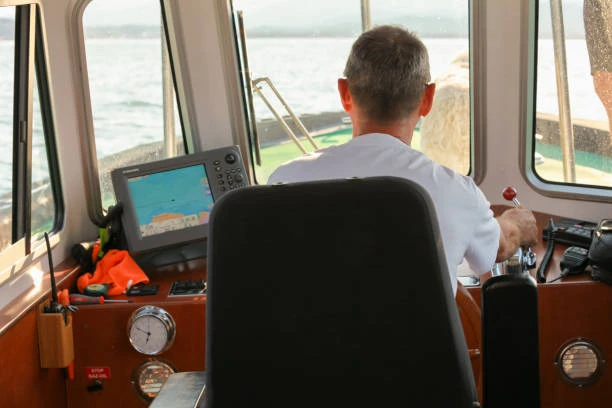
The primary advantages of mechanical systems become immediately apparent in marine applications. Their robust construction withstands the punishing combination of salt spray, constant moisture, and UV exposure that would compromise more complex systems. With fewer components and no reliance on seals that can fail or electronics that can corrode, maintenance requirements remain minimal-often limited to occasional lubrication and visual inspection. Performance stays consistent whether the seat is brand new or has logged thousands of hours at sea. For commercial operators managing tight budgets, mechanical suspension typically represents a more cost-effective solution both in initial investment and lifecycle costs.
This reliability explains why mechanical systems remain the preferred choice in demanding marine applications where equipment failure isn't just inconvenient-it's potentially dangerous and costly.
Understanding Air (Pneumatic) Suspension Seats
Air suspension systems take a fundamentally different approach, utilizing an air spring (airbag) that can be inflated or deflated to adjust ride characteristics. Electronic or pneumatic control systems modulate air pressure and damping force, often automatically compensating for operator weight and adjusting stiffness based on detected motion.
These systems offer highly adjustable ride quality, with some advanced models providing push-button control over firmness, damping, and ride height. The automatic weight compensation feature means the seat maintains optimal performance regardless of who's operating the vessel. Air systems excel at isolating high-frequency vibrations, creating an exceptionally smooth, cushioned feel that can reduce operator fatigue during extended operations.
However, Boat Driving Seat suppliers acknowledge that air suspension's sophistication comes with trade-offs in marine environments. The increased complexity introduces more potential failure points-air lines can develop leaks, electronic controls are vulnerable to corrosion despite waterproofing efforts, and compressors may struggle in humid, salt-laden air. Initial costs typically run higher than mechanical equivalents, and when repairs are needed, they often require specialized parts and expertise. For vessels operating far from service facilities, this dependency can pose operational risks.
Head-to-Head Comparison: Key Factors
Shock Absorption & Performance: Mechanical suspension systems demonstrate exceptional effectiveness in handling the sharp, high-impact shocks characteristic of marine environments-think of a vessel slamming into a wave at speed. The direct mechanical connection provides immediate, predictable response. Air systems, conversely, excel at general vibration isolation and can offer a more cushioned feel during moderate conditions, though they may not respond as quickly to sudden, severe impacts.
Durability & Maintenance: The contrast here is stark. Mechanical components-hardened steel springs, sealed dampers with marine-grade finishes-stand up remarkably well to corrosion. Boat Driving Seat manufacturers design mechanical systems with minimal serviceable parts, meaning less can go wrong. Air systems, with their seals, electronic sensors, and control modules, face constant assault from the marine environment. Even with protective coatings and sealed housings, the complexity creates vulnerability.
Cost & Value: A low price Mechanical Suspension Boat Driver Seat isn't just cheaper upfront-it typically delivers superior return on investment for commercial operators. When you factor in maintenance costs, downtime for repairs, and replacement part expenses over a five or ten-year operational life, mechanical systems often cost half or less than their pneumatic counterparts. For fleet operators managing multiple vessels, this difference becomes substantial.
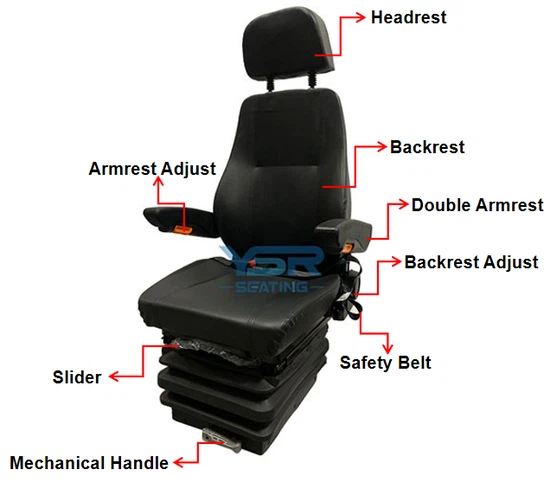
Adjustability & User Experience: Air suspension wins on adjustability, offering fine-tuned control that can adapt to different operators and conditions at the touch of a button. Mechanical systems require manual adjustment and offer fewer parameters to modify. However, many professional operators appreciate the simplicity and predictability of mechanical adjustments that don't rely on functioning electronics.
Why Choose a Mechanical Suspension System for Marine Use?
The harsh realities of marine operations demand equipment that prioritizes reliability above all else. Salt spray doesn't take days off. Corrosion doesn't pause for maintenance schedules. In this unforgiving environment, mechanical suspension offers unparalleled dependability precisely because it doesn't depend on components that marine conditions systematically attack.
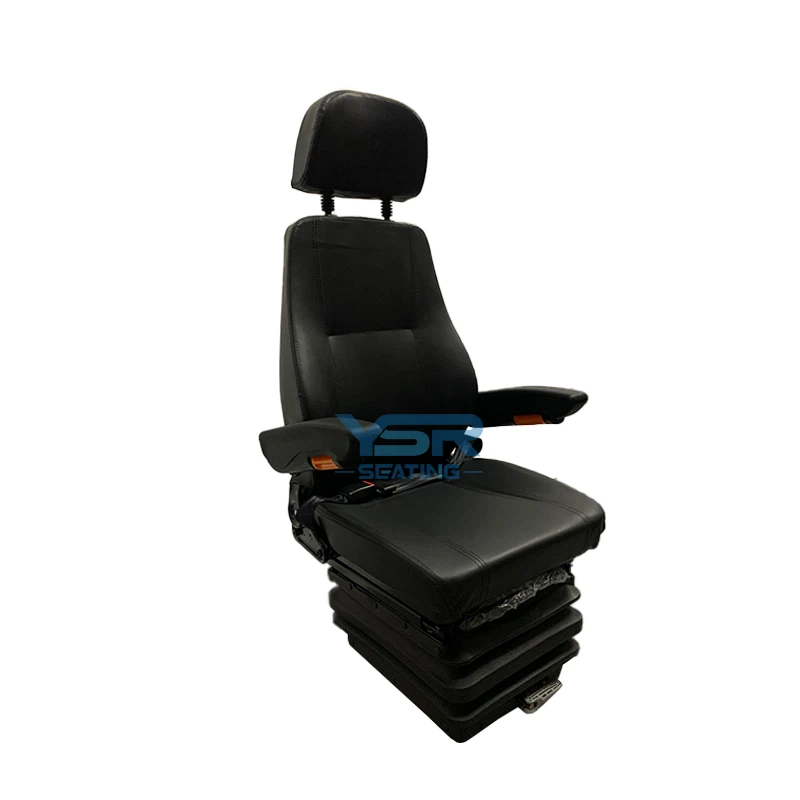
Consider the Mechanical Suspension Boat Driver Seat model YSR911-3 as a case study in purpose-built marine engineering. Its 100mm suspension travel provides ample shock absorption for vessels operating in rough seas, while the 150kg weight capacity accommodates operators of various sizes with safety margin to spare. The construction utilizes marine-grade materials-corrosion-resistant metals, UV-stabilized plastics, and sealed bearing assemblies-specifically selected to withstand constant saltwater exposure. Compliance with ISO standards ensures the seat meets internationally recognized benchmarks for safety and performance.
When Customized Mechanical Suspension Boat Driver Seat options are available, operators can specify features like armrest configuration, upholstery material suited to their climate, and mounting patterns that integrate with existing pedestal systems. This flexibility, combined with the fundamental robustness of mechanical suspension, creates solutions optimized for specific vessel types and operating profiles.
The applications listed for mechanical suspension seats-fishing vessels, patrol boats, workboats, pilot boats, and rescue craft-share a common thread: they're working vessels where equipment failure can compromise mission success or safety. Commercial fishermen can't afford a seat malfunction during a productive fishing window. Law enforcement patrol boats need reliable equipment during pursuits. Rescue craft must function flawlessly when lives hang in the balance. In these contexts, the dependability of mechanical suspension isn't just preferable-it's essential.
Making the Right Choice for Your Vessel
Selecting the right suspension system requires honest assessment of your specific situation. Consider these key factors:
- Vessel Type and Use: Commercial vessels operating in challenging conditions benefit most from mechanical reliability. Leisure craft used in calmer waters with occasional use might justify air suspension's comfort advantages.
- Operating Environment: Vessels regularly encountering rough seas, operating in remote areas with limited service access, or facing extreme weather conditions find mechanical systems more practical. If your operations keep you near port with easy access to service facilities, air suspension maintenance becomes less problematic.
- Budget Reality: Both initial capital and lifecycle costs matter. China Boat Driver Seat suppliers can provide detailed cost projections, but generally, mechanical systems deliver better value for budget-conscious operators, especially when multiplied across a fleet.
- Priority Balance: If maximizing operator comfort is paramount and budget permits regular professional maintenance, air suspension merits consideration. If operational reliability, durability, and cost-effectiveness rank highest, mechanical suspension is the clear choice.
For commercial fishing operations, patrol vessels, workboats, and professional maritime services, the Mechanical Suspension Boat Driver Seat represents the practical, proven choice that aligns operational demands with equipment capabilities.
|
|
|
|


Conclusion
The difference between mechanical and air suspension seats ultimately comes down to engineering philosophy: mechanical systems prioritize durability and value for marine harshness, while air suspension offers top-tier adjustable comfort at the cost of increased complexity. Neither technology is inherently superior-the right choice depends on your specific operational context.
For professional and demanding marine operations where equipment must perform reliably season after season in corrosive, punishing conditions, mechanical suspension delivers proven performance. The simplicity that some might view as old-fashioned is actually refined, time-tested engineering that succeeds precisely because it doesn't over-complicate the solution.
Ready to equip your boat with the durable, high-performance comfort of a mechanical suspension seat? Our factory experts stand ready to discuss your specific requirements, provide a competitive Mechanical Suspension Boat Driver Seat quotation tailored to your vessel, explore customization options that optimize the seat for your operation, or arrange a sample for hands-on evaluation before committing to a fleet order.
Contact us today:
Phone: +86-029-81136503
Email: sales@ysrseats.com
WhatsApp: +86-13991337062
WeChat: 18992819914
Let's discuss how the right seating solution can enhance operator safety, reduce fatigue, and improve productivity across your marine operations.
Related Articles
What is a mechanical suspension boat seat?
https://www.ysrseating.com/info/what-is-a-mechanical-suspension-boat-seat-103350289.html
How does mechanical suspension boat seat work?
https://www.ysrseating.com/info/how-does-a-mechanical-suspension-boat-seat-wor-103350315.html
What's the difference between mechanical suspension and air suspension seats?
https://www.ysrseating.com/info/what-s-the-difference-between-mechanical-suspe-103350335.html
Will this suspension seat fit my boat or pedestal mount?
https://www.ysrseating.com/info/will-this-suspension-seat-fit-my-boat-or-pedes-103350351.html
What are the benefits of using a mechanical suspension seat in a boat?
https://www.ysrseating.com/info/what-are-the-benefits-of-using-a-mechanical-su-103350729.html
How do you install a mechanical suspension boat driver seat?
https://www.ysrseating.com/info/how-do-you-install-a-mechanical-suspension-boa-103350947.html