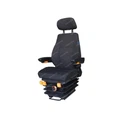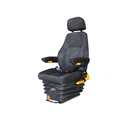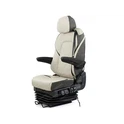


Adjustment
Ideal ergonomic help is a critical thought in the design of tilting seats, and adjustability is vital to accomplishing this. These seats regularly offer a scope of adjustments to oblige clients of differing heights, body types, and individual inclinations, guaranteeing most extreme solace and legitimate stance during prolonged sitting periods.

①Front and Rear Adjustment:
One of the essential highlights is the capacity to adjust its situation ahead and in reverse. This change permits clients to find the ideal distance from their workstation, whether it's a work area, control board, or vehicle dashboard. By properly positioning the seat, users can maintain a comfortable reach to their tasks, reducing strain on the arms, shoulders, and back.
The front and rear adjustment mechanism is often integrated into the seat's base or mounting system, enabling smooth and precise movement along a predetermined range. Some advanced models may even offer memory presets, allowing multiple users to quickly recall their preferred seating positions.
②Backrest Adjustment:
A very much planned backrest is fundamental for offering legitimate lumbar help and diminishing tension in the lower back. Tilting seats typically incorporate a backrest adjustment mechanism that allows users to recline or upright the backrest to their desired angle. This feature ensures that the backrest contours to the natural curvature of the spine, promoting good posture and minimizing the risk of back pain or discomfort.
The backrest adjustment may be controlled through various mechanisms, such as levers, knobs, or even pneumatic or electric systems in more advanced models. Some tilting seats also offer the ability to adjust the lumbar support independently, providing targeted support for the lower back region.
③Headrest Adjustment:
To complement the backrest adjustment, many seats incorporate an adjustable headrest. This feature allows users to position the headrest at the optimal height and angle, providing crucial support for the neck and head. A properly adjusted headrest can help alleviate neck strain and prevent fatigue, particularly during prolonged periods of sitting or in environments where vibrations or sudden movements may occur.
Headrest adjustment mechanisms may include height adjustment, tilt adjustment, or a combination of both. Some advanced models may even offer additional features, such as pivoting or sliding headrests, to accommodate a wider range of user preferences and seating positions.
Increase the Rotation Function According to User Needs
While the front and rear adjustment, backrest adjustment, and headrest adjustment cater to user comfort and support, the rotation function of a tilting seat addresses accessibility and efficiency. Many seats are designed with the ability to rotate or swivel horizontally, allowing users to easily access different areas or workstations without leaving their seat.
In office environments, a rotatable tilting seat enables users to seamlessly transition between multiple monitors, file cabinets, or workspaces without the need for excessive twisting or straining. This feature can significantly enhance productivity and reduce the risk of musculoskeletal disorders associated with repetitive movements or awkward postures.
In specialized environments, such as control rooms, command centers, or industrial settings, the rotation function can be further enhanced to provide a greater range of motion. Advanced seats may offer full 360-degree rotation, allowing operators to effortlessly transition between various workstations, monitors, or control panels while maintaining optimal ergonomic positioning.
The rotation mechanism is typically integrated into the seat's base or mounting system, ensuring smooth and controlled rotation. Some models may incorporate locking or tension adjustment features to prevent unintended rotation or to adjust the rotational resistance to the user's preference.
Design and Manufacture According to Seat Fabric Needs
The choice of seat fabric plays a crucial role in the overall comfort, durability, and aesthetics of a tilting seat. Reputable manufacturers understand the importance of offering a wide range of fabric options to cater to the diverse needs and preferences of their customers.
①Durability and Ease of Maintenance:
In high-traffic or demanding environments, such as industrial settings, healthcare facilities, or public spaces, seats are often upholstered with durable and easy-to-clean fabrics like vinyl or mesh. These materials are designed to withstand heavy use, spills, and frequent cleaning, ensuring a long service life and minimizing maintenance costs.
②Breathability and Comfort:
For office settings or environments where users spend prolonged periods seated, breathable fabrics like high-quality mesh or ergonomic cushioning are often preferred. These materials promote airflow and moisture-wicking, reducing discomfort caused by heat buildup or perspiration. Additionally, ergonomic cushioning can provide superior support and pressure relief, enhancing overall comfort during extended sitting periods.
③Aesthetics and Design Integration:
Tilting seats can also be upholstered with fabrics that complement the overall design aesthetic of the workspace or vehicle interior. Manufacturers offer a wide range of colors, patterns, and textures to allow for seamless integration with existing decor or corporate branding. This attention to detail ensures that seats not only provide functional benefits but also contribute to a visually appealing and cohesive environment.
④Custom Fabric Options:
For customers with specific requirements or unique branding needs, many manufacturers offer the option to customize the seat fabric. This may include using customer-supplied materials, incorporating custom patterns or logos, or working with specialized fabrics designed for specific applications, such as flame-resistant or antimicrobial materials.
By offering a diverse range of fabric options and customization capabilities, manufacturers ensure that tilting seats can meet the demands of various industries and environments, striking the perfect balance between functionality, comfort, and visual appeal.
Non-Suspension Seats with Double Armrest and Headrest
While many seats incorporate suspension systems for enhanced comfort, there is also a demand for non-suspension models in certain applications where stability, durability, and low maintenance requirements are prioritized over cushioned suspension.
①Non-Suspension Base:
Non-suspension tilting seats feature a rigid base, typically constructed from sturdy materials like steel or aluminum. This design provides a solid foundation and eliminates the need for suspension mechanisms, resulting in a more robust and low-maintenance seating solution. Non-suspension seats are often preferred in industrial settings, heavy machinery operation, or environments where vibrations or sudden movements are common.
②Double Armrests:
To compensate for the lack of suspension and enhance user comfort, non-suspension tilting seats frequently incorporate double armrests. These armrests provide ample support for the arms and shoulders during prolonged sitting periods, reducing strain and fatigue. The armrests can be adjustable in height and width to accommodate users of different sizes and preferences, ensuring optimal ergonomic positioning.
③Headrest:
In addition to double armrests, non-suspension seats often feature a headrest, similar to those found in suspension models. The headrest offers crucial neck and head support, reducing strain and fatigue, particularly in environments where users may experience vibrations or sudden movements. Like their suspension counterparts, the headrests in non-suspension tilting seats may be adjustable in height, tilt, or both, catering to individual user needs.
By combining the benefits of a tilting seat with double armrests and a headrest, non-suspension models offer a robust and supportive seating solution for various applications. These seats strike a balance between durability, stability, and user comfort, making them well-suited for demanding environments where longevity and low maintenance requirements are paramount.
To learn more about YSR seats, please contact us at sales@ysrseats.com.
References:
1. Ergonomic Trends. (2022). Tilting Seat Features and Benefits.
2. ISRI. (2022). Ergonomic Seating Solutions: Tilting seats.
3. Humanscale. (2022). Tilting Seat Mechanisms: Design and Customization.
4. NHML. (2022). Non-Suspension Tilting seats: Durability and Support.
5. Steelcase. (2022). Ergonomic Tilting seats for Office and Workstation Environments.