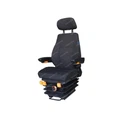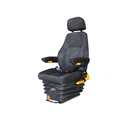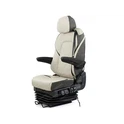


Truck drivers face endless miles of vibration, shocks, and heavy usage that requires truck driver seat to withstand extreme durability demands. However, durability cannot come at the expense of safety. The ideal commercial truck seat must deliver both to protect the precious cargo - the driver.

Ⅰ.Steel Frame Structure
The foundation of a quality truck seat is a rugged steel frame engineered to resist metal fatigue. Yisirui's Truck driver seats adopt a robust steel frame. It must maintain structural integrity through years of nonstop motion, shocks, and dynamic loading. The steel alloys and tubular design directly impact seat safety and service life.
High-Strength Steel Alloys - The frame should utilize specialized steel formulas that balance strength, ductility and fatigue resistance. Common alloys include:
Chromoly steel (SAE 4130) - Offers high strength-to-weight ratio and toughness to endure vibration. Contains chromium and molybdenum.
Manganese steel (SAE 8645) - Extremely high durability and hardness to resist wear and deformation under heavy loads.
Maraging steel - Built for strength and stability with excellent fatigue resistance. Contains nickel, cobalt, and molybdenum.
Ⅱ.Robust Tubular Design
The overall frame geometry also contributes to integrity and resilience:
Tubular and bracketed construction provide stability in multiple directions unlike flat frames.
Reinforced stress points endure repeated flexing without cracking or failing.
Optimization of weld placement and tube diameter, wall thickness, and shape avoid metal fatigue over decades of use.
Properly implementing advanced metallurgy and physics delivers steel seat skeletons that shrug off millions of road miles. Drivers stay protected even when hauling maximum payloads over the roughest terrain.
Ⅲ.Quality Materials - Leather, Fabric, Foam
Superior truck driver seat materials enhance user health and safety in several key ways:
① Upholstery Fabric
Durable, abrasion-resistant - Withstands scuffing and scraping against clothes and objects.
Breathable and moisture-wicking - Allows evaporative cooling and ventilation to keep the driver comfortable.
Microbial resistant - Prevents buildup of bacteria, fungi, and odors over seat lifetime.
Flame retardant - Self-extinguishes to avoid catching fire from sparks or embers.
Double or triple stitched - Reinforced seam strength without tearing or ripping over years.
Uses heavy-duty thread engineered for commercial upholstery demands.
② Leather
Top grain leather with a protective coating - Resists cracking, punctures, and tearing with proper care.
Softer and more breathable than vinyl - Allows better airflow and less sticking.
Distresses gracefully over time - Develops character without rips, cracks, and defects.
③ Padding Foam
High-resilience polyurethane foam - Provides cushioning without "bottoming out" or compacting permanently.
Multi-density construction - Optimizes comfort and support with firm and soft zones.
Flame-resistant additives - Improves fire safety compared to standard foam.
Microbial coatings - Resists mold, mildew, and bacterial growth over years of use.
Using the most advanced fabrics, leathers, and padding foams boosts seat lifespan, safety, and functionality - keeping commercial drivers comfortable and secure for the long haul.This is why Yisirui chose these materials.
Ⅲ.Highly Resilient Foam Padding - Maintains Shape and Support
Well-engineered foam is the essential ingredient that allows truck seats to absorb punishment without losing comfort. While basic foam will compress and degrade rapidly, optimized foams offer proper cushioning and posture support over decades. Key factors include:
Polyurethane Foam Chemistry
Higher density foams (90 kg/m3 or more) resist breakdown better under heavy loads.
Larger cells distribute pressure without collapsing or compacting permanently.
Optimized cell structure and wall strength provide just the right foam "bounce".
Addition of flame retardant chemicals enhances safety without compromising durability.
Multi-Zone Construction
Softer foams placed in primary contact areas maximize comfort.
Firmer foams reinforce lumbar, edges, and other support zones.
Dual-density foam placing soft foam over firm increases seat life.
Zoned foam tailors cushioning to different body parts and driver sizes.
Molded Shape Retention
Molded, contoured shapes match human ergonomics and provide support.
Foam retains molded shape without flattening out or developing pressure points.
Textured surface improves breathability and discourages sliding/slippage.
Advances in foam technology allow modern seats to thrive under driving conditions that quickly break down lesser foams. The latest material science ensures the seat will support and protect drivers in total comfort for years of faithful service.
From advanced steel alloys to cutting-edge polymers and fabrics, each material in truck driver seats serves a vital role in driver health, safety and performance. Drivers stay fresher and more focused when the seat reliably provides support and comfort mile after mile, year after year.
If you want to learn more about this kind of truck seat, welcome to contact us at sales@ysrseats.com.
References:
1: Hiemstra-van Mastrigt, S. "Seat comfort: A review." International Journal of Vehicle Noise and Vibration 11.2 (2015): 123-158.
2: Liu, X. et al. "Effects of lumbar support on truck driver's lower back pain, shooter, and work ability." Traffic Injury Prevention 19 (2018): S183-S189.
3: Van Der Westhuizen, D. and Van Niekerk, J. "Low back pain and work-related risk factors in professional truck drivers." South African Family Practice 60.3 (2018): 75-79.