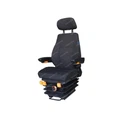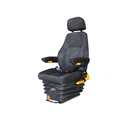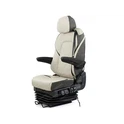


Safety regulations and standards are crucial in ensuring the protection of drivers and passengers in vehicles. Air bag suspension seats are an innovative technology designed to improve safety, but they must comply with regulatory standards to ensure their effectiveness.

Regulatory Standards:
When it comes to ensuring the safety of vehicle occupants, regulatory standards play a pivotal role in dictating the design, manufacturing, and installation of safety features such as air bag seats. Understanding the compliance requirements and certifications associated with these seats is essential for manufacturers, suppliers, and consumers alike.
Regulatory bodies such as the National Highway Traffic Safety Administration (NHTSA) in the United States and the European Union Aviation Safety Agency (EASA) in Europe establish stringent standards that govern the safety performance of automotive components, including seats. For air bag suspension seats, compliance with these standards is crucial to ensure that they meet minimum safety requirements.
European New Car Assessment Programme (Euro NCAP): This program conducts crash tests and assigns safety ratings to vehicles based on their performance. Euro NCAP has specific guidelines for air bag seats, which must be met to achieve a high safety rating.
Certifications such as the Federal Motor Vehicle Safety Standard (FMVSS) 207 and 210 in the United States outline specific criteria for seat integrity, strength, and occupant protection. Manufacturers must conduct rigorous testing and evaluations to demonstrate compliance with these standards before their air bag seats can be approved for use in vehicles.
Federal Motor Vehicle Safety Standard (FMVSS) 207 in the United States: This standard sets forth the requirements for side impact protection for motor vehicle occupants. Suspension seats must meet these requirements to be certified for use in the US market.
Japanese Automobile Standards Organization (JASO): In Japan, the JASO sets safety standards for air bag suspension seats, including requirements for crash testing and dynamic testing.
Furthermore, certifications from recognized testing laboratories, such as the International Organization for Standardization (ISO) certification, provide additional assurance of quality and safety. These certifications validate that air bag seats have undergone comprehensive testing and meet established performance benchmarks.
Industry Guidelines:
In addition to regulatory standards, automotive associations and industry organizations play a vital role in establishing recommended practices and standards for air bag seats. These guidelines go beyond regulatory requirements to promote best practices in seat design, installation, and maintenance.
The Society of Automotive Engineers (SAE) is one such organization that develops technical standards and recommended practices for the automotive industry. SAE J826 and J2292 are standards that cover seat design and performance requirements, including those specific to suspension seats. Adhering to these standards helps ensure consistency and compatibility across different vehicle models and manufacturers.
SAE International: SAE International provides guidelines for the design and testing of air bag suspension seats, including recommendations for safety and performance.
Moreover, automotive manufacturers often collaborate within industry consortia to establish voluntary safety initiatives and guidelines. These initiatives may focus on advancing technologies, sharing best practices, and addressing emerging safety challenges related to suspension seats.
By adhering to industry guidelines and standards, manufacturers can enhance the safety and reliability of their airbag seats while fostering innovation and continuous improvement within the automotive industry.
International Organization for Standardization (ISO): ISO provides guidelines for the design and testing of airbag suspension seats, including recommendations for safety and performance.
Global Variances:
While there are overarching regulatory standards and industry guidelines for air bag seats, it's essential to recognize that safety regulations can vary significantly from one country to another. Factors such as regional priorities, cultural norms, and infrastructure differences can influence the development and enforcement of safety standards.
For example, countries with robust automotive industries and high rates of vehicle ownership may have more stringent safety regulations for seats to mitigate the risks associated with road traffic accidents. Conversely, regions with emerging automotive markets may prioritize affordability and accessibility over advanced safety features.
Understanding these global variances is crucial for manufacturers seeking to market their seats internationally. It requires navigating a complex landscape of regulatory frameworks, certification processes, and cultural considerations to ensure compliance and market acceptance.
Safety regulations play a critical role in shaping the design, manufacturing, and implementation of air bag suspension seats. By understanding regulatory standards, adhering to industry guidelines, and navigating global variances, manufacturers can develop safer and more reliable seating solutions for vehicles, ultimately enhancing occupant safety on the road.
Please contact us at sales@ysrseats.com to learn more about YSR seats.
References:
1. National Highway Traffic Safety Administration (NHTSA). (n.d.). Federal Motor Vehicle Safety Standards and Regulations.
2. European Union Aviation Safety Agency (EASA). (n.d.). Certification Specifications for Normal, Utility, Aerobatic, and Commuter Category Aeroplanes.
3. Society of Automotive Engineers (SAE). (n.d.). SAE International Standards.
4. International Organization for Standardization (ISO). (n.d.). ISO Certification.