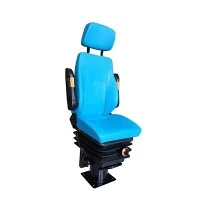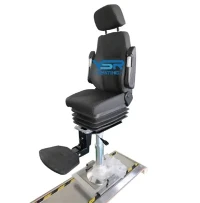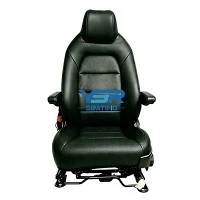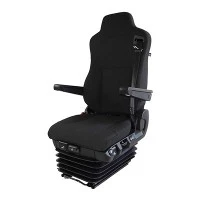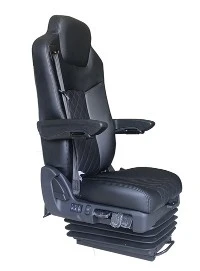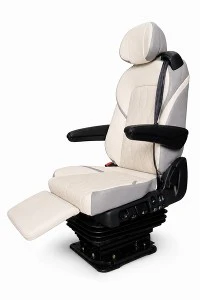


As a vehicle ages, its original seat may suffer from issues such as degraded shock absorption, foam deterioration, worn-out upholstery, or malfunctioning adjustment mechanisms. When this happens, it is time to consider a heavy-duty truck seat replacement. But what factors should you focus on when replacing a seat in a heavy-duty truck? And what are the differences between a standard replacement seat and a high-quality, shock-absorbing seat?

I. When Should You Replace a Heavy-Duty Truck Seat?
Trucks are frequently operated on highways, in mining areas, at construction sites, and over challenging terrain. Prolonged exposure to vibration and heavy, frequent use accelerate the wear and tear of seat components.
You should consider replacing your seat if you notice any of the following:
- Reduced shock absorption: The seat no longer effectively cushions road impacts, leading to noticeable jolting or bumping while driving.
- Deteriorated cushion and backrest: The foam has lost its elasticity, causing fatigue during long periods of sitting.
- Malfunctioning adjustment features: The mechanisms for height adjustment, fore-aft sliding, or backrest reclining are no longer working properly.
- Structural or component damage: Issues with the seat rails, armrests, base, or seatbelt mounting points.
II. What Features Should You Look for in a Heavy-Duty Truck Seat Replacement?
When selecting a replacement seat, do not focus solely on appearance or price. You should also consider the seat's construction, shock-absorption capabilities, mounting dimensions, and your specific operational requirements.
1. Air Suspension vs. Mechanical Suspension
This is a critical decision when replacing a heavy-duty truck seat.
Air-suspension seats use air bags and an air-suspension system to absorb vibrations during travel. Many models include built-in air pumps, adjustable damping, and automatic weight-sensing adjustments-making them ideal for long-haul trucks and heavy-duty construction vehicles where high levels of comfort are required.
Mechanical-suspension seats rely on springs and shock absorbers to cushion impacts. They feature a simpler design and are easier to maintain, making them a suitable choice for vehicles with tighter budgets or those operating in more stable, consistent environments.
2. Seat Adjustment Features
Since drivers vary in height, weight, and driving habits, the adjustability of a seat is of great importance.
Look for the following features:
- Fore-aft (sliding) adjustment, which allows the driver to find the optimal driving position.
- Height adjustment: Adapts to different cab types and driver heights.
- Backrest angle adjustment: Improves seating posture during long-haul driving.
- Lumbar support: Provides enhanced back support.
- Adjustable armrests: Offer comfortable support for the arms.
3. Installation Dimensions and Vehicle Compatibility
Replacing a seat does not mean that any product will fit directly. Before purchasing, it is essential to verify the original mounting hole positions, base dimensions, rail configuration, seat height, and seatbelt attachment method.
For major heavy-duty truck brands-such as Volvo, MAN, Mercedes-Benz, and Scania-compatibility requirements must be confirmed based on the specific vehicle model and cab configuration.
III. What Is the Difference Between OEM-Replacement Seats and Generic Aftermarket Seats?
There is a wide variety of replacement truck seats on the market, with significant differences in price and features.
Generic aftermarket seats typically feature a basic design with limited functionality; some may have shortcomings regarding suspension systems, adjustment ranges, or material quality.
In contrast, high-quality replacement seats prioritize structural design, suspension performance, installation compatibility, and long-term user experience. For wholesalers, truck parts distributors, and vehicle repair shops, partnering with a manufacturer that offers OEM/ODM customization capabilities allows for seat configurations to be tailored to specific market demands.
IV. How to Choose a Reliable Truck Seat Manufacturer?
Beyond the product itself, a supplier's production capacity and quality control processes are equally important.
When selecting a supplier, consider the following:
- Do they possess in-house production capabilities and offer OEM/ODM customization?
- Can they provide various product options, such as mechanical or air-suspension systems?
- Do they support customization of mounting hole patterns, upholstery materials, colors, and functional features?
- Do they have robust product testing and quality control protocols in place?
- Can they ensure stable bulk supply and reliable after-sales support?
For overseas buyers, choosing a Chinese seat manufacturer with genuine production capabilities can help strike an optimal balance between product quality, procurement costs, and customization flexibility.
V. YSR Seating: Replacement Seat Solutions for Heavy-Duty Trucks
YSR Seating specializes in the R&D and manufacturing of seats for commercial vehicles and construction machinery. Our product range includes seats for trucks, buses, recreational vehicles (RVs), and construction equipment.
For the heavy-duty truck replacement seat market, YSR offers a variety of mechanical and air-suspension seating solutions. We provide extensive customization options-including upholstery materials, colors, armrests, seat belts, suspension systems, and mounting configurations-tailored to meet specific customer requirements.
Whether you are looking to replace worn-out original seats or seeking an OEM seat supplier for bulk procurement projects, YSR can provide the ideal seating solution based on your specific vehicle model and operational needs.