

When examining the specialized world of railway equipment, one critical distinction often overlooked is the difference between a locomotive seat and standard passenger train seating. While both serve the rail industry, they address fundamentally different needs. A locomotive seat is engineered specifically for train operators who spend extended hours at the controls, requiring ergonomic support that enhances concentration, reduces fatigue, and ensures operational safety. In contrast, passenger seats prioritize comfort during shorter journeys and efficient space utilization across various train car configurations. Understanding these differences reveals the sophisticated engineering behind operator seating solutions.
Design and Functional Comparison
The structural and functional differences between locomotive seats and passenger seats are substantial. Locomotive seats incorporate mechanical suspension systems that actively absorb vibrations and shocks transmitted through the cab floor during operation. This mechanical suspension technology uses springs, dampers, and pivot mechanisms to isolate the driver from the constant jarring movements experienced at the front of a moving train.
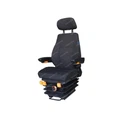
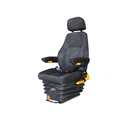
The YSR911-44 model exemplifies this approach, featuring advanced mechanical suspension that maintains operator comfort even on rough track conditions. This sophisticated suspension system protects drivers from long-term health issues associated with prolonged vibration exposure, including back pain and musculoskeletal disorders.

Beyond suspension, locomotive seats offer multi-directional adjustability including seat height, backrest angle, lumbar support depth, armrest positioning, and forward-backward sliding. Many models also feature 360-degree rotation capability, allowing operators to access controls and instruments positioned throughout the cab. These adjustments accommodate operators of different body types and allow personalized ergonomic configurations for shifts lasting eight hours or more.
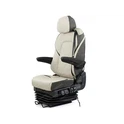
High-back designs with integrated headrests provide comprehensive spinal support, while bolstered side panels help stabilize the operator during lateral movements. Many mechanical suspension seats designed for locomotives also integrate control interfaces directly into the armrests or seat base, positioning switches and communication devices within easy reach without requiring the operator to leave their optimal seating position. Some advanced models include heating and cooling functions, further enhancing operator comfort across varying climate conditions.
Regular passenger train seats, conversely, prioritize different objectives. Their design emphasizes space efficiency, allowing maximum passenger capacity while meeting basic comfort standards. Adjustability is typically limited to reclining backrests or completely fixed positions, and suspension systems are minimal or absent entirely. Materials focus on durability under high-traffic conditions, ease of cleaning, and aesthetic appeal that complements the train's interior design. While passenger seats must withstand frequent use by diverse individuals, they don't require the specialized vibration isolation essential for locomotive operators.
Design and Functional Core Comparison
|
Feature Dimension |
Locomotive Seat |
Regular Train Seat |
|
Core Design Goal |
Operator ergonomics, safety, and alertness for long-duration work |
Passenger comfort, space efficiency, and durability for short trips |
|
Suspension System |
Mechanical suspension system (springs, dampers) actively isolates vibration |
None or minimal cushioning only |
|
Adjustment Features |
Multi-directional: height, backrest angle, lumbar support, headrest, armrests, slide, 360° rotation |
Typically backrest angle only (or fixed) |
|
Structural Characteristics |
High-back design, integrated headrest, lateral support, often integrated control interfaces |
Standard seat profile focused on space layout and aesthetics |
|
Typical Materials |
Composite knit or leather emphasizing support and durability |
Durable fabrics optimized for easy cleaning |
|
Integrated Functions |
Optional heating/ventilation, control panel integration |
Typically none |
Safety and Certification Standards
The regulatory framework governing locomotive seats is significantly more rigorous than that for passenger seating. Operators' seats must comply with strict industry certifications, including ISO9001 quality management standards and rail-specific safety protocols. These certifications verify that mechanical suspension seats can withstand extreme operating conditions, including emergency braking forces, collision impacts, and prolonged exposure to vibration without structural failure.
Testing protocols for locomotive seats include dynamic load assessments that simulate years of operational stress, material durability examinations under temperature extremes, and verification that suspension components maintain performance characteristics throughout their service life. The mechanical suspension system itself undergoes rigorous evaluation to ensure consistent damping performance, preventing both excessive movement and uncomfortable rigidity.
Passenger seats, while still subject to safety requirements, face less demanding certification processes. Primary concerns include fire resistance, structural integrity under normal use, and compliance with accessibility standards. The absence of complex mechanical systems in most passenger seats simplifies their approval process, though manufacturers must still demonstrate adequate durability for their intended service environment.
Safety and Certification Standards Comparison
|
Item |
Locomotive Seat |
Regular Train Seat |
|
Core Certifications |
ISO9001 quality management system, industry-specific safety protocols (e.g., EN standards) |
Fire resistance standards, general safety and accessibility standards |
|
Testing Focus |
Extreme dynamic loads, collision impact, long-term vibration fatigue, suspension performance lifecycle |
Static loads, durability, material flame resistance |
|
Core Requirements |
Ensure driver protection during emergency braking and accidents, structural integrity under prolonged vibration |
Ensure safety under normal use, fire prevention, and basic structural strength |

Customization and Industry Application
Locomotive seating solutions demonstrate a high degree of customization reflecting the diverse needs of railway operators worldwide. Different rail networks operate under varying track conditions, climate zones, and operational philosophies, necessitating tailored seating solutions. Manufacturers like YSR Seating Factory offer OEM/ODM services that allow railway operators to specify suspension characteristics, upholstery materials, adjustment ranges, and integrated technology features that align with their specific requirements.
The mechanical suspension parameters, for instance, can be tuned for different track conditions-softer settings for routes with poor rail maintenance, firmer configurations for high-speed operations on premium infrastructure. Seat dimensions accommodate various cab designs, control integration adapts to different locomotive architectures, and adjustment ranges can be specified based on operator demographic profiles. This customization extends to aesthetic elements, ensuring operator seats complement the overall cab design while maintaining their primary ergonomic function.
Regular train seats, by comparison, follow more standardized designs within each operator's fleet. While variations exist between first-class and economy configurations, individual seat customization is rare. Manufacturers produce seats to general specifications, and operators select from available options rather than commissioning bespoke designs. This standardization reduces costs and simplifies maintenance but offers less flexibility than the locomotive seat market.
Customization and Application Comparison
|
Aspect |
Locomotive Seat |
Regular Train Seat |
|
Customization Level |
High (OEM/ODM support): Customizable suspension parameters, dimensions, fabrics, control integration |
Low: Typically selected from existing standard models |
|
Design Focus |
Adapted to specific locomotive models, cab layouts, track conditions, and operational practices |
Adapted to overall train carriage interior design and class configurations (business/economy) |
|
Parameter Adjustment |
Suspension firmness, adjustment ranges, and control element positions are customizable |
Primarily fabric color and pattern selection |
|
Procurement Model |
Custom procurement based on technical specifications |
Bulk procurement based on budget and design |
Conclusion: Ergonomics and Purpose
The distinction between a locomotive seat and regular passenger train seating ultimately reflects their divergent purposes. Locomotive seats represent sophisticated ergonomic equipment engineered to support operators through demanding work shifts, incorporating mechanical suspension technology that protects against fatigue and maintains alertness. These specialized seats balance complex requirements: absorbing vibrations, providing extensive adjustability, integrating operational controls, and meeting stringent safety certifications.
Passenger seats, serving an equally important but fundamentally different role, optimize for comfort during shorter durations, efficient space utilization, and durability under diverse usage patterns. Neither category is superior-each excels within its intended application.

For railway operators seeking professional locomotive seating solutions that enhance driver performance and safety, partnering with experienced manufacturers is essential. Specialized products like the YSR911-44 with advanced mechanical suspension demonstrate the engineering sophistication available in modern locomotive seats. Contact YSR Seating Factory directly for expert consultation on customized seating solutions tailored to your operational requirements (Email: sales@ysrseats.com, Phone: +86-029-81136503). Our comprehensive OEM/ODM services and factory-direct support ensure you receive seating systems engineered precisely for your fleet's unique needs.
FAQ: Locomotive Seats vs. Regular Train Seats
Q: What is the most important feature of a locomotive seat?
A: The mechanical suspension system is critical, as it isolates the driver from harmful vibrations, reducing fatigue and long-term injury risk. This technology uses springs and dampers to actively absorb shocks transmitted through the cab floor.
Q: Can regular train seats be used in a locomotive cab?
A: No. They lack the necessary suspension, safety certifications (such as ISO9001), and ergonomic adjustments required for the operator's demanding environment. Using passenger seats in locomotive cabs would compromise driver safety and comfort.
Q: Are locomotive seats customizable?
A: Yes. Manufacturers like YSR offer extensive OEM/ODM services to tailor suspension parameters, dimensions, materials, and control integration to specific locomotive models and operational needs. This customization ensures optimal performance across different track conditions and climate zones.
Q: How long does a typical locomotive seat last?
A: With proper maintenance, high-quality mechanical suspension seats can provide reliable service for 10-15 years or more. The suspension components are designed to maintain performance characteristics throughout extended operational lifecycles, even under continuous vibration exposure.
Contact Information:
Phone: +86-029-81136503
Email: sales@ysrseats.com
WhatsApp: +86-13991337062
WeChat: 18992819914