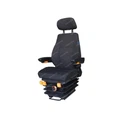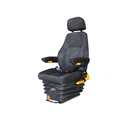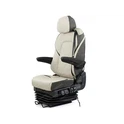


Ignore the hype-just focus on these three key points. For long-haul truck drivers, heavy machinery operators, and fleet purchasers, a poor-quality seat is a major headache. After a full day of driving, you're left with a sore back and aching muscles-or even a numb backside. Here are three simple steps to assess suspension quality and determine if a seat is up to the task.

Focus on how the seat reacts to different road conditions:
1. Driving over speed bumps or large potholes (Testing impact absorption)
- Poor seat: A harsh "thud" sends the impact straight to your lower back, potentially bouncing you out of the seat; or, after clearing the bump, the seat continues to oscillate up and down (failing to absorb energy).
- Good seat: You feel the suspension mechanism "soak up" most of the impact; the seat settles back down cleanly and firmly in one motion, without any secondary bouncing.
2. Driving on cobblestones or rough asphalt (Testing high-frequency, fine vibrations)
- Poor seat: The vehicle produces a constant, buzzing vibration; after just half an hour, your thighs and buttocks go numb.
- Good seat: You can feel the wheels rolling, but the vibrations transmitted to your body are filtered out, resulting in a soft, cushioned feel that prevents fatigue during long drives.
3. Foam elasticity (Testing damping/absorption)
Press down hard on the seat cushion with your palm and release quickly. It shouldn't be too bouncy (like a trampoline) or too hard (like a brick). High-quality, high-density foam should be resilient-absorbing shock while providing adequate support for your lower back and buttocks.
How do you choose the right YSR suspension seat for specific operating conditions?
As a brand specializing in driver seats for commercial vehicles and heavy machinery, YSR Seating offers two proven suspension solutions tailored to the real-world road conditions faced by different vehicle types:
1. Air suspension series (The top choice for large trucks and long-haul heavy-duty trucks)
Key advantages:
One-touch inflation/deflation and automatic weight adjustment: Whether you weigh 60kg or 100kg, the air bladder automatically adjusts to the optimal cushioning height. Damping adjustment function: Stiffen the damping on extremely rough roads to prevent "bottoming out," or soften it for highway driving to enjoy a "floating-on-a-cloud" ride quality.
Suitable applications: Long-haul tractor units, domestic heavy-duty trucks, highway coaches, and other scenarios requiring prolonged, continuous driving.
2. Mechanical suspension damping series (Top choice for construction vehicles, agricultural machinery, and mining trucks)
Key advantages:
Rugged structure and no reliance on an air supply: No connection to the vehicle's air system is required; it is ready to use upon installation and offers extremely low maintenance costs.
High impact resistance: Designed for extremely bumpy terrain-such as mines and construction sites-featuring a rigid chassis that withstands heavy shocks and rough handling.
Suitable applications: Excavators, loaders, forklifts, road rollers, and small trucks lacking an onboard air supply.
Buying advice: For trunk-line logistics and long-haul highway driving, the YSR pneumatic suspension seat is the top choice, as it significantly alleviates occupational lower back issues. For harsh environments like mining operations or agricultural infrastructure work, the YSR mechanical suspension seat offers superior durability and high-impact absorption, making it the more cost-effective option.