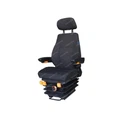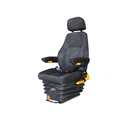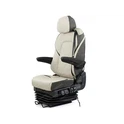


For a driver, the seat's shock-absorbing performance directly impacts daily comfort. So, how can you tell if a seat offers good shock absorption?

1. Presence of noticeable impact when driving over rough terrain
A high-quality shock-absorbing seat can absorb most vibrations transmitted from the chassis. When the equipment travels over potholes or gravel roads, the driver should not experience violent vertical bouncing.
2. Presence of a suspension system
Standard fixed seats offer virtually no shock absorption, whereas mechanical and air suspension seats effectively filter out vibrations.
Fixed seats: Suitable for light-duty equipment
- Mechanical suspension seats: Good cost-performance ratio
- Air suspension seats: Superior shock absorption; ideal for long shifts
3. Adjustability based on driver weight
Quality suspension seats usually feature weight adjustment capabilities, allowing the shock absorption and damping force to be tailored to the driver's weight, ensuring the suspension system operates at peak efficiency.
4. Susceptibility to fatigue during long periods of operation
A good seat ultimately proves its worth through the driving experience. If the driver remains comfortable in the lower back, upper back, and neck after hours of continuous work, it indicates the seat provides excellent support and effective vibration filtering.
When purchasing seats for construction machinery, look beyond appearance and price; prioritize the suspension structure, load-bearing capacity, and shock-absorption performance. For equipment involved in prolonged, high-intensity operations-such as excavators, loaders, and forklifts-installing mechanical or air suspension seats can significantly enhance driving comfort and reduce fatigue.