

In the demanding world of modern agriculture, operator comfort and health are no longer afterthoughts-they're essential components of productivity and safety. Seats For Agricultural Machinery play a crucial role in protecting operators from the constant vibrations, jolts, and physical strain that come with long hours in the field. Whether you're operating a tractor, combine harvester, or heavy-duty cultivator, the quality of your seat directly impacts fatigue levels, focus, and long-term musculoskeletal health.
At the heart of seat performance lies the suspension system, which acts as a critical buffer between the operator and the relentless movements of agricultural equipment. Today's market offers two primary suspension technologies: mechanical (spring-based) suspension and air suspension. Each brings distinct advantages and trade-offs that can significantly affect operator experience and equipment value. YSR Seating Factory, a specialized supplier with ISO9001 certification, has been at the forefront of developing advanced seating solutions that address the evolving needs of agricultural professionals worldwide.
Understanding Mechanical Suspension Seats
Mechanical suspension seats have been the traditional workhorses of agricultural seating for decades. These agricultural machinery seats rely on a straightforward mechanical system consisting primarily of coil springs paired with shock absorbers or dampers. When the machinery encounters bumps or uneven terrain, the springs compress and expand to absorb impact energy, while the shock absorbers control the rate of spring movement to prevent excessive bouncing.
The appeal of mechanical suspension lies in its simplicity and reliability. With fewer complex components, these seats typically offer lower upfront costs and straightforward maintenance requirements. For many farmers working with older equipment or operating on relatively smooth terrain, mechanical suspension provides adequate vibration damping for moderate-duration tasks. The robust steel construction common in these designs also contributes to long service life under normal operating conditions.

However, mechanical suspension has inherent limitations. The damping characteristics are essentially fixed at the time of manufacture, meaning the seat cannot adapt to different operator weights, varying terrain conditions, or changing loads. Over extended periods, springs can lose tension and shock absorbers can wear out, gradually reducing performance. For operators spending eight or more hours daily on rough terrain, the vibration isolation provided by mechanical systems may prove insufficient to prevent fatigue and potential long-term health issues.
Understanding Air Suspension Seats
Air suspension represents a significant technological advancement in agricultural seats design. Instead of metal springs, these systems use pressurized air bags (or air bellows) as the primary suspension medium. A compressor or manual inflation system maintains proper air pressure, while sophisticated valves and adjustable dampers control how the seat responds to movement.
The fundamental advantage of air suspension is its dynamic adaptability. By adjusting air pressure, operators can fine-tune the seat to match their body weight precisely, ensuring optimal suspension performance regardless of whether the operator weighs 150 or 250 pounds. This adjustability extends to other aspects of seat comfort as well-many air suspension seats offer on-the-go adjustments for seat height, backrest angle, lumbar support intensity, and even armrest positioning.
The superior vibration isolation provided by air suspension becomes particularly evident during all-day operations on uneven terrain. Air acts as a more progressive and compliant spring medium compared to metal coils, absorbing both high-frequency vibrations and low-frequency jolts more effectively. This translates to measurably reduced whole-body vibration exposure, which studies have linked to lower incidence of back pain, improved concentration, and decreased overall fatigue. For professional farmers and agricultural contractors who depend on peak performance throughout long seasons, this difference can be transformative.
Key Differences Between Mechanical and Air Suspension Seats
Damping Performance
The most significant distinction between these suspension types lies in vibration damping capability. Air suspension seats consistently outperform mechanical alternatives in isolating operators from jarring impacts and continuous vibrations. The compressible nature of air allows for a more gradual absorption of shock energy across a wider range of frequencies. When comparing old farm machinery seats with mechanical suspension to modern air-suspended alternatives, operators immediately notice smoother ride quality, especially during high-speed field work or transport on rough farm roads.
Adjustability
Air suspension systems excel in customization. Most quality air seats allow operators to adjust suspension firmness with a simple valve control, adapting instantly to different terrain conditions or operator preferences. Combined with ergonomic adjustments for lumbar support, seat depth, and backrest recline, these seats can accommodate diverse body types and working positions. Mechanical seats, by contrast, typically offer limited adjustment options-perhaps a fixed-position weight adjustment or basic height settings-making them less adaptable to individual needs.
Comfort Level
Prolonged comfort directly correlates with productivity, and here air suspension demonstrates clear advantages. By significantly reducing whole-body vibration transmission, air seats minimize the cumulative physical stress that leads to operator fatigue. This becomes especially important during critical farming windows when operators may work 12-16 hour days for weeks on end. The enhanced comfort translates to better decision-making, safer operation, and reduced risk of chronic musculoskeletal disorders that plague agricultural workers.
|
|
|
|
Durability and Maintenance
Both suspension types can deliver years of reliable service when properly maintained, but their service requirements differ. Mechanical systems need periodic inspection of springs for tension loss and shock absorbers for fluid leaks or reduced damping. Replacement parts are typically inexpensive and widely available. Air suspension systems require attention to air bag integrity, valve function, and compressor operation (if equipped). While air components may cost more to replace, modern designs have proven highly durable. Quality Stationary Seats suppliers like YSR provide comprehensive maintenance guidelines and replacement part support for both suspension types.
Cost Considerations
Mechanical suspension seats generally carry lower purchase prices, making them attractive for budget-conscious operations or older equipment. However, a complete cost analysis must consider long-term value. Air suspension seats, despite higher initial investment, often deliver superior return through reduced operator fatigue, potentially lower healthcare costs, improved retention of skilled operators, and enhanced productivity. For commercial operations and serious farmers, the incremental cost typically proves worthwhile within a single operating season.
Spotlight on an Advanced Air Suspension Model: YSR214-2P
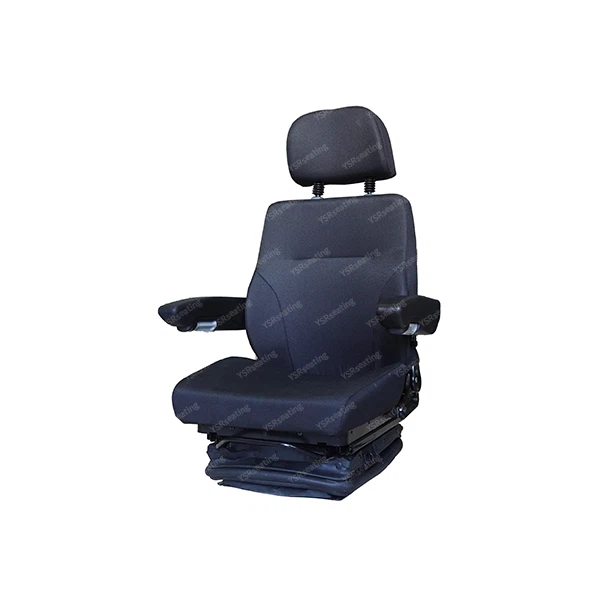
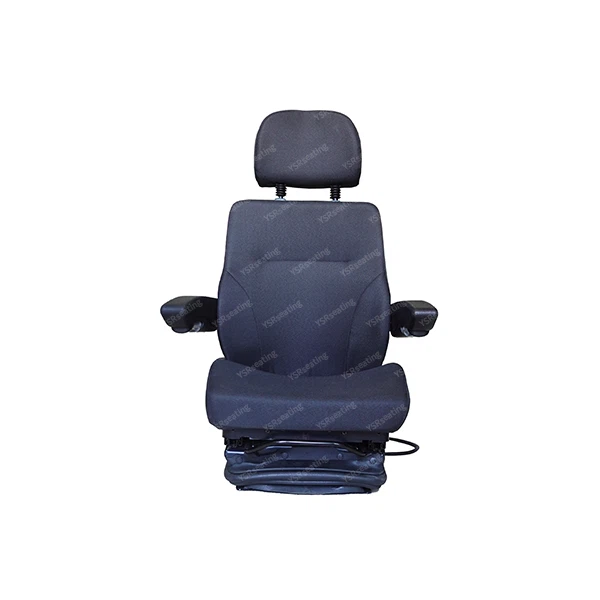
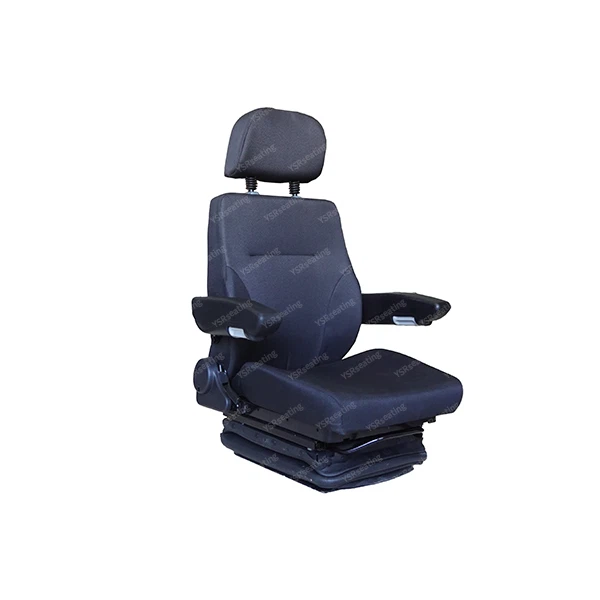
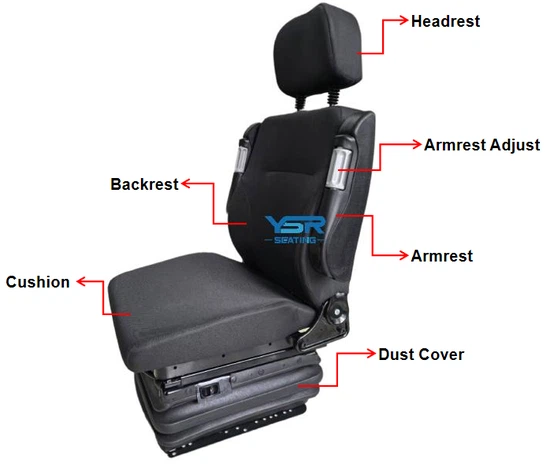
To illustrate the practical benefits of modern air suspension technology, consider the YSR214-2P-a premium example of contemporary Autofit Tractor Seat design from YSR Seating Factory. This model embodies the advantages discussed above while adding manufacturer-specific innovations.
The YSR214-2P features integrated air suspension engineered specifically for agricultural applications. Its air bag system provides smooth, progressive damping across the full range of operating conditions, from gentle field cultivation to aggressive harvesting on uneven ground. The ergonomic design incorporates contoured cushioning that supports natural spinal alignment, reducing pressure points during extended operation.
Customization options make this seat adaptable to diverse machinery and operator preferences. Customers can specify upholstery materials ranging from durable vinyl for harsh environments to premium fabric for enhanced breathability. Color matching ensures aesthetic integration with machinery branding. As Customized Autofit Tractor Seat solutions go, the YSR214-2P demonstrates how modern manufacturers balance standardization for efficiency with customization for specific needs.
Practical advantages include unshakable stability even during aggressive maneuvers, thanks to a reinforced steel frame construction that distributes loads effectively. The high weight capacity accommodates operators of various sizes without compromising suspension performance. User-friendly controls place adjustment levers within easy reach, allowing on-the-go refinements without interrupting work. ISO9001 certification assures consistent manufacturing quality and adherence to international standards.
Which Suspension Type Is Right for Your Machinery?
Selecting between mechanical and air suspension depends on several operational factors. Consider your typical terrain conditions first. Operations primarily on smooth, prepared fields may find mechanical suspension adequate, while those working rocky ground, hillsides, or rough pasture will benefit substantially from air suspension's superior isolation.
Operating hours matter significantly. If operators spend four hours or less daily on equipment, mechanical seats may suffice. Beyond that threshold-especially approaching full-time operation-air suspension becomes increasingly valuable for maintaining operator health and performance. Machine type also influences the decision. High-vibration equipment like tractors, combine harvesters, and forestry machines particularly benefit from air suspension, while lower-vibration applications might not require that level of sophistication.
Operator needs deserve careful consideration. Younger workers might tolerate mechanical suspension adequately in the short term, but protecting long-term health benefits workers of all ages. Operations struggling with operator retention or facing an aging workforce should seriously consider air suspension as an investment in human capital.
For those seeking air suspension solutions, working with Autofit Tractor Seat manufacturers like YSR Seating Factory offers distinct advantages. Direct manufacturer relationships provide access to customization options, OEM/ODM support for fleet standardization, technical expertise for proper installation, and reliable warranty service. The availability of Autofit Tractor Seat for sale through manufacturer channels often includes competitive pricing that narrows the cost gap with mechanical alternatives.
Conclusion
The distinction between mechanical and air suspension agricultural seats extends far beyond simple technical specifications-it fundamentally affects operator well-being, productivity, and equipment value. While mechanical suspension continues to serve adequately in certain applications, air suspension clearly excels in comfort, adaptability, vibration isolation, and long-term performance. For serious agricultural operations, the enhanced capabilities of air suspension typically justify the incremental investment through reduced fatigue, improved operator satisfaction, and sustained productivity throughout demanding seasons.
Selecting the right seat type represents a meaningful decision that impacts daily operations and operator health for years to come. As agricultural equipment becomes more powerful and operating hours more intensive, the protective benefits of advanced suspension technology become increasingly important.
Interested in upgrading to a high-comfort air suspension seat?
Contact YSR Seating Factory today to explore options like the YSR214-2P, request a sample, or discuss a custom solution precisely tailored to your machinery and operational requirements.
Reach Out for Expert Advice:
• Phone: +86-029-81136503
• Email: sales@ysrseats.com
• WhatsApp: +86-13991337062
• WeChat: 18992819914
Related Articles
What types of seats are available for agricultural machinery?
How do I choose the right seat for my tractor or combine harvester?
What is the difference between mechanical and air suspension agricultural seats?
What are the benefits of using a suspension seat in agricultural machinery?
Can a bad tractor seat cause back pain?
Do agricultural machinery seats improve operator comfort and reduce fatigue?