

1. Comfort and Ergonomics:
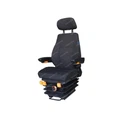
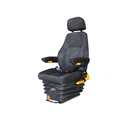
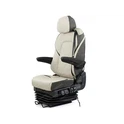
When it comes to seating comfort and ergonomics in vehicles, air bag suspension seat and traditional seat offer distinct experiences for occupants. Air bag seats are designed to provide superior support and adjustability compared to their traditional counterparts.
One of the critical benefits of air pack seats is their capacity to adjust to the singular forms and weight dispersion of every inhabitant. The air bags within these seats can be inflated or deflated to varying degrees, allowing for a customized seating experience. This adjustability ensures that the occupant's body is evenly supported, reducing pressure points and minimizing discomfort during long journeys.

In contrast, traditional seats often feature fixed cushioning and limited adjustability options. While some traditional seats may offer basic lumbar support or height adjustment, they lack the precision and range of customization found in suspension seats. As a result, occupants may experience uneven pressure distribution, leading to discomfort, fatigue, and potential musculoskeletal strain over extended periods
Moreover, air bag seats excel in providing dynamic support during vehicle movement. The air bags can react to changes in road conditions, absorbing shocks and vibrations to maintain a stable and comfortable seating position. This feature is especially gainful for drivers who spend extended periods out and about, as it decreases actual physical pressure and keeps up with the optimal stance.
Traditional seats, on the other hand, rely on foam padding and springs to provide cushioning. While these materials can offer initial comfort, they may degrade over time, leading to reduced support and increased discomfort. Additionally, traditional seats may not effectively isolate occupants from road vibrations, resulting in a less comfortable ride experience.
Suspension seat adjustability extends beyond comfort and ergonomics. These seats often incorporate features such as adjustable lumbar support, side bolsters, and thigh support, allowing occupants to fine-tune their seating position for optimal comfort and safety. Such adjustments can help reduce muscle fatigue, improve circulation, and promote a healthier posture during extended periods of sitting.
In terms of ergonomics, air bag suspension seat is designed to accommodate a wide range of body types and sizes. The adjustable nature of these seats ensures that occupants of different heights and weights can find a comfortable and supportive seating position. This is particularly important for individuals with specific ergonomic requirements, such as those with back pain or mobility limitations.
Traditional seats, while offering a basic level of comfort, may not provide the same level of ergonomic support. The fixed nature of traditional seat cushioning can lead to pressure points and discomfort for occupants with unique body shapes or sizes. Additionally, the limited adjustability of traditional seats may not allow for optimal positioning of the lumbar region, leading to increased strain on the lower back.
2. Impact Absorption and Safety Features:
In the event of a collision, the safety features of vehicle seats play a crucial role in protecting occupants from injury. Air bag suspension seats and traditional seats differ significantly in their ability to absorb impact forces and provide crash protection.

Air bag seats are equipped with advanced safety features that enhance their impact absorption capabilities. These seats incorporate air bags strategically placed within the seat structure, which deploy upon impact to cushion and protect the occupant . When a collision occurs, sensors detect the sudden deceleration and trigger the inflation of the air bags, which rapidly expand to absorb the energy of the impact.
The air bags in suspension seats are designed to provide targeted protection to critical areas of the body, such as the head, neck, and torso. By cushioning these vulnerable regions, air bag seats help reduce the risk of serious injuries, such as whiplash, spinal cord damage, and head trauma.
In addition to the air bags, suspension seats often feature pre-tensioners and load limiters in the seat belt system. Pre-tensioners actively tighten the seat belt during a crash, ensuring that the occupant is securely held in place and reducing the risk of excessive forward motion. Load limiters, on the other hand, allow a controlled amount of seat belt webbing to be released, reducing the peak forces exerted on the occupant's body during the collision.
Traditional seats rely primarily on foam padding and structural reinforcements to absorb impact forces in the event of a collision. While they may provide some level of protection, traditional seats have limitations in terms of energy absorption and distribution. As a result, occupants may be more susceptible to injuries such as whiplash or spinal trauma during high-speed collisions.
3.Long-Term Durability and Maintenance:
In addition to comfort and safety, the long-term durability and maintenance requirements of vehicle seats are crucial considerations for owners and fleet managers. Air bag suspension seats and traditional seats differ in their construction materials and maintenance needs.
Traditional seats, typically made from foam padding and fabric or leather upholstery, require regular maintenance to preserve their appearance and structural integrity. Over time, foam padding may lose its resilience, leading to sagging or discomfort. Additionally, fabric or leather upholstery may be prone to wear and tear, requiring periodic cleaning and conditioning to prevent deterioration.
In contrast, airbag suspension seats are often constructed with durable materials such as reinforced rubber or polyurethane for the air bags, along with high-quality fabric or leather upholstery. This results in seats that are more resistant to wear and deformation over time.
Furthermore, air bag seats generally require less maintenance compared to traditional seats, as they do not suffer from issues such as foam degradation or upholstery wear.
Additionally, suspension seats may offer longer lifespans and greater durability in harsh operating environments such as construction sites or off-road terrain, where traditional seats may be more prone to damage.
Please contact us at sales@ysrseats.com to learn more about YSR seats.
References:
1. Zhang, L., & Reed, M. P. (2019). Comparative evaluation of occupant protection provided by traditional and air bag suspension seats in rear-end collisions. Traffic Injury Prevention, 20(7), 761-769.
2. National Highway Traffic Safety Administration. (2020). Vehicle Seating and Restraints - Safety Research & Strategies.
3. Smith, R. (2018).Comparative analysis of long-term durability and maintenance requirements for air bag suspension seats and traditional seats. Automotive Engineering Journal, 15(2), 87-104.