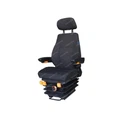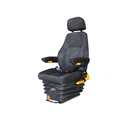


The process of foaming car seats usually includes the following steps: mold preparation, foaming material preparation, foaming, hardening, deburring, extrusion port treatment and sealing.https://www.ysrseating.com/driver-seat-parts/isri-seat-part.html
These steps are described in detail below.
1. Prepare the mold. The mold is a key tool for making car seats. The size and shape of the mold can be determined according to the design requirements. Usually, the mold is made of metal to ensure its durability and stability.
2. Preparation of foaming materials Car seats often use polyurethane as a foaming material. Polyurethane can react chemically under certain conditions to form a foam-like structure. Foaming materials are usually mixed with two liquid or solid components. The hardness and density of the foam can be adjusted by controlling the mixing ratio.
3. Foaming process The foaming material is poured into the mold and injected with an appropriate catalyst or promoter. As the two components are mixed, the foaming material begins to react to generate gas, thereby expanding into a foam. The foaming process is usually carried out under high temperature and high pressure conditions to ensure the quality and stability of the foam. After the foam is fully expanded, it is hardened.
4. Hardening Hardening means that the chemical reaction inside the foam is completed and the required hardness and strength are achieved. During hardening, the temperature and pressure are usually kept constant to ensure that the foam can harden evenly.
5. Deburring During the foaming process, some burrs or uneven parts are usually produced on the foam surface. In order to make the seat surface smoother and more uniform, the seat needs to be deburred. This is usually achieved by cutting and trimming.
6. Extrusion port treatment During the foaming process, the foaming material flows out of the extrusion port in the mold to form an edge. In order to make the edge of the seat more neat and beautiful, the extrusion port needs to be processed. Common methods include trimming, grinding and polishing.
7. Sealing After the entire foaming process is completed, the seat needs to be sealed to prevent the foam from overflowing from the bottom of the seat. This is usually achieved by using appropriate glue or sealant.
In general, the process flow of car seat foaming is a complex process that needs to be carried out under strictly controlled conditions. Through the steps of mold preparation, foaming material preparation, foaming, hardening, deburring, extrusion port treatment and sealing, high-quality and stable car seats can be produced.
Mold differentiation
After hot foaming and pouring, the mold is placed in an oven at 220-250℃ (not less than 180℃), and removed from the mold after the reaction is completed.
Advantages: low foam density, good thermal aging performance, no need to open holes separately. Low mold cost. Disadvantages: high energy consumption. The exhaust hole is prone to produce "mushroom heads", resulting in more waste of chemical materials. Later on-site cleaning and equipment maintenance are more troublesome.

Cold foaming is generally designed as a multi-station turntable production line.
The mold is generally heated to 45-70℃ by a mold temperature controller, and then demolded after the foaming reaction of the pouring PU material is completed. After demolding, the product needs to use a bubble breaker to help open the hole.
Advantages: low energy consumption, clean and easy to maintain equipment.
Disadvantages: more complicated equipment and high equipment cost. The thermal performance of the foam is average.

Release agent spraying station

Vacuum Bubble Breaker
Surface adsorption distinction
Naked foaming is named because it is the opposite of adsorption foaming. No fabric is placed in the mold in advance, and the surface of the foamed product is the PU layer. The cover is assembled after processing. Passenger cars mostly use this foaming process.

Before adsorption foaming pouring, the fabric is placed in the mold cavity first, and it is completely fitted by vacuum adsorption, and then the PU material is poured. After foaming, the surface of the PU product taken out of the mold is tightly fitted with the fabric. This foaming process is more commonly used in engineering machinery seats.

Hardness differentiation
Single hardness foaming is the simplest foaming, with a single formula, single pouring, and no other auxiliary means. The foam products presented have only a single hardness.
Dual hardness foaming Double hardness foaming is a selling point for many luxury cars. The seating area is softer and the supporting areas on both sides are harder, which can provide more comfort. The method of implementation is to use the seating area and the two side areas to pour separately, and achieve the dual hardness or multi-hardness differentiation of the product by means of the mold placement angle, adding a material trough between the two side wings and the seating area, and adding inserts on both sides of the foam.

• Phone: +86-029-81136503
• Email: sales@ysrseats.com
• Whatsapp: +86-13991337062
• WeChat: 18992819914