

When it comes to forklift operations, few questions spark as much debate as operator restraint requirements. Many warehouse managers and forklift operators remain uncertain about seat belt regulations, creating a dangerous gap between compliance and practice. The confusion often stems from varying interpretations of safety standards and the perceived inconvenience of restraint systems. However, the answer is clear: if your forklift is equipped with a seat and a Roll-Over Protective Structure (ROPS), seat belts are not optional-they're mandatory. This requirement makes investing in a quality Forklift Suspension Seat with integrated safety features not just a regulatory necessity, but a critical investment in operator protection. This article clarifies the legal landscape and explains why a proper seating system, including an Adjustable Forklift Seat quotation for upgrading your fleet, forms the foundation of workplace safety.
The Regulatory Landscape: What Do the Rules Say?
OSHA regulations in the United States, along with similar standards worldwide, establish clear requirements for forklift operator restraint systems. The fundamental principle is straightforward: when a forklift is manufactured or retrofitted with both a seat and ROPS, operators must use the provided seat belt during operation. This isn't a suggestion-it's a legal mandate backed by OSHA Standard 1910.178.
The regulation recognizes that the ROPS and seat belt work as an integrated safety system. The ROPS creates a protective zone around the operator, while the seat belt keeps the operator within that zone during a tip-over incident. Without proper restraint, operators instinctively try to jump clear during a rollover, often resulting in being crushed by the overhead guard or mast-the leading cause of forklift fatality.
This legal framework translates directly into the need for a robust universal forklift seat that incorporates secure belt anchor points, durable construction, and ergonomic design. Compliance isn't achieved with seat belts alone; the entire seating system must be engineered to withstand the forces involved in accidents while supporting safe, comfortable operation.

Beyond Compliance: The Lifesaving Role of Seat Belts
Understanding why seat belts save lives requires examining the primary risks in forklift operations. Tip-overs account for approximately 25% of all forklift-related fatalities, with most deaths occurring when operators attempt to exit the vehicle during a rollover. Additional hazards include being struck by falling loads, collisions with fixed objects, and falls from elevated positions.
The seat belt's role is deceptively simple yet profoundly effective: it keeps the operator contained within the protective envelope created by the ROPS. During a tip-over, this "survival space" remains relatively intact, even as the forklift rolls onto its side. An unrestrained operator who jumps or is thrown from the seat risks being crushed by thousands of pounds of equipment.
The seat itself is fundamental to this protection system. A seated forklift operator must have a seating platform that maintains integrity under extreme conditions. The seat must feature secure belt anchor points engineered to handle the dynamic loads of an incident, a frame that won't collapse or detach, and a design that encourages consistent belt use through comfort and accessibility.
Features of a Safety-Compliant Forklift Seat
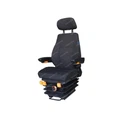
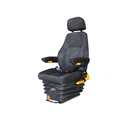
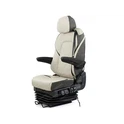
Not all forklift seats are created equal. A truly safety-compliant seat incorporates specific features that support both regulatory requirements and real-world operator protection. The YSR211-5 model exemplifies these essential characteristics:
- Integrated Seat Belt Anchors: Safety-engineered anchor points are built into the seat frame, designed and tested to withstand the forces generated during tip-overs or collisions. These aren't aftermarket additions-they're integral to the seat's structural design.
- Robust Construction: The seat frame must maintain structural integrity under stress. Quality seats use heavy-duty steel frames with reinforced mounting points that can support both normal operational loads and the extreme forces of an incident.
- Ergonomic Adjustability: Comfort directly impacts safety compliance. When operators find seats uncomfortable, they're tempted to operate unsafely-leaning out of position, failing to fasten belts, or adopting postures that compromise control. Features like backrest angle adjustment, armrest positioning, and slide rail adjustment enable operators to achieve a secure, comfortable driving position that encourages belt use and maintains proper vehicle control.

These features aren't luxury additions-they're requirements for meeting regulatory demands while genuinely protecting operators. When evaluating an Adjustable Forklift Seat quotation, prioritize these safety-critical elements over cost alone.
The YSR211-5: A Case Study in Integrated Safety
The YSR211-5 represents a thoughtfully engineered approach to forklift seating that balances safety, durability, and operator comfort. With a seat weight of 15kg and compact dimensions (450mm width, 440mm depth, 100mm height adjustment range), this Forklift Suspension Seat provides a practical example of how proper design serves both compliance and protection.
Key safety-supporting features include weight adjustment capabilities that accommodate operators from 50-130kg, ensuring proper seat function across diverse workforces. The slide rail adjustment (100-150mm range) allows precise positioning for optimal control access and visibility. The mechanical suspension system absorbs vibration and shock, reducing operator fatigue that can lead to lapses in safety practices.
The backrest tilt adjustment (10-30°) supports proper posture during extended shifts, while integrated armrests (220mm width, 50mm height adjustment) provide stability and reduce the physical strain that causes operators to compromise safe positioning. These aren't comfort features masquerading as safety-they're ergonomic solutions that make safe operation sustainable throughout entire work shifts.
As a universal forklift seat solution, the YSR211-5 fits multiple forklift models and brands, simplifying fleet standardization and maintenance. Its design ensures that belt anchors, frame integrity, and operator positioning meet or exceed safety requirements across various applications.

Safety is Non-Negotiable
The evidence is unambiguous: seat belts are legally required on equipped forklifts and represent one of the most effective injury prevention measures available. However, a seat belt is only as effective as the seating system that supports it. Investing in high-quality, safety-engineered seats isn't an optional upgrade-it's a fundamental responsibility for any organization operating forklifts.
Compliance failures carry severe consequences: OSHA violations, increased insurance premiums, potential civil liability, and most critically, preventable injuries and deaths. The relatively modest investment in proper seating equipment pales against these risks. A seated forklift operation that prioritizes integrated safety systems demonstrates organizational commitment to protecting your most valuable assets-your people.
Your Next Step Towards a Safer Workplace
Don't leave your operators' safety to chance or defer equipment upgrades due to uncertainty about costs. Request a formal Adjustable Forklift Seat quotation today to understand exactly what compliance and protection require. YSR Seating offers factory-direct pricing, extensive customization options through OEM/ODM services, and global expertise in industrial seating solutions.
Contact us for your quotation and safety consultation:
Phone: +86-029-81136503
Email: sales@ysrseats.com
WhatsApp: +86-13991337062
WeChat: 18992819914
Protect your operators. Meet your obligations. Invest in seating systems that save lives.