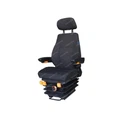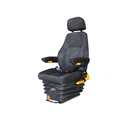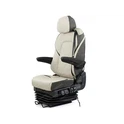


In the demanding world of agricultural and construction operations, tractor seats play a pivotal role in ensuring operator comfort, health, and productivity. As operators often spend long hours navigating rough terrain and enduring continuous vibrations and jolts, the quality of their seating can significantly impact their well-being and performance. This article aims to compare two prominent tractor seat technologies: mechanical systems and Tractor suspension seat, discussing their respective advantages, disadvantages, and suitability for different applications.
Mechanical Systems:
Mechanical tractor seats rely on traditional suspension systems that utilize springs and dampers to provide support and cushioning. These systems have been a longstanding choice in the industry due to their simplicity and affordability.
Mechanical systems' long lifespan and low upkeep requirements are among their primary advantages. The use of robust metallic springs and sturdy dampers ensures a long service life, with minimal need for replacement or adjustment, making them a cost-effective choice for many operators.
However, the simplicity of mechanical systems also comes with limitations. While they offer basic cushioning and shock absorption, their adjustability is often limited, making it challenging to personalize the seating experience to individual preferences or varying operating conditions.

Tractor suspension seat:
In contrast to mechanical systems, air suspension seats utilize air springs or air bladders to isolate the operator from vibrations and impacts. This innovation has gotten significant traction as of late because of its capacity to give unrivaled comfort and customization.
One of the primary advantages of air suspension seats is their excellent shock absorption and vibration dampening capabilities. Operators can fine-tune the seating experience to their individual preferences and the particular requirements of the task at hand thanks to the air springs' ability to be adjusted to the desired firmness or softness.
Air suspension seats also offer improved ergonomics and posture support. By providing customizable lumbar and lateral support, these seats can help alleviate strain on the operator's back and promote proper spinal alignment, reducing the risk of musculoskeletal disorders and fatigue over extended periods of use.

Comparison:
When comparing mechanical systems and air suspension seats, several key factors come into play:
Comfort and Ergonomics:
Air suspension seats generally offer superior comfort and ergonomic support due to their ability to isolate vibrations and provide customizable cushioning and support. The air bladders or pneumatic systems in these seats can be adjusted to conform to the operator's body shape and weight, reducing pressure points and promoting proper spinal alignment. Mechanical systems, while offering basic cushioning, may not provide the same level of comfort and ergonomic benefits, particularly over extended periods of use or in demanding environments.
Adjustability and Customization:
Tractor suspension seats excel in terms of adjustability and customization, allowing operators to fine-tune the seating experience to their specific needs and preferences. These seats often feature multiple adjustment points, such as lumbar support, seat tilt, and seat height, which can be easily adjusted to accommodate different body types and postures. Mechanical systems, on the other hand, offer limited adjustability, making them less versatile for diverse operator populations or those with specific ergonomic requirements.
Durability and Maintenance:
Mechanical systems are often praised for their durability and low maintenance requirements, as they rely on robust metallic components with minimal moving parts. These systems can withstand harsh environments and heavy use without significant wear and tear. Air suspension seats, while generally durable, may require periodic maintenance or replacement of air bladders or seals, particularly in demanding or abrasive environments.
Cost and Availability:
Mechanical systems tend to be more affordable and widely available, making them an attractive choice for budget-conscious operators or those working in remote locations. These systems are relatively simple and can be easily sourced from various manufacturers. Air suspension seats, while offering superior comfort and customization, typically come at a higher initial cost and may have limited availability in certain regions or for specific applications.
Noise and Vibration Isolation:
Tractor suspension seats are renowned for their ability to isolate vibrations and dampen noise, creating a more comfortable and less fatiguing environment for operators. The air bladders or pneumatic systems act as shock absorbers, reducing the transmission of vibrations from the machine to the operator's body. Mechanical systems, while providing some cushioning, may not offer the same level of vibration and noise isolation, potentially leading to increased operator fatigue and discomfort over time.
While both mechanical systems and air suspension seats have their strengths and weaknesses, the choice ultimately depends on the specific requirements of the operator and the application. For operations that prioritize cost-effectiveness and simplicity, mechanical systems may be a suitable option. However, for operators who value superior comfort, customization, and ergonomic support, particularly in demanding or prolonged applications, air suspension seats may be the better choice, offering long-term benefits in terms of operator well-being, productivity, and safety.
YSR's Tractor suspension seat is made of PVC,powder-coated steel, and sponge, Please contact us at sales@ysrseats.com to learn more.
References:
1. Ebe, K., & Griffin, M. J. (2001). Factors affecting static seat cushion comfort. Ergonomics, 44(10), 901-921.
2. Kyaw, E. P., & Nai, E. E. K. (2015). Ergonomics intervention for commercial vehicle drivers. International Journal of Occupational Safety and Ergonomics, 21(4), 493-503.
3. Park, J., & Jung, E. S. (2018). Effects of adjustable seat pan depth on driver's postural behaviors and discomfort. Applied Ergonomics, 71, 32-41.